

Industrial plants depend on controlled switching, not just large machines. A relay lets a low-power signal operate a separate circuit, helping control pumps, conveyors, heaters, and alarms. It can also isolate control logic from higher-voltage loads. The detail matters: a relay may be small, but a failed contact can stop a production line.
The U.S. Energy Information Administration’s Electric Power Annual reports that industrial customers accounted for about 26% of U.S. retail electricity sales in 2023. That figure does not measure relay use directly. It does show the scale of electrical activity that industrial systems must manage. Relays Electrical applications range from motor starters and interlocking circuits to protective schemes that respond to abnormal conditions. IEC 60255, a family of standards for measuring relays and protection equipment, provides a technical reference for important parts of that work.
Relays remain useful because they provide a clear, familiar way to switch, separate, and coordinate circuits. They are also relatively easy to inspect. Still, they are not automatically the best choice. Contact wear, coil voltage, switching frequency, and the surrounding environment all affect service life. A relay selected from a catalogue without checking the actual load can create avoidable downtime. That part is easy to overlook. This article examines why industrial systems use relays, where they fit, and what engineers should verify before specifying them.
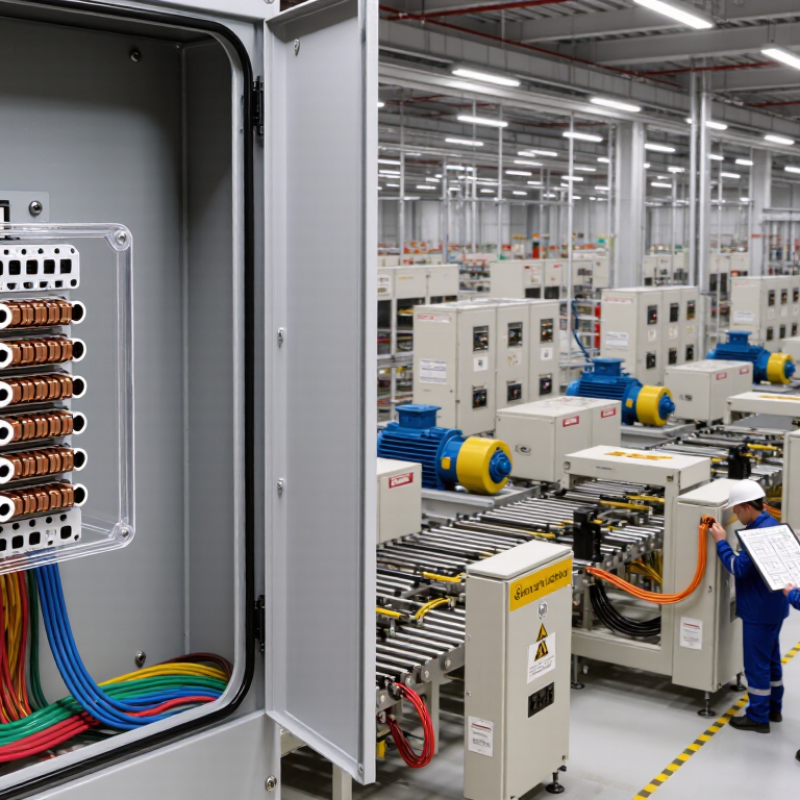
An electrical relay is a switch controlled by an electrical signal. In an electromechanical relay, current through a coil creates a magnetic field that moves an armature. The armature opens or closes contacts, allowing a low-power control circuit to operate a separate load circuit. Depending on the design, the contacts may be normally open or normally closed. You can hear a soft click when many relays switch.
When the control signal reaches the coil, the contacts change state. When that signal stops, a spring usually returns them. This simple action helps control motors, lamps, heaters, and other equipment from a control panel. A relay can also provide separation between control and load circuits, but only when its construction and ratings support it. Check the coil voltage and contact ratings before installation. A relay rated for a resistive load may not handle a motor’s starting current well. Small details matter.
Tips: Match the relay to the load and control voltage. Keep contacts clean and check for heat or wear during maintenance. If a relay chatters, don’t assume it is harmless; inspect the supply and connections. I’ve found that wiring diagrams can still leave room for interpretation, so verify terminals against the device markings.
Why Are Electrical Relays Used in Industrial Systems?
Key Relay Types Used in Industrial Systems
Industrial relays switch circuits, isolate control signals, and help equipment respond to faults. The right type depends on load, switching speed, and operating conditions. Electromechanical relays use a moving armature and contacts; they suit straightforward control panels and are easy to inspect. Solid-state relays switch electronically, with no moving contacts, making them useful for frequent, quiet switching. They can, however, generate heat and need suitable cooling.
Overload relays protect motors by responding to excessive current over time. Safety relays monitor emergency stops, guards, and other safety circuits, while time-delay relays sequence equipment or prevent rapid restart. Selection needs care. A relay is not a circuit breaker, and it cannot replace correctly rated overcurrent protection. The U.S. Department of Energy’s 2014 sourcebook, Improving Motor and Drive System Performance, estimates motor-driven systems use about 68% of electricity in U.S. manufacturing. That figure shows why reliable motor control matters, though it does not make one relay type right for every application.
Tips: Check coil voltage, contact rating, load type, and ambient temperature against the datasheet. For a hot cabinet or frequent switching, verify heat dissipation and expected service life. Small details matter. A relay that fits electrically may still be a poor mechanical fit.
| Relay Type | How It Works | Why It Is Used | Typical Industrial Applications | Key Considerations |
|---|---|---|---|---|
| Electromechanical Relay | An energized coil creates a magnetic field that moves mechanical contacts to open or close a circuit. | Provides electrical isolation and allows a low-power control signal to switch a separate load circuit. | Control panels, motor starters, HVAC equipment, and general-purpose machine control. | Contacts can wear or arc over time. Select contact ratings appropriate to the load and switching duty. |
| Solid-State Relay | Semiconductor components switch the load without moving mechanical contacts. | Enables quiet, fast switching and avoids mechanical contact wear in frequently switched applications. | Heater control, process temperature systems, and other repetitive switching applications. | May generate heat and require suitable heat sinking. Check leakage current, load type, and voltage ratings. |
| Time-Delay Relay | Changes its contacts after a preset delay, or after a timed interval following energization or de-energization. | Sequences operations and prevents equipment from starting or stopping at the wrong time. | Motor sequencing, conveyor systems, pump controls, and delayed shutdown circuits. | Choose the correct timing range and delay mode for the control sequence. |
| Thermal Overload Relay | Uses the heating effect of motor current to detect sustained overload and open the motor control circuit. | Helps protect motors from prolonged overcurrent conditions that can cause overheating. | Motor control circuits for pumps, fans, compressors, and conveyors. | It is generally paired with a contactor and is not a substitute for short-circuit protection. |
| Protective Relay | Monitors electrical quantities such as current, voltage, frequency, or phase conditions and initiates a trip when set criteria are met. | Detects abnormal power-system conditions and helps isolate affected equipment. | Switchgear, transformers, generators, feeders, and industrial distribution systems. | Settings and coordination should match the system design and protection requirements. |
| Safety Relay | Monitors safety devices and uses monitored switching circuits to initiate a controlled stop when a safety condition is violated. | Supports safety functions such as emergency stopping and guard interlocking when used as part of a properly designed system. | Machine guards, emergency-stop circuits, light curtains, and industrial machinery. | Selection, wiring, and validation must follow the applicable machinery safety requirements and risk assessment. |
| Reed Relay | A magnetic field operates sealed ferromagnetic contacts inside a small glass capsule. | Provides compact switching with low contact current and useful isolation in signal-level circuits. | Instrumentation, test equipment, and signal switching within industrial control systems. | Check contact ratings and switching limits; it is typically intended for lower-power signals rather than large loads. |
In an industrial control panel, a relay lets a low-power signal operate a separate circuit. A temperature sensor or controller energizes the relay’s coil. The coil moves an armature, changing the contacts from open to closed, or closed to open. A distinct click may be audible inside the cabinet. That small movement can start a pump through a properly rated control path, switch an indicator lamp, or signal another device. The controller does not need to carry the load current itself. A relay is not magic, though: contact ratings, coil voltage, and switching frequency all matter.
Relays can also separate control wiring from load wiring. This electrical separation helps limit the effect of faults and electrical noise, provided the relay is designed and installed for the application. It is not, by itself, proof that a circuit is safe to touch. For larger motors, a relay commonly operates a contactor rather than switching motor current directly. Normally open and normally closed contacts give designers different behaviors if the coil loses power. That choice deserves thought. A contact can wear, weld shut, or fail to move, especially under unsuitable loads. Inspection and correctly rated protective devices remain important; relying on the click alone is a weak check.
In a factory control cabinet, relays connect small control signals to larger electrical loads. A programmable controller can energize a relay coil; its contacts then switch a pump, conveyor motor, or ventilation fan. This separation helps protect sensitive control equipment from load-side voltage and current. It also makes troubleshooting more concrete: technicians can check the coil, listen for a click, and test contact continuity. Not glamorous, but useful.
Motor control is one of the most common industrial applications. A U.S. Department of Energy assessment estimated that motor-driven systems account for about 68% of industrial electricity use. The figure appears in its 2014 Industrial Electric Motor Systems Market Opportunities Assessment. Relays help operate motors through start-stop circuits, interlocks, and alarm sequences. On a production line, for example, a relay can prevent a conveyor from starting until a guard switch is closed. That small decision can keep a routine fault from becoming equipment damage.
Relays also switch heating elements, lighting circuits, compressor controls, and signals between equipment. In substations and process plants, protection relays detect abnormal electrical conditions and command circuit breakers to open. Their value is practical: clear isolation, familiar operation, and replaceable components. Still, contact wear and coil failure happen, especially in dusty cabinets or circuits that switch frequently. A relay is not a cure-all. The right type, rating, and inspection schedule matter.
Why Are Electrical Relays Used in Industrial Systems?
Selecting an industrial relay starts with the load, not just the control voltage. A motor contactor circuit, heater, and small sensor output create different electrical stresses. Check operating voltage, steady current, inrush current, switching frequency, and whether the load is AC or DC. Contact ratings should match the actual load category, not merely the number printed beside a resistive rating. The U.S. Department of Energy’s 2014 Industrial Electric Motor Systems Market Opportunities Assessment estimates motor-driven systems consume about 68% of U.S. manufacturing electricity. That makes appropriate switching and protection a practical reliability concern. Small detail. Coil voltage, required isolation, and available panel space matter too.
Environmental conditions shape service life. Heat, dust, moisture, vibration, and corrosive atmospheres can affect contacts and insulation. Choose an enclosure and relay construction suited to the installation, then check the relevant product standard, such as IEC 61810-1 for electromechanical elementary relays. In maintenance rounds, inspect terminals for looseness or discoloration, listen for chatter, and compare operating temperatures with normal conditions. De-energize equipment and follow site procedures before inspection. Record switching cycles and failures; these notes often reveal a pattern before an outage does.
A relay may meet its nominal rating and still wear quickly under frequent motor starts or high inrush. This is easy to miss. Review the manufacturer’s electrical-life data for the real load, and replace devices showing inconsistent operation rather than waiting for a hard failure. Test the control signal and connected load separately when troubleshooting. One limitation: maintenance intervals cannot be universal; dust, duty cycle, and temperature change the answer.
Common industrial relay coil supply voltages
Relays let low-power control circuits switch separate electrical loads, supporting isolation and practical automation. 24 V DC, 120 V AC, and 230 V AC are common control supply voltages; always match the relay coil rating to the actual circuit and check the manufacturer’s specifications.
QUICK LINKS
CONTACT US
Office: (+86) 755 23040566
Tel: (+86) 158 9965 5195
E-mail: sale@pcbledmodule.com
Skype: Hans@Rocket-PCB
Whatsapp: 86 1589965 5195
Office Address: 2207,Bid 4,He Gu Shan Hui Cheng,35#,Guang Tian RoYanluo street, Song Gang Town,518105 SHENZHENG, CHINA
Plant ADD.: No 69, Lianfeng North Road, Xianxi Area, ChangAn Town, Dongguan, China.


Copyright © 2025 Rocket PCB Solution Ltd. | All Rights Reserved Sitemap Friendship link: CNC machining heat sink


