
English


For global buyers, Cnc Machining Metal is more than a production method. It is a practical route to accurate, repeatable, and scalable metal components. A milled aluminum housing can leave the shop with clean bores, sharp edges, and tolerances measured in microns. That consistency matters when parts travel from a supplier in Asia to an assembly line in Europe or North America.
Peter Zelinski, a long-time manufacturing journalist and editor, has stated, “The machine tool is the foundation of manufacturing.” His observation explains why CNC capability remains central to modern sourcing. Computer-controlled equipment reduces manual variation and supports complex designs. It can also process aluminum, stainless steel, brass, titanium, and engineering alloys. Buyers can request inspection reports, material certificates, surface-finish data, and first-article samples before approving production. These documents make supplier evaluation more reliable.
Cost is another reason global companies choose Cnc Machining Metal. Digital drawings can move quickly between engineering teams and factories. Tool changes, batch sizes, and cycle times can be reviewed before production begins. Still, lower pricing does not always mean better value. I have seen attractive quotations become expensive after rework, unclear tolerances, or weak packaging caused delays. That is an uncomfortable point, but it deserves attention. Buyers should compare process control, communication, inspection equipment, and delivery records alongside price. Certification claims also require verification. A careful sourcing decision combines technical evidence with real manufacturing experience.
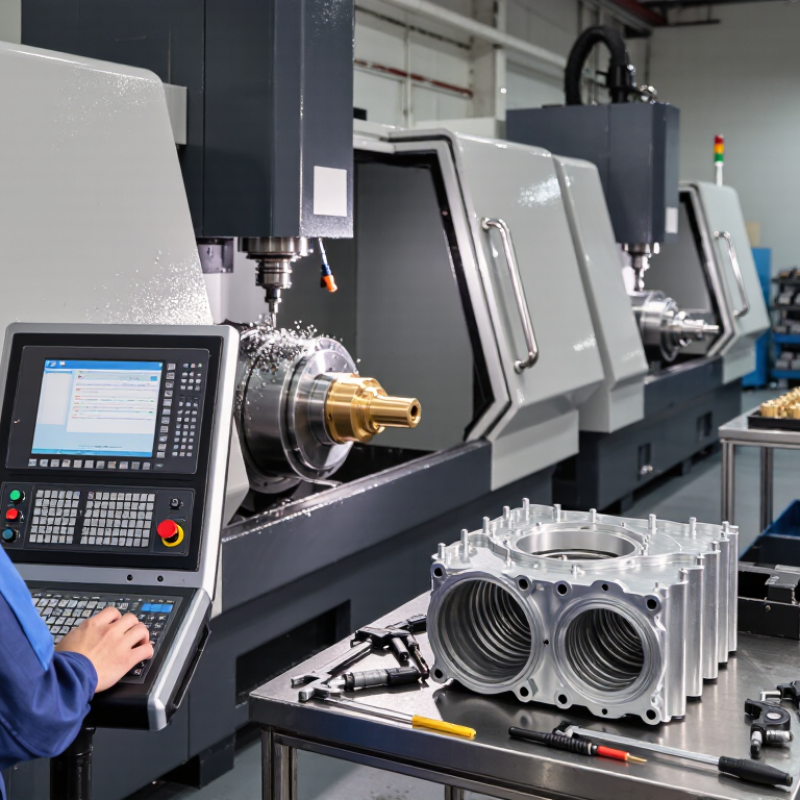
CNC metal machining gives global buyers a practical route to tight, repeatable dimensions. Under suitable conditions, experienced machinists can hold tolerances down to ±0.01 mm on selected features. That level matters when a bearing bore, sealing face, or threaded connection must fit without excessive play. A small aluminum housing, for example, may require a controlled bore and flat mounting surface. The machine follows digital coordinates, while calibrated tools remove material in measured passes.
Precision does not come from the machine alone. Material stability, tool wear, temperature, fixturing, and cutting strategy all influence the final result. A ten-degree temperature change can affect metal dimensions, especially on larger parts. Reliable suppliers verify critical features with micrometers, height gauges, or coordinate measuring equipment. They should also provide inspection records linked to drawing requirements. Ask for that evidence.
±0.01 mm is not magic. It is a manufacturing target with conditions. Very small internal corners, deep cavities, and thin walls can challenge consistency. Some designs need wider tolerances to control cost and reduce distortion. This is where engineering review becomes valuable. A first design may look precise but still be difficult to inspect or machine. Revising datum points, wall thickness, or tolerance zones can improve reliability. Small details decide whether parts assemble smoothly across repeated orders.
QUICK LINKS
CONTACT US
Office: (+86) 755 23040566
Tel: (+86) 158 9965 5195
E-mail: sale@pcbledmodule.com
Skype: Hans@Rocket-PCB
Whatsapp: 86 1589965 5195
Office Address: 2207,Bid 4,He Gu Shan Hui Cheng,35#,Guang Tian RoYanluo street, Song Gang Town,518105 SHENZHENG, CHINA
Plant ADD.: No 69, Lianfeng North Road, Xianxi Area, ChangAn Town, Dongguan, China.


Copyright © 2025 Rocket PCB Solution Ltd. | All Rights Reserved Sitemap Friendship link: CNC machining heat sink