
English


Why Choose Unionwell automotive plunger switches? The answer begins with dependable sensing in demanding vehicle environments. A Unionwell automotive plunger switch can detect door closure, hood position, pedal movement, or seat adjustment. Its compact body fits limited spaces. Its plunger responds to controlled mechanical pressure.
Small component. Serious responsibility.
Automotive designers need more than a switch that works on a clean workbench. They need stable operation near vibration, dust, temperature changes, and repeated mechanical contact. Unionwell’s experience in micro switches and customized control components supports practical product selection. Engineers can review contact ratings, actuator movement, mounting dimensions, and terminal options before approval. These details help prevent mismatched parts during assembly.
Real testing still matters. A switch may perform well in a sample vehicle, yet behave differently after long cycling or poor alignment. That is why careful validation should include endurance testing, electrical load checks, environmental exposure, and installation review. Unionwell automotive plunger switch solutions can be considered for these evaluations, but performance depends on the selected model and application. This point deserves attention.
Reliable sourcing also involves communication. Clear drawings, responsive technical support, and consistent production records can reduce uncertainty for purchasing and engineering teams. Unionwell’s manufacturing background offers a foundation for customized automotive switch requirements. However, no supplier should replace application-specific verification. The strongest choice combines proven construction, accurate specifications, and honest testing results. That balance helps automotive manufacturers build safer, more consistent systems without adding unnecessary complexity.
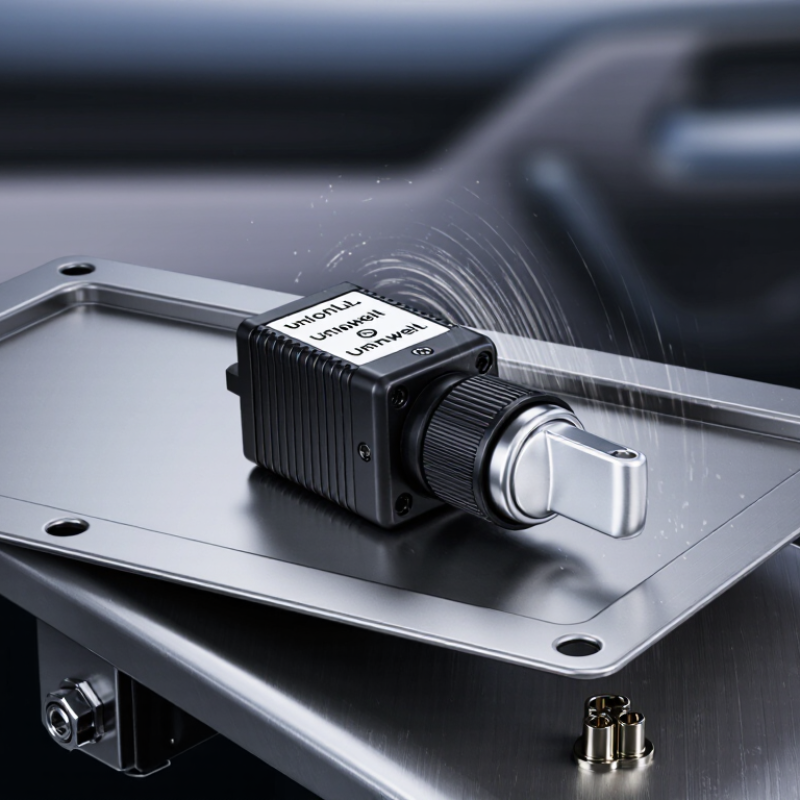
Automotive plunger switches are compact electromechanical sensors with a spring-loaded button. A door, hood, trunk, or pedal presses the plunger during movement. The switch then opens or closes an electrical circuit. This simple action can control interior lights, warning signals, alarm inputs, or start-permission systems.
Their value becomes clearer at production scale. The International Organization of Motor Vehicle Manufacturers reported more than 93 million vehicles produced worldwide in 2023. Each vehicle may use several position-detection switches. Therefore, consistent contact pressure and stable terminals matter. ISO 16750 also identifies temperature, vibration, humidity, and electrical loads as important vehicle testing conditions. A plunger switch must survive more than ordinary garage use.
Tips: Check the actuator length before installation. Confirm the normal-open or normal-closed circuit. Keep the mounting area free from dust and water. A loose bracket can create intermittent signals. Small errors matter.
In practical inspections, a switch may work perfectly on a clean workbench. It can still fail after months of vibration or repeated pressing. That is the part engineers should question. Look for sealed housings, corrosion-resistant terminals, and a defined operating force. Do not judge quality only by appearance. Measure continuity while moving the plunger slowly. A brief signal drop often reveals a weak contact or poor alignment. Reliability depends on the switch and its surrounding installation.
QUICK LINKS
CONTACT US
Office: (+86) 755 23040566
Tel: (+86) 158 9965 5195
E-mail: sale@pcbledmodule.com
Skype: Hans@Rocket-PCB
Whatsapp: 86 1589965 5195
Office Address: 2207,Bid 4,He Gu Shan Hui Cheng,35#,Guang Tian RoYanluo street, Song Gang Town,518105 SHENZHENG, CHINA
Plant ADD.: No 69, Lianfeng North Road, Xianxi Area, ChangAn Town, Dongguan, China.


Copyright © 2025 Rocket PCB Solution Ltd. | All Rights Reserved Sitemap Friendship link: CNC machining heat sink

