
English


Industrial Printing Systems are changing how manufacturers mark, decorate, and identify products at scale. A production line may print a crisp serial number onto a metal component, then apply a variable code to packaging minutes later. That flexibility matters. Grand View Research estimated the global industrial printing market at about $19.7 billion in 2023 and projected a 10.3% compound annual growth rate from 2024 to 2030. This is a market forecast, not a guarantee that every investment will pay off.
The shift reflects real production needs: shorter runs, changing designs, traceability, and less dependence on separate tooling. Benny Landa, founder of Landa Digital Printing, captured the wider transformation: “Everything that can become digital, will become digital.” His observation is relevant, but digital equipment is not automatically the right choice. Still, measure carefully. Buyers should compare print speed, substrate compatibility, ink or consumable costs, maintenance access, and integration with existing workflows. A machine that prints beautifully in a demonstration may behave differently during an eight-hour shift. That detail is easy to overlook. For operations managers, the strongest case for Industrial Printing Systems is practical: consistent output, adaptable production, and measurable gains in workflow efficiency. The best decision begins with a real production sample, verified supplier specifications, and a clear cost-per-part calculation.
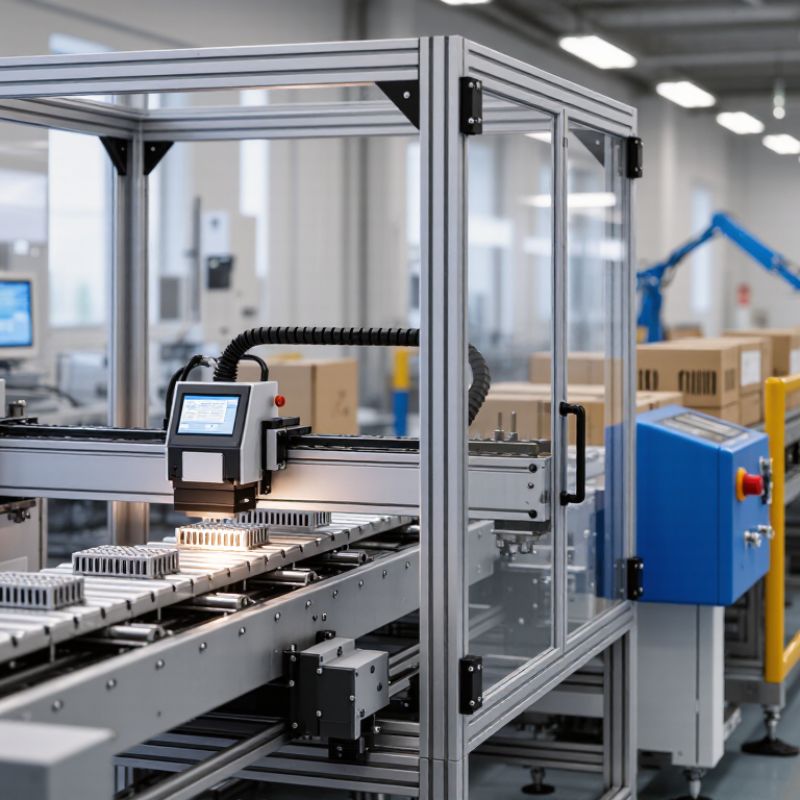
Industrial printing systems are production tools, not simply larger office printers. They apply text, graphics, codes, or patterns directly to materials such as cartons, plastic film, metal, textiles, and building products. A typical line may combine a printer, material feeder, curing or drying unit, inspection camera, and control software. The exact setup depends on the substrate, line speed, print durability, and required detail. Some systems print variable data, such as batch codes, on moving packages; others decorate broad surfaces in repeatable runs.
The definition is not perfectly tidy. Industrial printing can include digital inkjet, screen, flexographic, and other processes when they serve manufacturing or high-volume production. The choice changes cost, setup time, color range, and maintenance needs.
Smithers’ The Future of Digital Print for Packaging to 2029 estimates that digital packaging print will grow from about $22.3 billion in 2024 to $36.9 billion in 2029. That forecast concerns packaging, not every industrial-printing application, but it signals expanding use of short runs and customized designs.
On a factory floor, small details matter. Ink must adhere after handling, and a barcode must remain readable after the surface is curved or coated. A fast printer is not automatically a good fit; downtime, waste, and inspection failures can erase speed gains. I would test the actual material and production conditions before choosing a system. It is easy to overlook that step.
QUICK LINKS
CONTACT US
Office: (+86) 755 23040566
Tel: (+86) 158 9965 5195
E-mail: sale@pcbledmodule.com
Skype: Hans@Rocket-PCB
Whatsapp: 86 1589965 5195
Office Address: 2207,Bid 4,He Gu Shan Hui Cheng,35#,Guang Tian RoYanluo street, Song Gang Town,518105 SHENZHENG, CHINA
Plant ADD.: No 69, Lianfeng North Road, Xianxi Area, ChangAn Town, Dongguan, China.


Copyright © 2025 Rocket PCB Solution Ltd. | All Rights Reserved Sitemap Friendship link: CNC machining heat sink

