Why Choose a Hot Melt Roller Coating Machine?
Choosing a Hot Melt Roller Coating Machine can improve coating consistency, production speed, and material control. It is especially useful for manufacturers working with films, foils, fabrics, foams, and other continuous substrates. The machine heats adhesive into a stable liquid state. A metering roller then applies a controlled layer across the moving surface. This method can reduce overspray, limit material waste, and create a cleaner production area.
The real advantage appears during daily operation. Operators can adjust roller speed, coating pressure, temperature, and web tension. These controls help maintain uniform coverage when material conditions change. A clear coating line is easier to inspect. Small defects become visible before they affect a large production batch. Experienced teams also monitor adhesive viscosity and substrate temperature, not just machine settings. Good results depend on the complete process.
Still, no machine is perfect.
Different adhesives require different thermal ranges, roller surfaces, and application speeds. Excessive heat may damage sensitive materials or reduce adhesive performance. Insufficient heat can create uneven transfer and weak bonding. Proper installation, ventilation, guarding, and operator training remain essential. These practices support safer and more reliable production, while documented testing provides stronger evidence than assumptions.
In practical use, the best choice comes from matching machine capacity with product requirements. Buyers should evaluate coating width, output targets, cleaning needs, maintenance access, and energy consumption. Some trial and error remains. That is normal, but it should be measured carefully. With verified process data and experienced oversight, a Hot Melt Roller Coating Machine can become a dependable part of modern coating operations.
What Is a Hot Melt Roller Coating Machine?
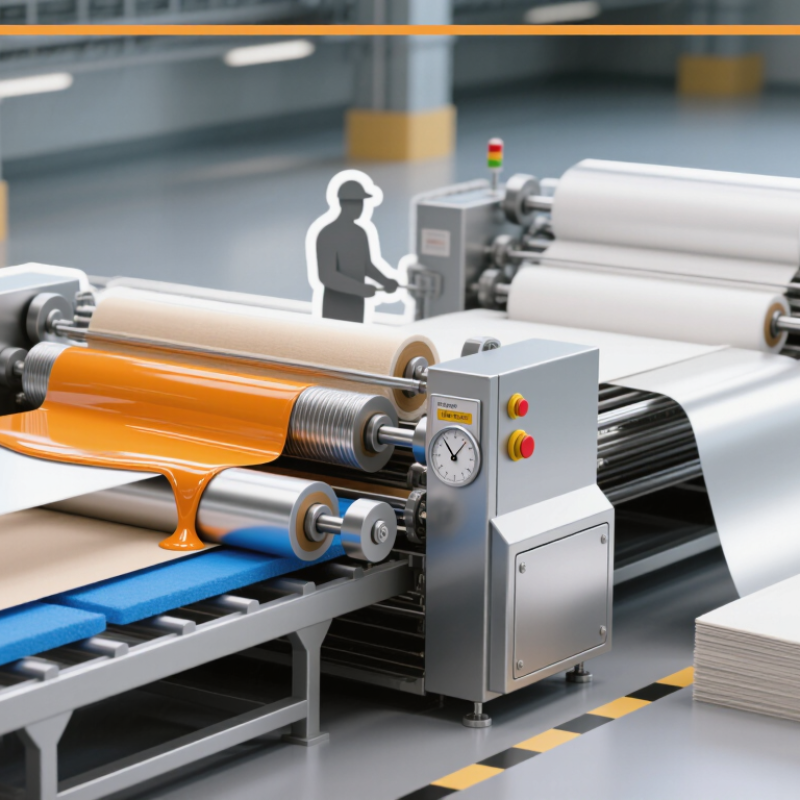
A hot melt roller coating machine applies a heated thermoplastic adhesive as a controlled film. Solid adhesive enters a heated tank and becomes fluid. A pump moves it toward a precision coating roller. The roller then transfers adhesive onto fabric, foam, film, foil, or other suitable substrates.
The process is continuous and highly adjustable. Operators can control temperature, roller speed, pressure, and coating width. These settings influence coat weight, bonding strength, and surface appearance. In practical use, a clean roller creates a smoother layer. A small temperature change can still cause uneven edges or adhesive strings. That detail is easy to underestimate.
This machine is often chosen for its fast production and low solvent exposure. It can reduce drying space because the adhesive solidifies as it cools. I have found that consistent substrate tension matters as much as machine settings. If the web shifts slightly, the coating may drift from its target position. Regular checks should include film thickness, roller temperature, and peel performance. Test samples are essential. The first result may look perfect, yet fail after cooling or repeated flexing. Good operation depends on measured adjustments, careful maintenance, and documented process conditions. Not every material responds equally. Trial runs remain necessary.
How Does a Hot Melt Roller Coating Machine Work?
A hot melt roller coating machine applies adhesive without solvents. It uses controlled heat, rotating rollers, and precise pressure. Solid adhesive enters a heated reservoir, where it becomes a uniform liquid. A metering roller then transfers a measured film onto the substrate. The coating thickness depends on roller speed, temperature, gap, and material viscosity.
As the web passes through the nip, pressure spreads the adhesive evenly across its surface. The coated material may bond immediately with another layer, or cool before further processing. In practice, the first pass is rarely perfect. A small temperature drift can create streaks, weak edges, or excessive coating weight. Operators should check the coating visually and measure its thickness regularly. These simple checks improve consistency and reduce unnecessary material waste. The machine also needs stable web tension. Uneven tension can wrinkle thin films or shift the coating position.
Tips: Warm the system gradually. Confirm the adhesive’s recommended processing range before production. Clean roller surfaces after shutdown, because hardened residue can affect the next run. Keep hands away from moving rollers and follow site safety procedures. Do not assume a higher temperature improves bonding. Excessive heat may damage sensitive substrates or shorten adhesive performance. Recording speed, pressure, and temperature settings helps operators repeat successful results, although every material may still require careful adjustment.
Why Choose a Hot Melt Roller Coating Machine?
A hot melt roller coating machine applies adhesive in a controlled, solvent-free process. The adhesive is heated until it reaches a stable coating viscosity, transferred through a heated roller, and then cooled to form an immediate bond.
The representative profile shows how solid hot melt adhesive is heated from room temperature to a typical coating range of approximately 130–180°C, depending on the adhesive formulation. After transfer to the substrate, the adhesive cools rapidly, enabling fast handling, consistent coating weight, and solvent-free production.
What Materials and Applications Does It Support?
A hot melt roller coating machine supports many adhesive and substrate combinations. Common adhesive choices include EVA, polyolefin, polyamide, and reactive polyurethane formulations. Each requires suitable melting temperature, viscosity, and application speed. The machine can coat paper, cardboard, nonwoven fabric, textiles, foam, plastic film, foil, wood veneer, and thin insulation layers.
Applications range from laminating and composite assembly to packaging, furniture panels, mattress components, labels, and protective materials. A controlled roller can create a smooth adhesive layer, even on wide surfaces. It also reduces liquid handling and shortens drying time. However, it is not a universal solution. Very heat-sensitive films may shrink, curl, or lose surface quality. Poorly matched viscosity can cause streaks, edge build-up, or uneven bonding. Production trials remain essential, especially when the substrate contains dust, moisture, or recycled fibers.
Tips: Start with a small coating trial. Measure coat weight across the web, not only at the center. Check peel strength after cooling and again after 24 hours. Clean the roller before changing adhesive types. Operators should record temperature, line speed, and pressure. Small records matter. A perfect setting on one material may fail on another.
What Are Its Main Advantages in Production?
Why Choose a Hot Melt Roller Coating Machine?
What Are Its Main Advantages in Production?
A hot melt roller coating machine applies adhesive through a heated roller and controlled nip gap. The process is steady, clean, and easy to monitor. Operators can adjust coating weight, roller speed, and temperature during production. These controls help maintain consistent bonding across films, foams, textiles, and laminates.
Production speed is a major advantage. Hot melt adhesive does not need solvent evaporation, so coated materials can move directly to the next stage. This reduces drying space and shortens handling time. Less liquid waste may also improve material efficiency. A uniform roller surface can create smooth coverage, even on wide rolls. Small changes matter here. A slight temperature shift can alter viscosity and coating thickness.
From practical operation, the machine responds quickly when settings are correct. Clear temperature zones, guarded rollers, and automatic shutoff features support safer work. Regular cleaning prevents cured adhesive from forming rough spots on the roller. Still, it is not a magic solution. Poor substrate tension can cause wrinkles, while excessive heat may damage sensitive materials. I have found that trial runs are essential. Test samples should check peel strength, appearance, coating weight, and bond stability after storage. Maintenance records also help identify gradual changes before they become production defects.
How Should Businesses Evaluate and Select a Suitable Model?
Selecting a hot melt roller coating machine should begin with the product, not the catalogue. Record adhesive viscosity, melting range, coating weight, web width, and target speed. A laboratory trial often reveals problems that brochures hide. The roller may look stable, yet edge build-up can waste material.
Grand View Research projects the hot melt adhesives market to grow at about 6% annually from 2024 to 2030. That growth does not justify buying the fastest machine. Match capacity to real orders. A model running at 80 metres per minute may be inefficient if your normal production is 25 metres per minute. Ask for coating-weight tolerance, temperature uniformity, start-up time, and changeover data from comparable applications.
Energy and maintenance also deserve measured attention. The U.S. Department of Energy reports that industrial systems can reduce energy use through better controls and operating practices. Therefore, compare heater insulation, standby settings, drive efficiency, and recovery time. Check whether operators can clean the roller without lengthy dismantling. Spare-part availability matters too. Ask for service response times in writing.
Do not ignore the awkward details. A narrow trial roll may not represent full-width production. Humidity, adhesive ageing, and substrate tension can change results. Request test samples from your own materials. Measure coating weight across the web, not only at the centre. A slightly slower machine with repeatable control may outperform a faster model. This is easy to underestimate.