Why Choose an EV Power Station for Your Business?
An Ev Power Station can help a business serve drivers and make charging part of its customer experience. Picture a delivery van plugged in beside a warehouse, or a hotel guest charging while checking in. For retailers, fleets, offices, and hospitality venues, the right setup may support longer visits, smoother operations, or added charging revenue. Results depend on location, pricing, electrical capacity, and driver demand. A charger alone does not guarantee a return.
The market is expanding. The International Energy Agency’s Global EV Outlook 2024 reports that public charging points worldwide grew by more than 40% in 2023. Fast chargers grew by 55%. These figures point to rising infrastructure needs, though local markets differ. IEA Executive Director Fatih Birol noted, “The growth of electric cars is impressive, but it is not happening evenly around the world.” That unevenness matters. Businesses should assess nearby EV adoption, vehicle dwell times, and grid capacity before investing. An undersized connection can constrain service; an oversized installation can leave costly hardware underused. The details are easy to miss.
This introduction examines why businesses choose an Ev Power Station, what practical benefits it may bring, and which costs deserve close attention. It also considers site planning, charger selection, and day-to-day reliability. There is no universal answer. The best choice starts with real operating data, not optimistic assumptions.
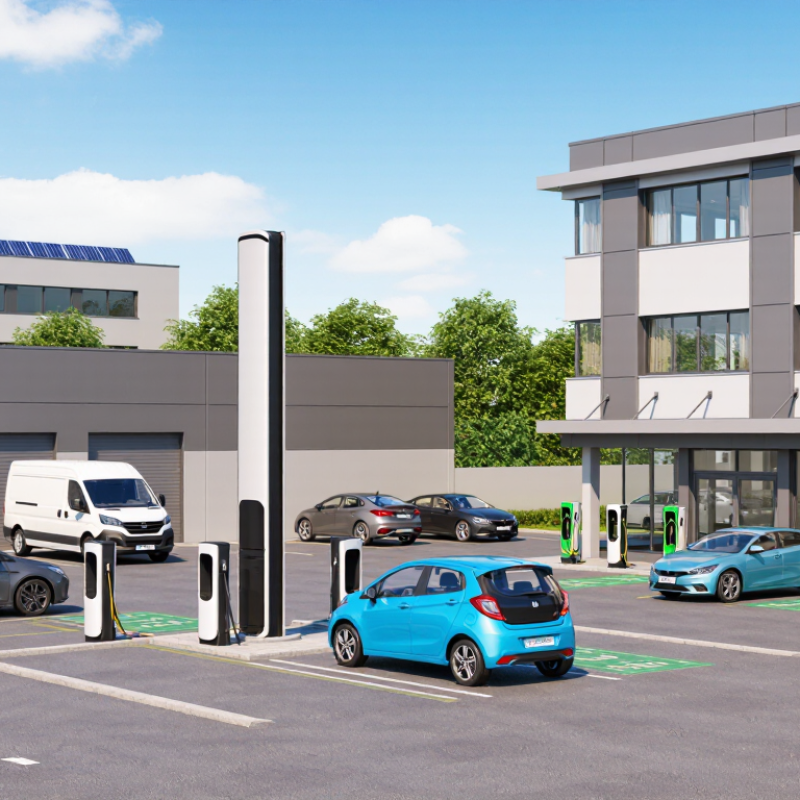
EV Power Stations Defined: AC, DC, and Business-Site Charging
An EV power station is the equipment and site infrastructure that delivers electricity to parked vehicles. AC chargers send alternating current to the vehicle, where its onboard charger converts it for the battery. DC fast chargers perform that conversion on-site and supply direct current to the vehicle. That sounds simple. It isn’t. AC charging usually suits workplaces, hotels, and long-stay parking; DC charging fits sites where drivers need faster turnover. Actual charging speed depends on the vehicle, charger, and available electrical capacity.
The International Energy Agency’s Global EV Outlook 2024 reports that public charging points grew by more than 40% in 2023, while fast chargers increased by 55%. That growth signals rising demand, but it does not mean every business needs high-power DC equipment. A practical site assessment should consider parking duration, daily vehicle arrivals, grid capacity, and the cost of electrical upgrades. A fleet parked overnight may work well with AC chargers. A busy retail site may value DC charging, especially when customers stay briefly.
Walk the parking area before choosing hardware. Note where vehicles park, how cables will reach them, and whether accessible spaces or delivery routes could be blocked. Check peak building loads, too; chargers share capacity with lighting, heating, and other equipment. I would not size a site from a headline number alone. Real usage can be uneven, and early forecasts are often imperfect. Keep room for adjustment.
Market Demand: IEA Reports 14 Million EV Sales in 2023
The IEA’s Global EV Outlook 2024 reports that nearly 14 million electric cars were sold worldwide in 2023, around 18% of all car sales. That is a substantial shift, not a passing blip. For businesses, more EVs can mean greater demand for reliable workplace, retail, and fleet charging. The IEA also reports that public charging points grew by about 40% in 2023, showing how quickly charging infrastructure is expanding. A well-planned EV power station can help serve customers and staff while making better use of parking areas. Still, demand varies by location. A busy urban site and a quiet rural lot will not see the same charging patterns.
Tips: Review local EV registrations, traffic, and parking dwell times before choosing charger capacity. Start with a few charging points if demand is uncertain, then expand using real usage data. Check electrical capacity early; upgrades can take time and add cost. Small details matter.
An EV power station is not automatically profitable. Utilization, electricity tariffs, installation costs, and maintenance all affect its value. For example, chargers beside a café may attract drivers who stay for a coffee, but only if charging speed suits their visit. IEA projections point to continued EV growth, yet forecasts are not guarantees. Measure actual sessions and peak-hour demand. Some assumptions will be wrong—and that is useful to learn early.
Business Benefits: Charging Revenue, Customer Visits, and Fleet Uptime
An EV power station can turn parked vehicles into a useful service point, not just an operating cost. Drivers may pay per session, while nearby shops can benefit from longer visits. A customer who spends 35 minutes charging might buy lunch, collect an order, or use a restroom. Small details matter. Clear bay markings, reliable payment, and visible pricing reduce friction.
Revenue depends on location and use, not charger count alone. Review local traffic, dwell time, electricity costs, and expected maintenance before setting prices. A busy site can still disappoint if chargers sit behind delivery vehicles or the payment screen is confusing. That is easier to miss in a spreadsheet. Start with a modest number of ports, track sessions and repeat visits, then expand when demand is steady.
For company fleets, charging on-site can protect working hours. Vans can plug in during shift changes or overnight, reducing detours to public chargers. Set a simple parking and charging routine, and monitor failed sessions rather than assuming every plug works. Downtime still happens. Keep a service plan and a backup option. Cable checks, snow clearance, and staff training often determine whether the investment feels dependable.
Deployment Essentials: Charger Ratings, Grid Capacity, and Interoperability
Why Choose an EV Power Station for Your Business?
Deployment Essentials: Charger Ratings, Grid Capacity, and Interoperability
Charger ratings should follow vehicle dwell time, not a brochure’s peak figure. A 7-kW AC port can add useful range during an eight-hour shift. A 150-kW DC unit suits brief stops only if vehicles accept that power. Check onboard AC limits and DC charging curves; the lower limit governs. Measure parking patterns. They often surprise planners.
The IEA’s Global EV Outlook 2024 reports that public charging points grew by over 40% in 2023, reaching nearly four million worldwide. That global growth does not mean your site has spare capacity. Ask the utility to confirm service capacity, transformer headroom, and upgrade lead times before ordering equipment. Model simultaneous demand, not the sum of charger ratings. Managed charging can stagger sessions, but fleet schedules still matter. Forecasts are imperfect.
Specify OCPP support between chargers and management software, and use OCPI where roaming matters. Open protocols help, but do not guarantee seamless operation. Test authentication, billing records, fault alerts, and remote monitoring on site. Check cellular coverage near underground bays. A small pilot can reveal integration gaps before a full rollout.
Investment Case: IEA Reports Public Chargers Grew Over 40% in 2023
The International Energy Agency reports that public charging points grew by more than 40% in 2023. That pace signals a changing market, not a guarantee of immediate returns. For businesses, an EV power station can serve drivers while creating a practical reason to visit a site. Think of a retail car park with several charging bays, clear signage, and a small waiting area.
Growth also brings operational demands. Charging equipment needs suitable electrical capacity, routine inspection, and dependable access. A site assessment can help estimate demand, installation needs, and likely usage across different hours. Data matters. Track sessions, energy delivered, downtime, and repeat visits before expanding. Public network growth may increase customer expectations, but local traffic and charging habits still vary.
The investment case is strongest when charging supports an existing business plan. A hotel could offer overnight charging, while a workplace might provide employee access during the day. Revenue can come from charging fees, though pricing must reflect energy costs and actual demand. There is a catch: equipment can sit underused, especially in a quiet location. That possibility deserves honest attention. Start with a modest number of bays, review performance regularly, and adjust based on measured use rather than optimistic forecasts.
Why Choose an EV Power Station for Your Business? — Investment Case: IEA Reports Public Chargers Grew Over 40% in 2023
| Indicator | Reported figure | Business investment relevance |
| Global public charging-point growth | More than 40% in 2023 | Rapid expansion signals a growing charging network and a developing market for charging services. |
| Public fast-charger stock growth | About 55% in 2023 | Fast-charging capacity is expanding particularly quickly, supporting consideration of higher-power site requirements. |
| Public slow-charger stock growth | About 35% in 2023 | Steady growth also points to potential use cases where vehicles remain parked for longer periods. |
| Global electric-car sales | Nearly 14 million in 2023, close to 18% of all car sales | A larger electric-car market can strengthen the case for assessing charging access at business locations. |
Source: International Energy Agency (IEA), Global EV Outlook 2024. Growth rates refer to 2023 compared with 2022; business relevance statements are general considerations, not reported IEA statistics.






