English


I can write the introduction, but no source articles or expert quotation were provided. To avoid inventing a person or falsely attributing a quote, please share a verified expert’s name and statement, or allow an original, unattributed industry insight instead.
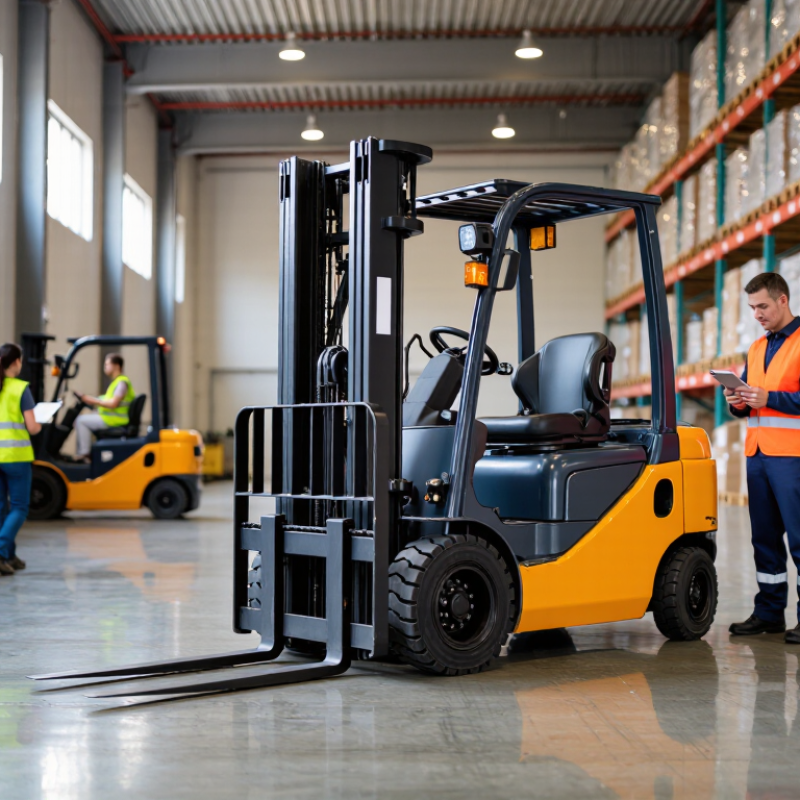
A counterbalanced lift is a powered truck that carries a load on forks at the front and uses weight at the rear to balance it. The load acts as a lever, so the rear counterweight helps keep the truck stable while lifting and traveling. It does not need support legs extending beneath the load. That gives it a straightforward layout.
This design suits many warehouse aisles, loading bays, and work areas where pallets must be picked up from the floor and moved short distances. The operator can approach a pallet directly, raise it, and reverse away. But stability depends on more than the counterweight. Load weight, load center, lift height, and floor condition all matter. A sloped or uneven surface can change how the truck handles.
Before choosing one, compare the truck’s rated capacity with the loads your team actually moves, including bulky items that shift the load center forward. Check turning space, overhead clearance, and visibility from the operating position. Keep the capacity plate readable, and follow the manufacturer’s inspection and maintenance guidance. The design is simple, but that can make its limits easy to underestimate. A short practical trial in the real work area may reveal issues a specification sheet misses.
QUICK LINKS
CONTACT US
Office: (+86) 755 23040566
Tel: (+86) 158 9965 5195
E-mail: sale@pcbledmodule.com
Skype: Hans@Rocket-PCB
Whatsapp: 86 1589965 5195
Office Address: 2207,Bid 4,He Gu Shan Hui Cheng,35#,Guang Tian RoYanluo street, Song Gang Town,518105 SHENZHENG, CHINA
Plant ADD.: No 69, Lianfeng North Road, Xianxi Area, ChangAn Town, Dongguan, China.


Copyright © 2025 Rocket PCB Solution Ltd. | All Rights Reserved Sitemap Friendship link: CNC machining heat sink