
English


A Shipping Tarp is more than a sheet pulled over a load. It is a practical barrier between cargo and the changing conditions of a journey. On a flatbed, it can help shield lumber from rain, keep dust off equipment, or reduce direct sun exposure on boxed goods. The exact protection depends on the tarp’s material, condition, and fit. No cover can make every load safe in every kind of weather.
Picture a tarp stretched over a pallet of building supplies. Its edges are secured, the fabric lies close to the load, and there are no loose corners snapping in the wind. Those details matter. A poorly fitted tarp may flap, shift, or collect water, while worn seams and damaged grommets can weaken its performance. Before a trip, check the tarp and tie-down points, and follow the product maker’s instructions. Small checks help.
Shipping tarps come in different weights, sizes, and materials, so the right choice depends on the cargo and route. A breathable cover may suit some items, while other loads need stronger resistance to moisture or abrasion. It is tempting to think one heavy tarp solves everything. It does not. Understanding what a shipping tarp is used for—and what it cannot do—helps people protect cargo more thoughtfully, reduce avoidable damage, and choose a cover that fits the job.
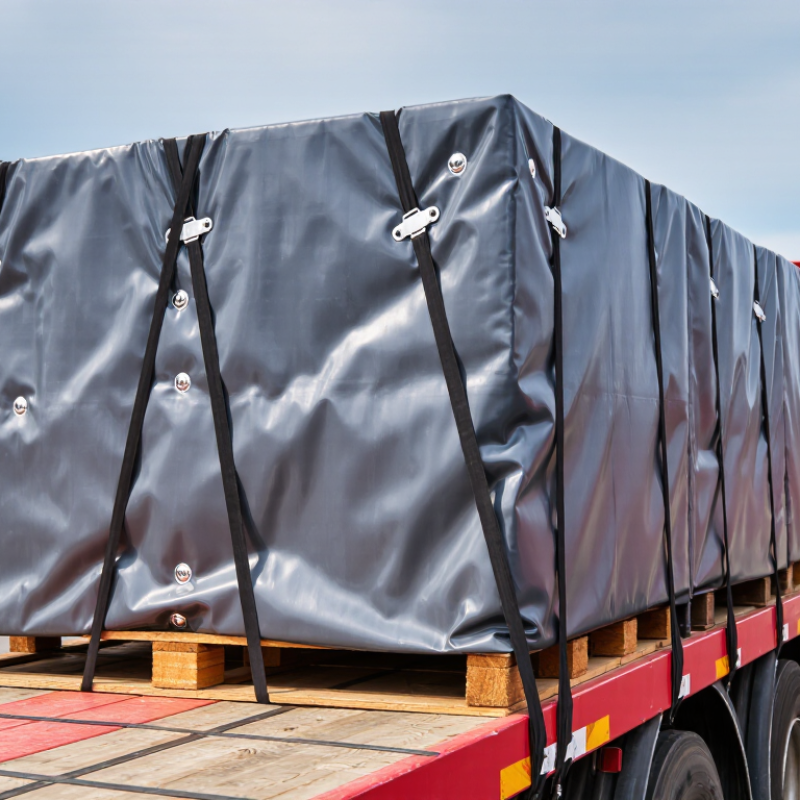
Shipping tarps commonly cover lumber, plywood, pipes, and other building materials moving by truck. They help shield loads from rain, road spray, dust, and sunlight. Steel beams and bundled metal stock may also be tarped to reduce exposure during transit. For machinery, a tarp can protect exposed surfaces from grime and light moisture. It should not press against delicate parts or trap condensation. Palletized goods and bagged materials may need coverage too, especially when packaging could tear or absorb water. Hay bales and some agricultural loads are covered in suitable conditions, though airflow matters. One detail is easy to miss: a tarp does not secure cargo. Proper blocking and tie-downs still matter.
Tips: Choose a tarp large enough to cover the load without dragging on the road. Check its condition before use; small tears can spread under wind pressure. Keep sharp corners from rubbing through the fabric with padding. Tighten straps evenly, then recheck them after the load settles. For damp cargo, consider whether trapped moisture could cause damage. Tarps help, but they are not a perfect seal.
QUICK LINKS
CONTACT US
Office: (+86) 755 23040566
Tel: (+86) 158 9965 5195
E-mail: sale@pcbledmodule.com
Skype: Hans@Rocket-PCB
Whatsapp: 86 1589965 5195
Office Address: 2207,Bid 4,He Gu Shan Hui Cheng,35#,Guang Tian RoYanluo street, Song Gang Town,518105 SHENZHENG, CHINA
Plant ADD.: No 69, Lianfeng North Road, Xianxi Area, ChangAn Town, Dongguan, China.


Copyright © 2025 Rocket PCB Solution Ltd. | All Rights Reserved Sitemap Friendship link: CNC machining heat sink

