
English


A Poe Switch combines network connectivity and electrical power through one Ethernet cable. It sends data to devices such as wireless access points, IP cameras, VoIP phones, and smart lighting systems. The result is cleaner installation. Fewer cables. Less dependence on nearby wall outlets.
The process is carefully controlled. A powered device, or PD, first identifies itself to the switch. The switch, known as the power sourcing equipment, then checks compatibility before supplying power. Standards such as IEEE 802.3af, 802.3at, and 802.3bt define different power levels. A Cat5e or better cable may carry both traffic and energy, although distance, cable quality, heat, and total power budgets still matter. A larger switch does not always deliver more useful power.
Peter Jones, an Ethernet Alliance leader and Cisco Distinguished Engineer, has described PoE as delivering “power and data over the same cable.” That short explanation captures the main advantage, but real deployments require more judgment. Installers must calculate the switch budget, check each device’s wattage, and consider backup power during outages. A camera may work on a small desktop switch, yet several cameras can quickly exceed its capacity. Heat can also become an overlooked problem in crowded racks.
This guide explains what a Poe Switch is, how detection and power negotiation work, and where the technology fits. It also examines common standards, installation choices, and practical limitations. PoE is convenient. It is not magic. Careful planning still decides whether a network remains stable, safe, and expandable.
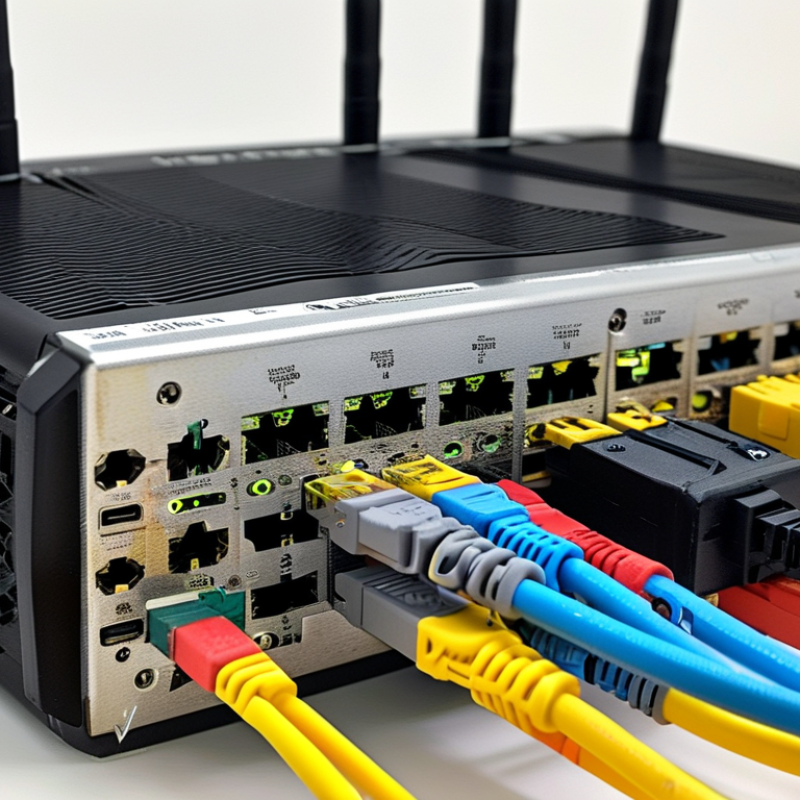
A Power over Ethernet (PoE) switch is a network switch that sends data and electrical power through one Ethernet cable. It connects devices such as security cameras, wireless access points, and VoIP phones without separate power adapters. This reduces cable clutter and can simplify installation in ceilings, corridors, and outdoor cabinets.
The switch acts as power-sourcing equipment, while the connected device is the powered device. Before supplying power, it checks whether the device supports PoE. It then negotiates a safe power level. IEEE 802.3af provides up to 15.4 watts per port, while 802.3at raises that figure to 30 watts. The newer 802.3bt standard can deliver up to 90 watts, depending on the equipment and cable conditions. The process is controlled.
According to IoT Analytics’ State of IoT report, connected IoT devices reached about 18.8 billion worldwide in 2024. That growth increases demand for simpler edge connectivity. In practical use, one cable can carry a camera stream while powering the camera’s infrared LEDs at night. However, real installations are less perfect. Cable length, temperature, connector quality, and power budgets can reduce performance. A switch may advertise high output, yet its total capacity can limit every port operating together. Engineers should check the standard, available wattage, cable category, and device requirements before deployment. Mistakes happen. Reliability depends on the entire link, not the switch alone.
| Data Dimension | Typical Value or Standard | Description |
|---|---|---|
| Definition | Power over Ethernet switch | A network switch that transmits data and electrical power through the same twisted-pair Ethernet cable. |
| Primary Function | Data switching plus power delivery | It forwards Ethernet traffic between network devices while supplying power to compatible endpoints such as access points, IP cameras, and VoIP phones. |
| Common PoE Standard | IEEE 802.3af | Provides up to 15.4 W from the switch port, with up to approximately 12.95 W available to the powered device after cable losses. |
| Higher-Power Standard | IEEE 802.3at, PoE+ | Provides up to 30 W from the switch port and up to approximately 25.5 W to the powered device. |
| Four-Pair PoE Standard | IEEE 802.3bt | Uses all four twisted pairs to support higher power levels, commonly up to 60 W or 90–100 W at the source, depending on the operating type and equipment design. |
| Power Classification | Classes 0–8 | The switch and powered device negotiate an appropriate power level so that the endpoint receives only the power it requires. |
| Typical Ethernet Cable | Category 5e or better | Standard balanced twisted-pair copper cabling, including Cat 5e, Cat 6, and Cat 6A, can carry both Ethernet data and PoE power when properly installed. |
| Standard Cable Distance | Up to 100 m per Ethernet channel | The usual maximum includes up to 90 m of permanent horizontal cabling and up to 10 m of patch cords. Longer distances require approved extension methods or additional network equipment. |
| Power Negotiation | Detection and classification | A standards-compliant switch checks whether a connected device is PoE-compatible before applying power, helping protect non-PoE equipment. |
| Power Budget | Total available PoE wattage | The power budget is the maximum combined output available to all PoE ports. It should exceed the expected device load, including an appropriate safety margin. |
| Port Speed | 100 Mb/s to 10 Gb/s | PoE switches may support Fast Ethernet, Gigabit Ethernet, multi-gigabit Ethernet, or higher uplink speeds. Power delivery and data speed are separate specifications. |
| Common Powered Devices | IP cameras, wireless access points, VoIP phones | PoE can also power intercoms, access-control devices, sensors, LED lighting, and other compatible network endpoints. |
| Managed Features | VLAN, QoS, monitoring, redundancy | Managed models can separate traffic, prioritize voice or video, monitor power consumption, schedule ports, and support link or power-management functions. |
| Installation Benefit | One cable for data and power | PoE reduces the need for separate power outlets and adapters near endpoint devices, simplifying installation and centralizing power management. |
| Key Selection Criteria | Standard, port count, speed, and power budget | Choose a switch according to endpoint power requirements, total wattage, network bandwidth, cable distance, management needs, and installation environment. |
QUICK LINKS
CONTACT US
Office: (+86) 755 23040566
Tel: (+86) 158 9965 5195
E-mail: sale@pcbledmodule.com
Skype: Hans@Rocket-PCB
Whatsapp: 86 1589965 5195
Office Address: 2207,Bid 4,He Gu Shan Hui Cheng,35#,Guang Tian RoYanluo street, Song Gang Town,518105 SHENZHENG, CHINA
Plant ADD.: No 69, Lianfeng North Road, Xianxi Area, ChangAn Town, Dongguan, China.


Copyright © 2025 Rocket PCB Solution Ltd. | All Rights Reserved Sitemap Friendship link: CNC machining heat sink