English


A Non Cartridge Mechanical Seal is a component-style sealing assembly installed piece by piece on rotating equipment. Unlike a cartridge seal, it does not arrive as one preassembled unit. The installer positions the stationary seat, rotating face, springs, gland, and related parts directly on the pump shaft. This design appears in water pumps, chemical-process equipment, mixers, and general industrial machinery. Its simpler structure can reduce purchase costs and fit older equipment. However, it demands careful measurement and disciplined installation.
Small details matter. A scratched seal face can create leakage within hours. Incorrect spring compression may cause overheating, while a misaligned shaft can damage the elastomer. Experienced technicians usually inspect shaft runout, check the stuffing-box dimensions, and clean every contact surface before assembly. They also confirm material compatibility with the pumped fluid, temperature, pressure, and speed. Manufacturer instructions remain essential because dimensions and setting procedures vary between models.
Not always easy.
This article explains how a Non Cartridge Mechanical Seal works, where it performs well, and why installation quality affects service life. It also compares component seals with cartridge designs, including maintenance demands, operating risks, and typical failure clues. Some recommendations may seem obvious, but real maintenance work often exposes overlooked problems. A seal can look correctly installed and still fail because of dry running, vibration, or poor flushing. Reliable selection therefore combines equipment records, field experience, technical data, and honest review of previous failures. This practical approach supports safer decisions and more predictable pump performance.
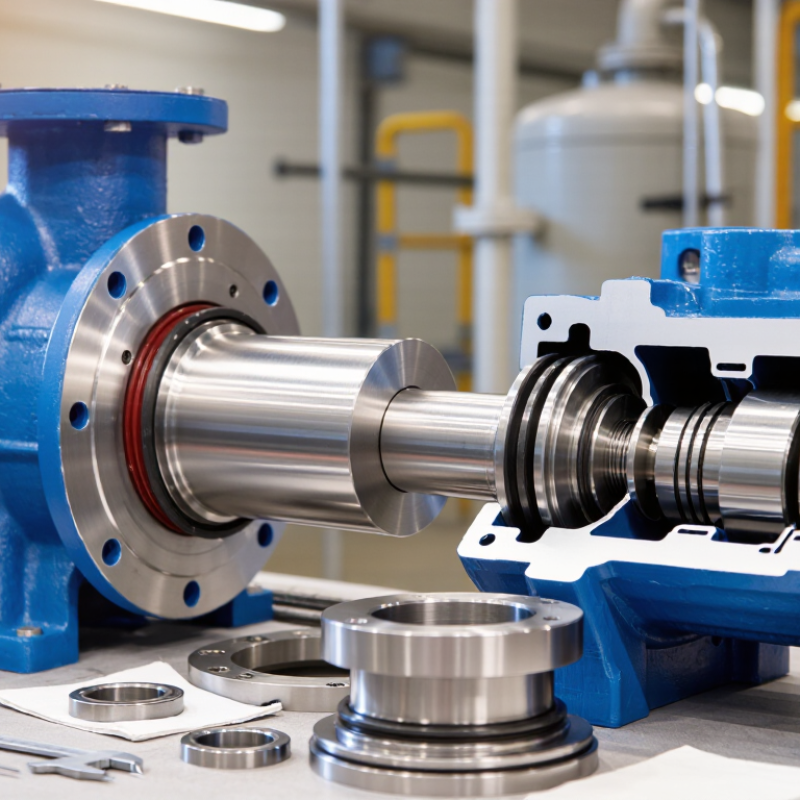
A non-cartridge mechanical seal is a shaft-sealing assembly installed piece by piece inside rotating equipment. Its main parts include a stationary face, rotating face, springs, elastomers, and a gland. Unlike a cartridge seal, these components are not preassembled on a sleeve. Technicians must position and adjust each part directly on the pump shaft.
Its core purpose is simple: control fluid leakage where a rotating shaft passes through a pump casing. The two polished seal faces press together with carefully controlled force. A thin liquid film forms between them, reducing friction while limiting leakage. The seal also helps protect bearings, couplings, and nearby surfaces from process fluid.
Installation demands patience. Shaft dimensions, face condition, spring placement, and gland alignment all matter. Even a small scratch or misplaced O-ring can cause early failure.
One detail is easy to underestimate. Cleanliness matters.
In field maintenance, non-cartridge seals remain useful because they can suit many equipment designs and may cost less initially. However, they require stronger installation skills and accurate measurements. They are not automatically inferior. A poorly fitted seal is the real problem. Yet, the design leaves less room for rushed work, and that limitation deserves honest consideration. Temperature, pressure, fluid type, and shaft movement must also match the seal’s operating range.
QUICK LINKS
CONTACT US
Office: (+86) 755 23040566
Tel: (+86) 158 9965 5195
E-mail: sale@pcbledmodule.com
Skype: Hans@Rocket-PCB
Whatsapp: 86 1589965 5195
Office Address: 2207,Bid 4,He Gu Shan Hui Cheng,35#,Guang Tian RoYanluo street, Song Gang Town,518105 SHENZHENG, CHINA
Plant ADD.: No 69, Lianfeng North Road, Xianxi Area, ChangAn Town, Dongguan, China.


Copyright © 2025 Rocket PCB Solution Ltd. | All Rights Reserved Sitemap Friendship link: CNC machining heat sink