
English


A Truck Engine is more than a block of metal beneath the cab. It turns fuel or stored energy into the power that moves heavy loads, climbs grades, and keeps schedules. The right choice depends on payload, distance, terrain, maintenance access, and time spent idling. One detail is easy to miss: the same truck may work very differently across two routes.
The U.S. Environmental Protection Agency’s Inventory of U.S. Greenhouse Gas Emissions and Sinks tracks emissions from medium- and heavy-duty trucks, underscoring their importance in transport planning. The International Energy Agency’s Global EV Outlook 2024 also follows the expanding role of electric trucks. These reports point to a changing landscape, not a single winning design. Diesel remains common for demanding, long-haul work; gasoline and natural-gas engines serve selected applications; battery-electric powertrains can suit predictable routes with charging access. Hydrogen fuel-cell trucks are another developing option. Each has trade-offs.
Mike Roeth, executive director of the North American Council for Freight Efficiency, has emphasized matching vehicle technology to real fleet operations. Put plainly, choose for the duty cycle. That is a paraphrase, not a direct quotation. It matters because a specification sheet cannot show every cold morning, steep ramp, or missed charging window. The categories sound neat. Real fleets are messier. This guide explains how truck engines work, what types are available, and which practical questions help buyers compare them with care.
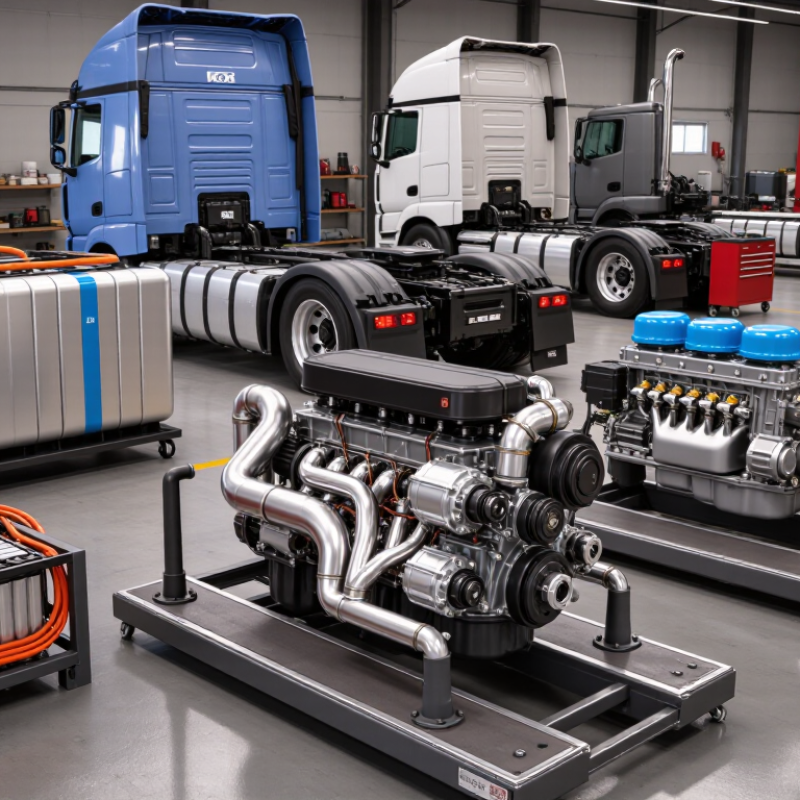
Engine displacement describes the combined volume swept by an engine’s pistons. It is often measured in liters or cubic inches. A larger displacement can move more air and fuel per cycle, but size alone does not determine how a truck performs. Turbocharging, engine design, and calibration also matter. The number is only one clue.
Torque is twisting force, measured in pound-feet or newton-meters. In a working truck, it helps the engine turn the drivetrain under load. You may notice its effect when pulling away with a loaded trailer or climbing a long grade. Low-speed torque can make those tasks feel less strained. But the transmission and axle gearing shape what reaches the wheels. Numbers can mislead.
Power measures how quickly work is done. It is commonly listed in horsepower or kilowatts, and it is related to torque and engine speed. A truck with strong torque may still feel slow if its gearing or power range does not suit the job. Conversely, more peak power does not automatically mean better towing or lower fuel use. Compare the engine’s output across its operating range, not just its highest figure. Real loads, hills, and shifting habits change the experience. Even careful comparisons have limits.
QUICK LINKS
CONTACT US
Office: (+86) 755 23040566
Tel: (+86) 158 9965 5195
E-mail: sale@pcbledmodule.com
Skype: Hans@Rocket-PCB
Whatsapp: 86 1589965 5195
Office Address: 2207,Bid 4,He Gu Shan Hui Cheng,35#,Guang Tian RoYanluo street, Song Gang Town,518105 SHENZHENG, CHINA
Plant ADD.: No 69, Lianfeng North Road, Xianxi Area, ChangAn Town, Dongguan, China.


Copyright © 2025 Rocket PCB Solution Ltd. | All Rights Reserved Sitemap Friendship link: CNC machining heat sink

