

loading

BLOG

China Top Transparent LED Display Manufacturers?

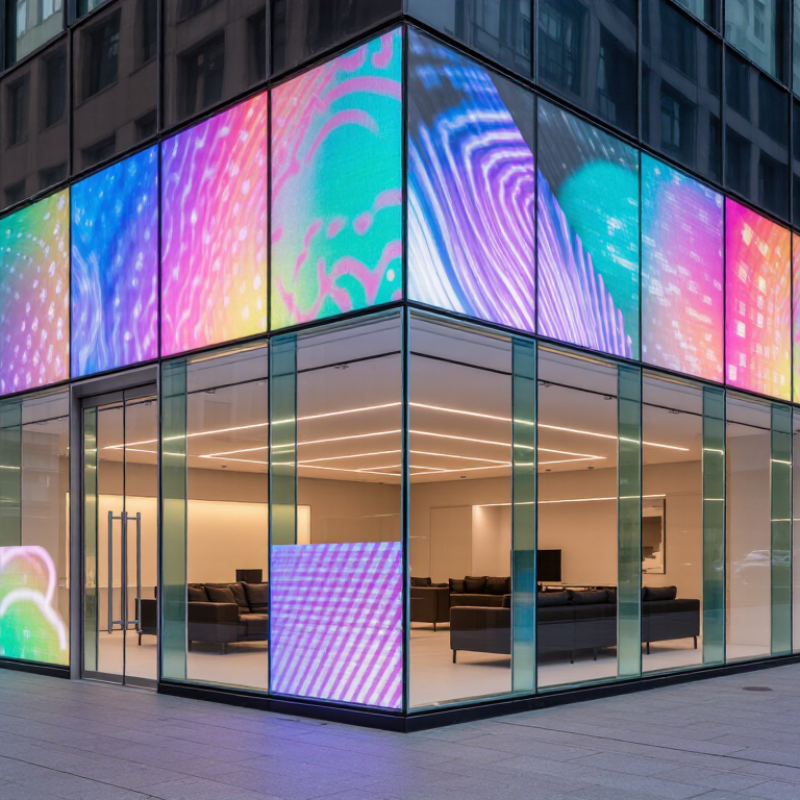
Transparent LED displays are turning ordinary glass into active media surfaces. Their appeal is easy to picture: a storefront window stays bright and open, while animated graphics appear across the glass. But brightness, transparency, pixel pitch, and installation quality vary widely. Buyers need more than a polished product photo.

The market is growing, though the figures require careful reading. MarketsandMarkets estimated the global transparent display market at USD 4.2 billion in 2022 and projected USD 10.8 billion by 2027, a 20.8% compound annual growth rate. This estimate covers transparent display technologies broadly; it should not be treated as a forecast for transparent LED products alone. The distinction matters.

This guide compares China’s leading manufacturers through practical criteria: display performance, product range, engineering support, customization, and evidence of completed projects. A transparent LED display that looks impressive indoors may struggle against direct sunlight or reveal distracting pixel gaps at close range. Details matter. We also recognize a limitation: no source articles or verifiable expert quotation were provided with the request. Rather than invent a quotation or attribute unsupported words to a named specialist, this introduction relies on a traceable market estimate and clearly identifies its scope. Manufacturer claims should still be checked against product specifications, project references, and independent testing wherever available.
China Top Transparent LED Display Manufacturers?

What Is a Transparent LED Display?

A transparent LED display is a screen built from LED strips, bars, or a fine mesh, with open spaces that let light and views pass through. Unlike a solid video wall, it can show moving images across a glass façade without fully blocking the space behind it. The effect is striking. But “transparent” does not mean invisible. Pixel pitch, open-area ratio, brightness, and viewing distance all affect the result. In a sunlit shop window, dark footage may look faint, while bright graphics remain clear. Small details can disappear from across the street.

MarketsandMarkets estimated the broader transparent-display market at about US$2.4 billion in 2023, with a projection of US$4.4 billion by 2028, or a 13.1% compound annual growth rate. This category includes more than transparent LED, so the figures should not be read as LED-only sales. For a real installation, compare transparency and brightness measurements under similar conditions, then test a sample at the intended viewing distance. A specification sheet helps, but it cannot reproduce changing daylight or reflections. That part is easy to underestimate.

How Transparent LED Displays Work and Where They Are Used

A transparent LED display uses rows of tiny light-emitting diodes mounted on narrow strips or a fine mesh. Each diode creates a pixel, while the open spaces between components allow light and views to pass through. When the screen receives a video signal, its control system adjusts the pixels to form images and text. The result can feel like graphics floating on glass. It is not invisible, though.

Transparency and image detail involve trade-offs. Wider gaps can preserve a clearer view through the screen, but may make fine text or small details harder to see. More closely spaced pixels often improve image definition, yet can reduce the open appearance.

Brightness matters too. A display facing a sunlit storefront needs different settings from one inside a softly lit gallery. Test the content from the actual viewing distance.

These displays are used on shop windows, building facades, atriums, and exhibition spaces. In a retail window, a short animation can draw attention while leaving products visible behind it. In an atrium, a suspended screen can carry announcements without blocking the space completely.

Installation still requires careful checks of support, ventilation, cable access, and maintenance. A screen may look light, but its mounting system must handle real loads. And the visual effect can disappoint if the content is too dense; that is an easy mistake to make.

How to Evaluate Transparent LED Display Manufacturers in China

When evaluating transparent LED display manufacturers in China, look beyond the quoted price and showroom video. Ask for a working sample or live demonstration with the proposed pixel pitch, cabinet size, and control system. Check visibility from both sides, image uniformity, and how much daylight passes through the panel. Small details matter. Request brightness and power-consumption data at stated operating settings, not just peak figures. A bright demo may look impressive indoors yet perform differently behind a sunlit shop window. It is easy to focus on image quality and miss the frame, wiring, or viewing distance.

Review the manufacturer’s production process, quality records, and test documentation. Confirm what each test covers and whether reports apply to the exact model being quoted. Ask how modules are replaced, which spare parts are available, and who handles remote troubleshooting after installation. Get warranty terms, lead times, packaging details, and service response expectations in writing. If possible, speak with a customer whose installation resembles yours. Compare performance at a real site, not only in a controlled booth. Content design also affects readability through transparent screens, so request sample footage at your intended viewing distance. Some specifications may still feel unclear after a meeting. Note them and ask again before paying a deposit. That extra round can feel awkward, but it may prevent a costly mismatch after installation.

Notable China-Based Transparent LED Display Manufacturers

Notable China-Based Transparent LED Display Manufacturers

China-based transparent LED display manufacturers serve projects ranging from retail windows to large glass façades. Their strengths often differ: some focus on fine pixel pitches, while others prioritize lightweight cabinets or high brightness for sunlit areas. A useful supplier profile includes in-house engineering, documented production checks, and experience with comparable installations. Ask for the pixel pitch, transparency rate, viewing distance, and cabinet weight. Details matter. A bright showroom sample may look convincing, yet perform differently behind reflective glass or in direct afternoon sun.

When comparing manufacturers, request a working sample and test it at the intended viewing distance. Check whether cables, power supplies, and mounting points fit the site plan. Ask how the display handles heat, maintenance access, and replacement modules. These questions reveal more than a polished brochure. Some specifications can be hard to compare, and quoted transparency figures may use different measurement methods. That deserves a second look. A manufacturer with clear test records and responsive technical support may be a safer fit than one offering the lowest price. Still, no supplier is ideal for every building; installation constraints can change the decision.

China Top Transparent LED Display Manufacturers? - Notable China-Based Transparent LED Display Manufacturers
Comparison Dimension Common Industry Specification or Practice What Buyers Should Check
Display transparency Transparent LED products commonly advertise transparency in the approximate 60%–90% range; the result varies by LED spacing, structure, and product design. Request the measured transparency figure for the exact configuration and confirm that it meets the project’s daylight and visibility requirements.
Pixel pitch Transparent LED products are available in a range of pixel pitches, broadly from around 2.6 mm to 10 mm or more. Match pixel pitch to viewing distance, content detail, and installation size. Ask for a viewing-distance recommendation and a sample image.
Brightness Published brightness varies by model and use case. High-brightness models are designed for brighter environments, while indoor installations may need less output. Compare brightness in nits on the specific product datasheet. Confirm whether the figure is a maximum or typical value and whether brightness can be adjusted.
Refresh rate Product specifications commonly list refresh rates such as 1,920 Hz or 3,840 Hz, depending on the LED system and configuration. Check performance with the intended camera settings if the display will appear in filmed events, retail content, or broadcast footage.
Grayscale performance LED display datasheets may specify 14-bit or 16-bit grayscale processing; actual image performance also depends on the control system and settings. Request dark-scene and gradient demonstrations, and confirm that the stated grayscale specification applies to the complete display system.
Environmental protection Indoor and outdoor products use different enclosure and protection designs. IP ratings, when provided, describe protection under specified test conditions. Verify the exact IP rating for the installed face and enclosure, along with temperature, humidity, wind-load, and drainage requirements for the site.
Installation and structure Transparent displays may use panel, strip, mesh, or film-style constructions. Mounting method and structural requirements differ by design. Confirm panel dimensions, connection method, maintenance access, support structure, cable routing, and the installation drawings for the project.
Control and connectivity LED display systems typically include sending and receiving equipment, control software, and supported video inputs; options depend on the system. Check input formats, controller compatibility, remote-management options, operating system support, and how the system handles signal loss.
Power consumption Power demand varies with display area, brightness, content, pixel pitch, and operating conditions. Request both maximum and average power figures for the proposed configuration, then size electrical supply and cooling accordingly.
Quality and compliance documents Applicable safety and electromagnetic-compatibility requirements depend on the destination market and product configuration. Request current test reports and certificates relevant to the destination country; confirm that model numbers match the quoted equipment.
Warranty and support Warranty duration, spare-parts arrangements, response times, and local service coverage vary by supplier and contract. Get warranty exclusions, replacement-parts terms, technical-support hours, and service responsibilities in writing before ordering.
Specification verification Values shown in marketing materials are product-specific and should not be treated as universal manufacturer performance. Compare dated datasheets, samples, test results, and a written bill of materials for the exact display being quoted.
This table provides general product-selection benchmarks, not a company ranking or an endorsement. Specifications and available options vary by model and project; verify all figures with the supplier’s current documentation.

How to Compare Manufacturers for Your Project Needs

Comparing transparent LED display manufacturers starts with the installation, not the catalogue. Record the glass dimensions, viewing distance, ambient daylight, and acceptable obstruction. A street-facing window at noon needs a different brightness target from an indoor retail partition. Ask each supplier for measured transparency, pixel pitch, refresh rate, and power consumption under stated test conditions. The figures are only useful when test conditions match.

Grand View Research estimated the global transparent display market at about $1.3 billion in 2023, with strong growth projected through 2030. MarketsandMarkets projected the broader LED display market to grow from $7.1 billion in 2023 to $11.6 billion by 2028. These market forecasts indicate demand, not product reliability. Numbers need context.

Request a working sample, then check text readability, color consistency, and glare from several angles. Compare warranty terms, spare-module availability, control software, and local service response times. Ask for references from installations with similar glass and climate conditions.

A bright showroom demo can hide heat, reflections, or difficult maintenance. I would still question any quote that skips a site survey. A neat specification sheet cannot predict every window.

Chat Online
Chat Online
Leave Your Message inputting...
Thank you for your attention. Please kindly describe your question first, or please send your inquiry to our email sale@pcbledmodule.com, and we will reply to you ASAP. Welcome, what can I help you?
Sign in with:



