

China has a broad manufacturing base for power distribution equipment, including transformer and switchgear solutions for industrial plants, commercial buildings, and utility projects. This guide explores leading Transformer Switch Gear suppliers in China and the factors buyers can use to assess them. The phrase covers different equipment configurations, so product scope should be confirmed before comparing quotations.
Supplier selection involves more than price. Buyers should review rated voltage, current capacity, short-circuit performance, insulation type, enclosure protection, and compatibility with the transformer and site conditions. Ask for technical drawings, test reports, operating manuals, and clear warranty terms. Details matter.
A company’s export history or product catalogue can offer useful context, but neither proves that a particular unit suits a project. Check relevant quality certificates and test documentation directly, and confirm which standards apply in the destination market. Factory audits or sample inspections may also help, especially when specifications are complex. Not every supplier fits.
This overview is intended to support a practical comparison, not to declare one manufacturer best for every application. It considers product range, engineering support, production capability, and communication during procurement. Some information may change as product lines and certifications are updated. That is worth remembering. A careful shortlist, followed by direct technical questions, gives buyers a firmer basis for choosing a supplier.
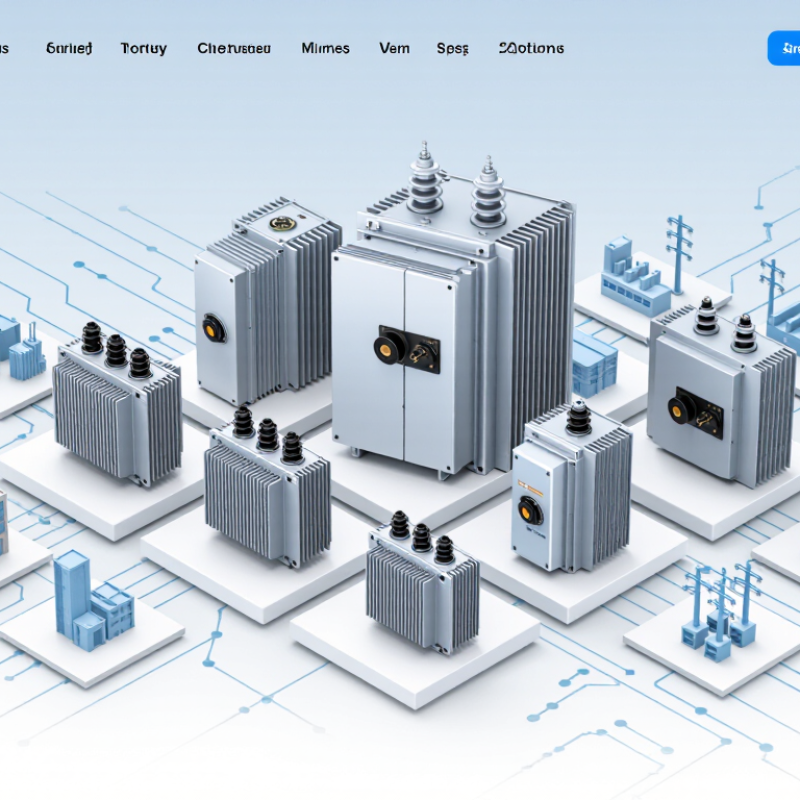
Transformer switchgear is the equipment that controls, protects, and isolates electrical circuits connected to a transformer. The term is used somewhat loosely. In practice, the assembly may include circuit breakers, disconnectors, protective relays, and earthing switches. Together, these components help interrupt fault currents and allow safe maintenance. That distinction matters.
You will find it in utility substations, industrial plants, commercial buildings, and renewable-energy installations. At a substation, medium-voltage switchgear routes power from transformers to outgoing feeders. In a factory, it can isolate a transformer when a fault occurs, limiting disruption to other circuits. In wind and solar facilities, switchgear helps connect transformers to collection networks. Faults travel fast. Correct ratings and coordination matter.
The International Energy Agency’s 2023 report, Electricity Grids and Secure Energy Transitions, says more than 80 million kilometres of grids need to be added or refurbished by 2040. That is roughly the length of the existing global grid. The report does not measure switchgear demand directly, but it highlights the scale of grid work where switching and protection equipment plays a practical role.
Selection still depends on voltage, fault level, installation conditions, and maintenance access. Small details can be missed. They should not be.
China’s transformer switchgear supply market is organized around project type, voltage level, and procurement route. Large national manufacturers typically serve utility and transmission projects, where capacity, documented testing, and delivery coordination matter. Specialized producers focus on distribution equipment, industrial sites, or compact substations. Regional factories may compete on customization and shorter lead times. The map is not perfectly tidy: some suppliers manufacture core equipment, while others integrate components from several sources.
Procurement often runs through utility tenders, engineering contractors, or direct industrial purchasing. Buyers compare rated voltage, short-circuit performance, insulation design, factory test records, and after-sales coverage. These checks are practical, not decorative. The IEA’s 2023 report, Electricity Grids and Secure Energy Transitions, estimates global grid investment must rise above USD 600 billion annually by 2030, from roughly USD 300 billion today. That global outlook helps explain demand pressure, but it does not measure China’s switchgear market specifically.
Tips: Request recent type-test reports and confirm the exact factory address. Check whether quoted lead times include testing and transport. A low price can hide a component mismatch. Ask for clarification in writing.
China’s supply market is commonly segmented by the voltage level and application of the equipment. This chart maps selected nominal AC grid voltage levels; it does not represent supplier rankings, market shares, or sales volumes.
Voltage classes shown: 10, 35, 110, 220, 500, 750, and 1,000 kV. These levels indicate grid segments served by different equipment specifications; actual product ratings and procurement requirements depend on the project.
A reliable transformer switchgear supplier proves performance with test records, not polished brochures. Ask for type-test reports matching the exact voltage, current, and short-circuit ratings you need. Check compliance with relevant IEC 62271 requirements, plus routine-test results for the actual production unit. Inspect drawings, component traceability, and factory quality controls. A certificate alone is not enough.
The IEA’s 2023 report, Electricity Grids and Secure Energy Transitions, says annual grid investment must rise from about $300 billion to over $600 billion by 2030. That growth makes dependable equipment and after-sales support increasingly important. Ask suppliers about delivery schedules, spare-part availability, commissioning assistance, and response times. Request references for installations with similar indoor or outdoor conditions. A neat report can still hide a gap; compare its test scope with your specification line by line.
Tips: Review a sample test dossier before ordering. Confirm who performs each test and whether an independent laboratory is involved. Ask how the supplier handles failed tests, design changes, and replacement parts. Small details matter.
Leading transformer switchgear suppliers in China serve utilities, factories, commercial buildings, and infrastructure projects. Their products may include medium-voltage switchgear, transformer protection panels, and integrated substations. A capable supplier should explain how each component is rated for the project’s voltage, load, and installation environment. Clear technical answers matter.
Buyers can review drawings, test reports, quality-control procedures, and references from comparable installations. Ask how the supplier manages routine testing, production changes, and after-sales support. For example, confirm whether the proposed equipment suits a dusty indoor room or a humid coastal site. Details like enclosure rating, cable access, and operating temperature can affect long-term reliability.
A polished catalog is useful, but it does not replace engineering checks. Request configuration details and compare them with the project specification before placing an order. Not every catalog is complete. Supplier capabilities vary, so assess the actual factory, documentation, and service response rather than relying on broad claims. Even a strong proposal may leave gaps; review those gaps with an independent electrical engineer before final approval.
When comparing transformer switchgear suppliers in China, look beyond quoted price and delivery dates. Ask each supplier to quote against the same technical schedule: rated voltage, continuous current, short-circuit withstand, insulation level, enclosure rating, and operating conditions. Small gaps matter. A lower quote may exclude relays, busbar connections, or commissioning support.
Request product-specific evidence, not a generic certificate PDF. Review type-test reports, routine test records, drawings, and component lists. Check that model numbers and ratings match the exact offer. Confirm certificates come from identifiable testing bodies and apply to the intended market and project. A certificate alone does not prove every delivered unit matches the tested design. Ask how serial numbers link to inspection records and factory acceptance tests.
Compare how suppliers handle questions and deviations. Arrange a factory audit or witnessed acceptance test where practical. Inspect nameplates, wiring labels, clearances, and finish on the production floor. Request written details on lead times, spare parts, warranty exclusions, and design changes. Details reveal habits. No checklist is perfect; a small document mismatch can still delay technical review. Allow an independent engineer time to reconcile test evidence with project specifications.
Use this comparison framework to assess suppliers without relying on rankings or brand claims. Confirm that certificates and test reports apply to the exact product configuration, ratings, and manufacturing site being offered.
| Comparison Dimension | What to Compare | Evidence to Request | How to Verify |
|---|---|---|---|
| Product scope | Confirm whether the quotation covers transformer equipment, medium-voltage switchgear, or a complete substation package. Check that the switchgear and transformer ratings are compatible with the project. | Itemized quotation, technical schedule, single-line diagram, and equipment datasheets. | Match each quoted item to the project specification, system voltage, installation conditions, and required interfaces. |
| Switchgear type and rated voltage | Compare indoor or outdoor installation, metal-enclosed construction, insulation type, busbar arrangement, and rated voltage. GB/T 3906 covers AC metal-enclosed switchgear and controlgear in its stated voltage range of 3.6 kV to 40.5 kV. | Product datasheet, outline drawings, nameplate schedule, and the declared applicable standard and edition. | Check that the rated voltage and equipment type fall within the scope of the declared standard and match the project requirements. |
| Applicable standards | For relevant high-voltage switchgear, check the declared editions of IEC 62271-1 (common specifications), IEC 62271-200 (AC metal-enclosed switchgear above 1 kV and up to 52 kV), and IEC 62271-100 (AC circuit-breakers). Chinese standards may also be specified, including GB/T 3906. | Standards compliance statement, technical agreement, and complete type-test reports. | Verify the standard number, edition, product scope, and ratings against the contract. Do not treat a general “IEC compliant” statement as proof of compliance. |
| Transformer compliance | Where a transformer is included, compare its rated power, voltage ratio, vector group, impedance, cooling method, insulation system, and installation environment. IEC 60076 is the IEC series for power transformers; the relevant parts depend on the transformer design. | Transformer datasheet, routine test reports, type-test reports where applicable, and the declared IEC 60076 or applicable GB/T 1094 requirements. | Check that test documents identify the same transformer design and ratings as the offered unit, and that the specified standard editions match the contract. |
| Short-circuit and interruption ratings | Compare rated short-time withstand current and duration, peak withstand current, and circuit-breaker rated short-circuit breaking current. Ratings must be suitable for the calculated system fault level. | Rated-current schedule, circuit-breaker datasheet, and applicable short-circuit type-test reports. | Compare the declared values with the project fault study and confirm that the report covers the offered design and rating. |
| Insulation and environmental performance | Compare rated lightning impulse withstand voltage, power-frequency withstand voltage, ambient temperature, altitude, humidity, pollution conditions, and indoor or outdoor service conditions. | Insulation-level schedule, environmental limits, installation manual, and any relevant test reports. | Confirm that the declared limits meet site conditions. Request design provisions where altitude or other conditions exceed standard assumptions. |
| Type-test report traceability | Check whether reports cover the same switchgear family, enclosure, busbar arrangement, circuit-breaker type, and ratings as the offered configuration. | Full report from an identifiable testing laboratory, including report number, date, tested configuration, and results. | Verify the report with the issuing laboratory where possible. Review deviations between the tested sample and the offered product rather than accepting a certificate cover page alone. |
| Routine testing and factory inspection | Compare the factory routine tests included for each delivered unit and whether customer witness or inspection is available before shipment. | Inspection and test plan, sample routine-test record, and completed records tied to serial numbers. | Confirm test acceptance criteria, hold points, document delivery, and non-conformance handling in the purchase contract. |
| Protection, control, and interlocking | Compare protection functions, measurement, control power, communication interfaces, mechanical and electrical interlocks, and the scope of supplied relays and accessories. | Protection and control schematics, interlock logic, relay datasheets, and interface list. | Review the drawings against the project control philosophy and confirm that all interfaces and required functions are included in the quotation. |
| Manufacturing and quality records | Assess production capability, inspection procedures, component traceability, change control, and quality management arrangements at the actual manufacturing site. | Manufacturing-site details, quality-system certificate, inspection procedures, and sample material or component traceability records. | Check certificate validity and site scope with the issuing body. Arrange a site audit or independent inspection when project risk warrants it. |
| Delivery, warranty, and service | Compare stated production lead time, packing and shipping scope, warranty terms, commissioning support, spare-parts availability, and response arrangements. | Delivery schedule, warranty wording, packing specification, service plan, and recommended spare-parts list. | Put measurable delivery milestones, warranty start date, exclusions, and service responsibilities into the contract. |
| Final compliance decision | Evaluate technical compliance separately from price. Record deviations, exclusions, document gaps, and any approval conditions for each bid. | Completed compliance matrix, approved drawings, certificates, test reports, and signed technical agreement. | Accept only after resolving deviations and confirming that the approved documents correspond to the final equipment configuration and manufacturing location. |
QUICK LINKS
CONTACT US
Office: (+86) 755 23040566
Tel: (+86) 158 9965 5195
E-mail: sale@pcbledmodule.com
Skype: Hans@Rocket-PCB
Whatsapp: 86 1589965 5195
Office Address: 2207,Bid 4,He Gu Shan Hui Cheng,35#,Guang Tian RoYanluo street, Song Gang Town,518105 SHENZHENG, CHINA
Plant ADD.: No 69, Lianfeng North Road, Xianxi Area, ChangAn Town, Dongguan, China.


Copyright © 2025 Rocket PCB Solution Ltd. | All Rights Reserved Sitemap Friendship link: CNC machining heat sink


