English


Choosing the right Drawn Steel Wire Equipment starts with the wire specification, not the machine catalogue. Diameter range, tensile strength, surface finish, and required output determine whether a line needs dry or wet drawing, single-block or multi-block machines, or additional processing stages. A compact dry-drawing line may suit heavier wire and shorter runs. Wet drawing can support finer products and controlled surface quality, but requires attention to lubricant handling and maintenance.
The scale is substantial. World Steel Association’s World Steel in Figures 2025 reports 1,882.6 million tonnes of crude steel production worldwide in 2024. The OECD Steel Outlook 2025 also examines global steelmaking capacity and industry conditions. These reports describe the wider market; they do not rank wire-drawing machines or prove that one equipment type is best. That distinction matters.
This guide compares the main equipment types used in modern wire production: payoff systems, drawing machines, dies and lubrication systems, annealing lines, straightening and cutting units, and take-up equipment. It focuses on practical selection points, including throughput, changeover time, energy use, and compatibility between machines. A fast drawing block can still become a bottleneck if its spooler cannot keep pace. Small details count. The available data is uneven, and published market figures rarely separate equipment by exact configuration. Buyers should verify performance claims against trial results, maintenance records, and the wire grades they actually produce.
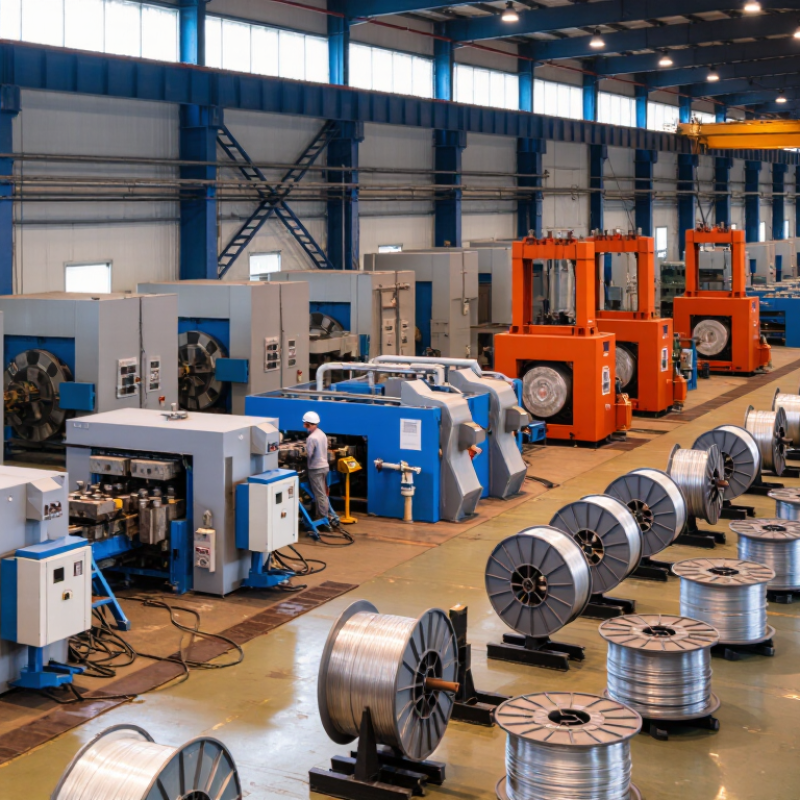
In 2026, wire producers commonly choose between single-block, multi-block, and continuous drawing machines. A single-block unit reduces wire through one die, making it useful for smaller runs or final sizing.
Multi-block machines draw wire through several dies in sequence. Their synchronized capstans help maintain steady tension and support higher production rates. Setup matters. A poorly matched speed can cause breaks or uneven diameter.
Dry drawing machines use lubricant powder around the dies, while wet drawing machines keep dies and wire immersed in liquid lubricant. Dry systems are often used for larger wire sizes; wet systems suit finer wire and demanding surface finishes.
Rod breakdown machines reduce thick feed rod, while fine-wire machines handle later reductions. Bull-block machines coil drawn wire on a large rotating drum, often for heavier sections.
The categories can overlap, so the label alone does not tell the full story. Buyers should compare material, target diameter, die sequence, cooling, and maintenance access.
Even a capable machine may disappoint if its controls or lubrication do not fit the actual production line. I would not choose by speed alone.
QUICK LINKS
CONTACT US
Office: (+86) 755 23040566
Tel: (+86) 158 9965 5195
E-mail: sale@pcbledmodule.com
Skype: Hans@Rocket-PCB
Whatsapp: 86 1589965 5195
Office Address: 2207,Bid 4,He Gu Shan Hui Cheng,35#,Guang Tian RoYanluo street, Song Gang Town,518105 SHENZHENG, CHINA
Plant ADD.: No 69, Lianfeng North Road, Xianxi Area, ChangAn Town, Dongguan, China.


Copyright © 2025 Rocket PCB Solution Ltd. | All Rights Reserved Sitemap Friendship link: CNC machining heat sink