
English


Choosing a Digital Air Compressor supplier involves more than comparing motor ratings or advertised efficiency. Global buyers must examine operating pressure, airflow demand, control options, service access, and the conditions of each installation. A compressor serving a quiet laboratory faces different demands from one running beside a dusty production line. Details matter.
Professor Peter Radgen’s research focuses on industrial energy efficiency. A practical paraphrase of that emphasis is: “Measure performance where the air is used, not only at the compressor.” This is not a verbatim quotation. It is a useful reminder to check system-level energy use, pressure stability, and maintenance requirements alongside product specifications. Sensors and remote monitoring can help, but only when the data supports clear decisions. Connectivity alone does not guarantee savings.
This guide reviews ten suppliers for international buyers, with attention to product range, technical documentation, support networks, and suitability for different applications. It also considers integration and lifecycle service, which can be harder to compare than purchase price. Supplier claims deserve careful checking against real operating needs. There is no universal best choice; even a well-known brand may not fit every site. The comparisons offer a starting point, not a substitute for an engineering assessment.
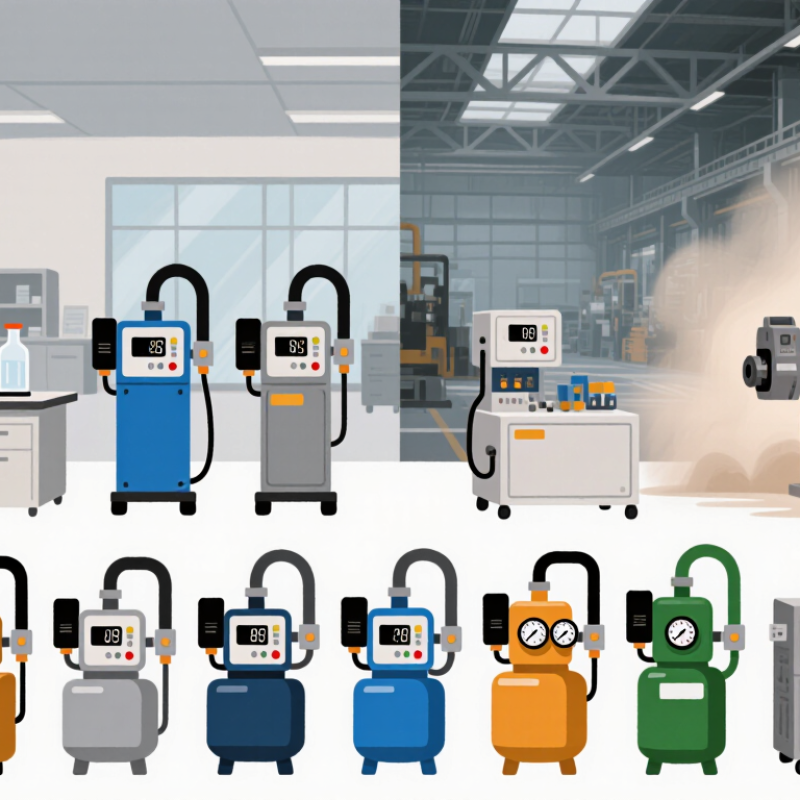
Digital air compressors combine compression hardware with sensors and electronic controls.
Some also use variable-speed drives. Pressure and temperature readings help controllers adjust motor output as demand changes. A display may show operating hours, alarms, and energy use. These details are useful in workshops where tools start and stop throughout the day. Digital control can reduce unnecessary idling, but savings depend on correct sizing and regular maintenance. The screen is useful; it cannot fix a leaking hose.
Applications range from small production lines using pneumatic tools to larger facilities with central compressor systems.
Buyers should compare airflow at the required pressure, duty cycle, noise level, service access, and electrical supply. A quoted efficiency figure alone can mislead because demand changes by shift. For instrument air, specify filtration and drying separately; compressor controls alone do not ensure air quality. This part is sometimes overlooked.
Tips:
Log pressure and run hours for a week before choosing a unit. Check filters and drain condensate on schedule. Ask how alarms are interpreted, not just whether they appear.
A digital reading can be wrong or misunderstood, so verify unusual values with a qualified technician. Teams skip this more often than they should.
QUICK LINKS
CONTACT US
Office: (+86) 755 23040566
Tel: (+86) 158 9965 5195
E-mail: sale@pcbledmodule.com
Skype: Hans@Rocket-PCB
Whatsapp: 86 1589965 5195
Office Address: 2207,Bid 4,He Gu Shan Hui Cheng,35#,Guang Tian RoYanluo street, Song Gang Town,518105 SHENZHENG, CHINA
Plant ADD.: No 69, Lianfeng North Road, Xianxi Area, ChangAn Town, Dongguan, China.


Copyright © 2025 Rocket PCB Solution Ltd. | All Rights Reserved Sitemap Friendship link: CNC machining heat sink

