
English


Choosing the top Cuav V5+ Flight Controller for global buyers requires more than comparing processor speed or port counts. Real performance depends on installation quality, firmware support, sensor calibration, and dependable documentation. A controller may look excellent on a product page, yet behave differently inside a vibrating frame or under changing temperatures.
The Cuav V5+ Flight Controller is designed for demanding autonomous aircraft and PX4-based development. Its redundant sensors, multiple communication interfaces, vibration-resistant structure, and flexible power connections support serious integration work. Buyers should examine connector types, carrier-board compatibility, firmware versions, and regional technical support before purchasing. Small details matter. A poorly secured cable can create a major flight problem.
PX4 founder Lorenz Meier has described the platform as “open source flight control software for drones and other unmanned vehicles.” That principle remains important when evaluating CUAV hardware. Open software can improve transparency, testing, and long-term maintainability, but it does not remove the need for careful engineering. Users must verify parameters, update procedures, and failsafe behavior on the actual aircraft.
This guide compares the Cuav V5+ Flight Controller through a practical, global-buyer lens. It considers laboratory specifications and field realities, including setup time, documentation clarity, replacement access, and integration with GPS, telemetry, CAN devices, and companion computers. Some conclusions may remain conditional. Aircraft design, operator experience, and mission requirements can change the result. The best choice is not always the most powerful board. It is the board that can be installed, tested, supported, and maintained responsibly.
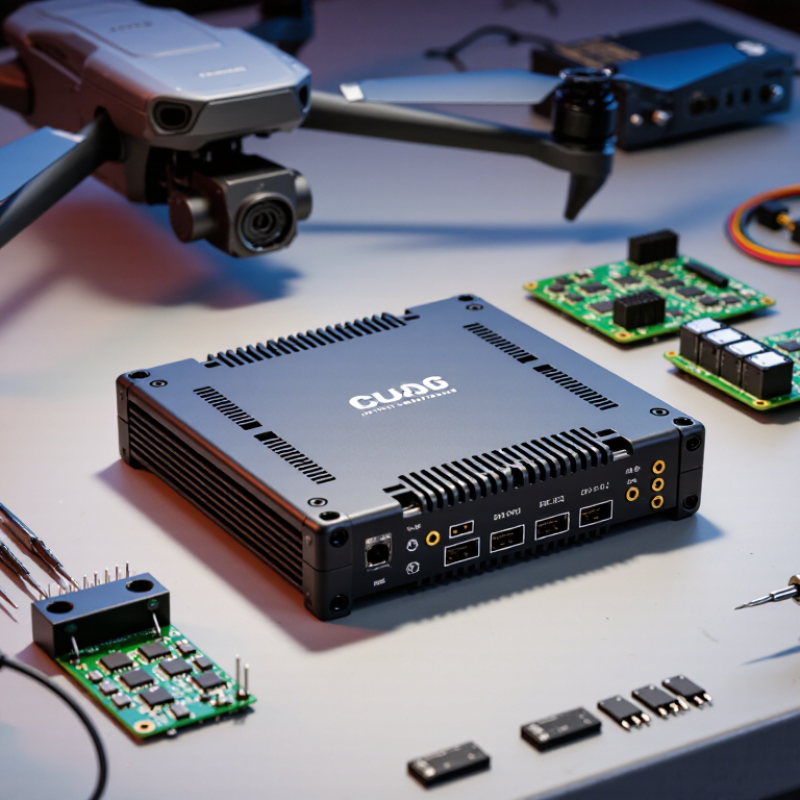
The V5+ flight controller is designed for serious multicopter and fixed-wing projects. Its FMUv5-class architecture typically combines a high-speed 32-bit processor, redundant inertial sensors, isolated power inputs, CAN interfaces, multiple serial ports, and PWM outputs. These connections support GPS, telemetry, digital airspeed sensors, external compasses, and motor controllers.
Its real value is integration flexibility. A builder can place the controller on a vibration-damped plate, route telemetry through a dedicated UART, and reserve CAN for future peripherals. This matters as drone fleets become more professional. Drone Industry Insights reported that the global commercial drone market reached about US$30 billion in 2023, with inspection and mapping among major applications. Reliability is no longer just a hobby concern. It affects data quality, maintenance time, and operational risk.
Tips: Check the exact firmware target before purchase. Confirm connector pinouts, sensor redundancy, power-module voltage limits, and enclosure clearance. Use a clean 5-volt supply and test every failsafe on the bench. My practical concern is heat. Compact airframes can trap warmth around the processor, especially under direct sunlight. Also, redundant sensors do not remove every failure. Poor vibration isolation can still corrupt altitude and position estimates. The specifications look strong, but installation quality remains the weaker link.
QUICK LINKS
CONTACT US
Office: (+86) 755 23040566
Tel: (+86) 158 9965 5195
E-mail: sale@pcbledmodule.com
Skype: Hans@Rocket-PCB
Whatsapp: 86 1589965 5195
Office Address: 2207,Bid 4,He Gu Shan Hui Cheng,35#,Guang Tian RoYanluo street, Song Gang Town,518105 SHENZHENG, CHINA
Plant ADD.: No 69, Lianfeng North Road, Xianxi Area, ChangAn Town, Dongguan, China.


Copyright © 2025 Rocket PCB Solution Ltd. | All Rights Reserved Sitemap Friendship link: CNC machining heat sink