
English


Choosing a Rubber Deflashing Machine supplier in China takes more than comparing quoted prices. Rubber parts vary in size, hardness, shape, and flash thickness. A machine suited to small molded seals may not handle larger, irregular components efficiently. Details matter.
This guide introduces practical ways to assess Chinese suppliers and their equipment. It considers machine type, processing capacity, control options, and the support available after purchase. For cryogenic systems, ask about operating requirements, cooling procedures, and how sample parts perform after deflashing. For mechanical methods, examine the tooling, part-handling process, and possible effects on delicate edges. Request clear specifications, not just broad claims.
A factory visit can help. So can a live demonstration using your own parts. Ask how cycle time is measured, which consumables are needed, and whether replacement components are readily available. Check installation guidance, operator training, warranty terms, and response times for technical questions. These points may seem ordinary. They often shape the real cost of ownership.
No supplier is automatically the best fit for every application. Published capacity figures may not reflect your actual part mix, and a polished sample may not reveal routine production limits. That deserves a second look. Before shortlisting a supplier, compare test results, communication quality, and documented service commitments. This overview offers a grounded starting point, while final decisions should follow trials with representative parts and a careful review of your production needs.
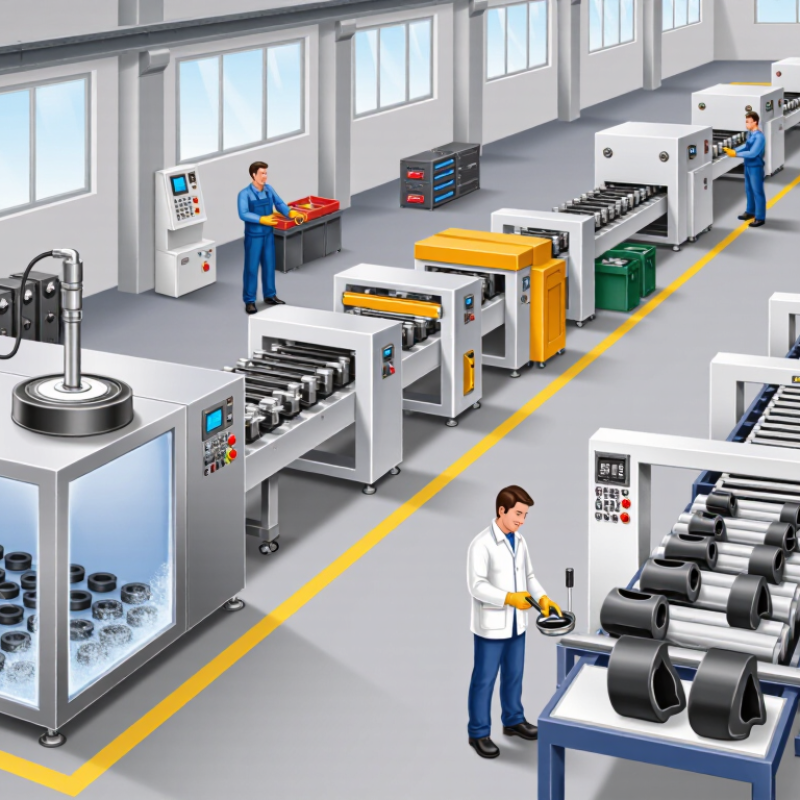
A rubber deflashing machine removes thin excess material, called flash, from molded rubber parts. Flash forms where mold sections meet or around vents. It can leave a rough edge on a seal, gasket, or small component. The machine cleans these edges more consistently than hand trimming, though results depend on the part and process.
One common method is cryogenic deflashing. The machine cools rubber parts, often with liquid nitrogen, until their thin flash becomes brittle. A controlled stream of media then knocks away the flash while the thicker parts remain intact. Other machines use mechanical cutting or tumbling. Each method suits different shapes, compounds, and production volumes. That distinction matters. A compound that performs well in one process may crack or retain flash in another. Operators should inspect sample parts and check for surface damage before setting production parameters.
Tips: Ask suppliers about process trials, cycle time, media recovery, and cleaning needs. Compare finished samples under consistent lighting. Small details count. A little flash left in a groove can still affect fit, so inspection criteria should be agreed upon before purchasing.
QUICK LINKS
CONTACT US
Office: (+86) 755 23040566
Tel: (+86) 158 9965 5195
E-mail: sale@pcbledmodule.com
Skype: Hans@Rocket-PCB
Whatsapp: 86 1589965 5195
Office Address: 2207,Bid 4,He Gu Shan Hui Cheng,35#,Guang Tian RoYanluo street, Song Gang Town,518105 SHENZHENG, CHINA
Plant ADD.: No 69, Lianfeng North Road, Xianxi Area, ChangAn Town, Dongguan, China.


Copyright © 2025 Rocket PCB Solution Ltd. | All Rights Reserved Sitemap Friendship link: CNC machining heat sink

