

loading

BLOG

What Are the Top Aluminum Spacer Types in 2026?

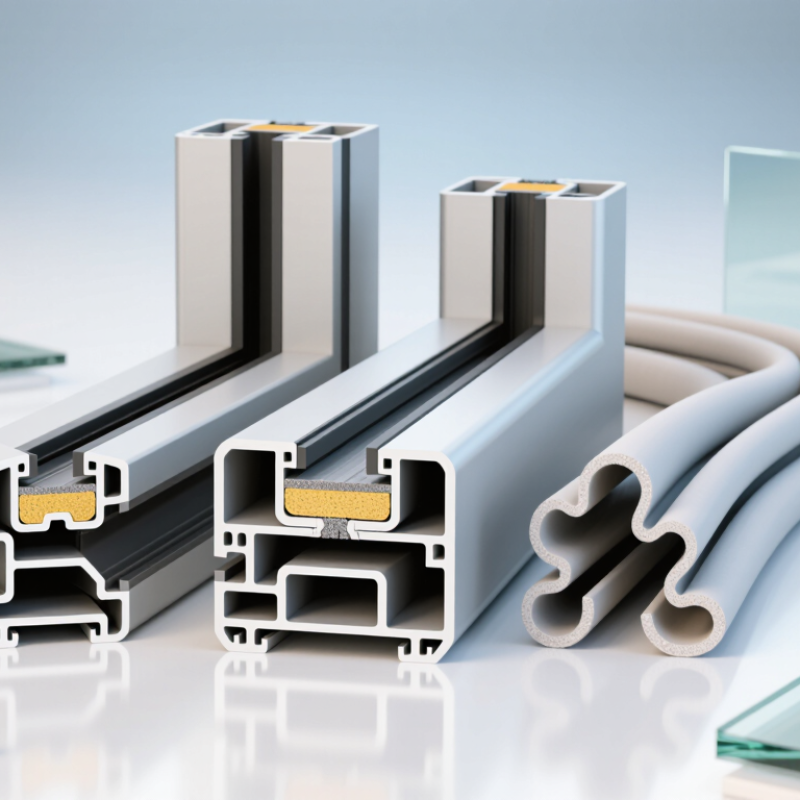
Choosing an Aluminum Spacer in 2026 means balancing durability, thermal performance, fabrication needs, and cost. In insulated glass units, the spacer separates panes and helps maintain the seal around the glass edge. A conventional hollow aluminum profile remains familiar to manufacturers. It is rigid, easy to form, and widely available. Yet aluminum conducts heat readily, so the frame edge can become a weak point in the window’s overall thermal performance. Details matter.

Common options include straight rigid profiles, roll-formed spacers, and flexible, bent-on-demand designs. Their shapes and joining methods affect production speed, corner quality, and suitability for different window sizes. Some products combine aluminum with foam or other low-conductivity materials. These hybrid systems may reduce heat transfer while retaining a metal component. They are not all purely aluminum spacers, though. That distinction is easy to blur, and a product label may not tell the whole story.

This guide compares the leading types by construction, practical strengths, and likely applications. It also considers how coatings, sealant compatibility, equipment, and climate can influence a choice. A spacer that performs well in one factory or building may not be the best fit elsewhere. Not always. Specifications should be checked against tested performance data and the complete glazing system, rather than judged by material name alone. The rankings that follow are useful starting points, not universal verdicts.
What Are the Top Aluminum Spacer Types in 2026?

What Aluminum Spacers Are and How They Are Classified

What Are the Top Aluminum Spacer Types in 2026?

What Aluminum Spacers Are and How They Are Classified

An aluminum spacer is a component that maintains a set gap between two parts. It may also distribute clamping force or align an assembly. Common forms include flat spacers, tubular sleeves, standoffs, and precision shims. These are not interchangeable: a sleeve guides a fastener, while a shim adjusts a small clearance. That distinction matters.

Spacers can also be classified by shape, alloy and temper, manufacturing method, and required tolerance. For example, a cut tube suits a simple through-bolt assembly; a machined spacer may be better when its length must be controlled closely.

Material choice depends on load, corrosion exposure, weight, and contact with neighboring parts. The International Aluminium Institute reported 70.6 million tonnes of global primary aluminum production in 2023. That figure describes the wider aluminum supply, not spacer output or demand. It does, however, show the scale of the material industry behind many fabricated components. Real selection still needs application-specific checks; I would not choose by alloy name alone.

Tips: Measure the installed gap and fastener diameter, then check the drawing’s tolerance. Also confirm whether the spacer must resist crushing or electrical contact. A thin shim can solve a fit problem, but it may not stay flat under heavy clamping.

Which Aluminum Spacer Types Are Most Widely Used in 2026?

What Are the Top Aluminum Spacer Types in 2026?
Which Aluminum Spacer Types Are Most Widely Used in 2026?

Round aluminum spacers remain common in electronics, control panels, and light machinery. Their simple shape supports even spacing between parts, such as a circuit board and its mounting surface. Hex spacers are also widely used. Their flat sides make them easier to grip during assembly, while threaded ends can secure stacked panels or components. Small details matter.

Shoulder spacers help align moving parts or guide a fastener through a fixed position. They are useful where a plain tube might shift, though the extra step in the shape may not be needed for a simple gap. Threaded standoffs are popular in enclosures and equipment racks because they combine spacing and fastening. In practice, choosing the right type can feel more complicated than the job requires.

Tips: Check the spacer’s length, inner diameter, and load before ordering. Measure the mating parts, too. Anodized finishes can slightly affect fit, so allow for tight tolerances. For damp settings, consider whether aluminum will contact other metals. I’ve seen simple assemblies become awkward because one small clearance was overlooked.

How to read this chart: Bars count external flat sides: cylindrical and ring-shaped profiles have 0, square profiles have 4, and hexagonal profiles have 6. These are common spacer forms; the chart shows geometry, not market share or sales rankings. The most suitable type depends on the application.

How Solid, Hollow, Slotted, and Threaded Spacers Differ

What Are the Top Aluminum Spacer Types in 2026?

How Solid, Hollow, Slotted, and Threaded Spacers Differ

Solid spacers suit joints that need a firm, continuous bearing surface. They work well between flat brackets, where a small gap must stay consistent under clamping. Hollow spacers weigh less and can route a wire or tube through their center. Their strength depends on wall thickness, diameter, and material temper; a thin tube may crush under excessive bolt force. Check the actual load, not just the outside dimensions.

Slotted spacers allow lateral adjustment or installation around an existing shaft. The slot is useful, but it removes material and can concentrate stress near its ends. Threaded spacers, often called standoffs, accept screws at one or both ends. They hold panels apart without a separate nut at every connection. Match the thread size and engagement length, and tighten carefully: aluminum threads can strip more readily than steel. Fit matters.

Where Each Aluminum Spacer Type Is Commonly Used

Aluminum spacers serve different jobs, from separating glass panes to setting precise gaps in equipment. Hollow rectangular spacers are common in insulated glass units used in homes, offices, and curtain walls. Their rigid profile holds two panes apart and contains desiccant to help control moisture between them. The trade-off matters: aluminum conducts heat readily at the glass edge. The U.S. Department of Energy’s Energy Saver guidance estimates that windows account for 25–30% of residential heating and cooling energy use. That figure makes edge performance worth checking, not just spacer price.

U-channel spacers are often used in glazing assemblies and lightweight frames where one-sided access simplifies placement. Small flat aluminum spacers, or shims, help level window frames, doors, and machinery during installation. They are useful when a few millimeters make a panel sit unevenly. They are not a cure for a poorly measured opening. A little frustrating, but true.

Solid round and tubular spacers are more common in fabricated equipment, fixtures, and mechanical assemblies. They maintain repeatable clearance around bolts, shafts, or panels. Precision-cut spacers suit compact devices; thicker tubes work where a longer stand-off is needed. For glass applications, compare whole-window U-factor and condensation resistance, rather than assuming a spacer material alone predicts performance. NFRC ratings assess the complete window, including its frame and glazing. Fit still deserves a final field check.

What Are the Top Aluminum Spacer Types in 2026? — Where Each Aluminum Spacer Type Is Commonly Used

Spacer Type Typical Form Common Applications Why It Is Used Practical Design Notes
Flat spacer washer Short, flat ring with a central hole Bolted joints, machinery assemblies, brackets, and general equipment Separates adjoining parts and distributes clamping load around a fastener. Choose the inside diameter, outside diameter, and thickness to suit the fastener and joint. Check that the aluminum is suitable for the load and environment.
Round tubular spacer Hollow cylindrical sleeve, usually cut to length Electronics enclosures, panels, mounting assemblies, and light mechanical structures Maintains a fixed gap while allowing a bolt or screw to pass through the center. Specify the bore, outside diameter, length, and end squareness. Thin walls can deform under excessive tightening force.
Hex spacer Six-sided body with a threaded or clearance hole Electrical panels, control cabinets, circuit-board assemblies, and equipment mounting The hexagonal exterior can be held with a wrench, making installation and removal easier. Available configurations include internally threaded and externally threaded ends. Match the thread size and length to the assembly.
Threaded standoff Short cylindrical or hexagonal post with internal threads, external threads, or both Printed circuit boards, instrument panels, display assemblies, and enclosure mounting Supports a component at a defined height and provides a fastening point. Confirm thread type, engagement depth, and required electrical isolation. Aluminum is conductive, so insulating hardware may be needed in some assemblies.
Shoulder or stepped spacer Machined part with a larger shoulder and a smaller-diameter section Hinges, pivots, linkages, precision fixtures, and rotating assemblies The shoulder locates the part while the reduced section can guide or support another component. Dimensions and tolerances are application-specific. Consider wear, fit, and the possibility of using a separate bearing or bushing.
Shim spacer Thin flat sheet, strip, or ring supplied in a selected thickness Machine alignment, equipment leveling, gap adjustment, and precision assembly Allows small changes in spacing or alignment without redesigning the surrounding parts. Use a thickness that can be measured and controlled reliably. Protect thin shims from bending, burrs, and corrosion during handling.
Aluminum insulating-glass spacer bar Hollow formed profile positioned between panes in an insulating glass unit Double- and triple-glazed windows and doors Separates glass panes and helps define the sealed cavity; some systems accommodate desiccant to help manage moisture within the unit. This is a glazing component rather than a fastener spacer. Thermal performance depends on the complete insulating-glass design, including the edge seal and spacer system.

How to Choose an Aluminum Spacer for a Specific Application

What Are the Top Aluminum Spacer Types in 2026?

How to Choose an Aluminum Spacer for a Specific Application

Aluminum spacers range from flat rings and precision sleeves to threaded standoffs and thin shims. Each type solves a different spacing or support problem. Flat spacers create a gap between components, while sleeves guide bolts and help maintain alignment.

Standoffs hold panels apart and may provide threaded attachment points. Shims make small adjustments where tight clearances matter. Simple parts, but details matter.

Start with the load, gap, and fit. A light enclosure may need a basic flat spacer; a vibrating assembly may need a closer-fitting sleeve and secure fastening. Measure the available space and check the hole diameter, spacer length, and tolerance. Too much looseness can cause movement. Too little clearance can make assembly difficult. The first choice is not always right.

Consider the operating environment, too. Moisture, temperature changes, and contact with other metals can affect performance. Alloy and surface finish should suit the expected conditions, while electrical or thermal isolation may require an additional insulating layer. For a critical fit, test a sample in the actual assembly and inspect it under load. A drawing can miss a burr, a coating thickness, or a slightly uneven mating surface. That is worth checking.

Chat Online
Chat Online
Leave Your Message inputting...
Thank you for your attention. Please kindly describe your question first, or please send your inquiry to our email sale@pcbledmodule.com, and we will reply to you ASAP. Welcome, what can I help you?
Sign in with:



