
English


A Mechanical Shaft Seal may look like a small ring of metal and elastomer, yet it controls leakage where a rotating shaft meets a stationary housing. Its performance depends on more than the seal’s name. Pressure, temperature, shaft speed, fluid chemistry, vibration, and installation quality all matter. A seal suited to clean water may struggle with abrasive slurry or a hot process fluid. Small details count.
Machinery reliability authority Heinz P. Bloch has written extensively about selecting and maintaining equipment for its operating conditions. A practical paraphrase of that reliability principle is: “Choose the seal for the duty, not the label.” This guide compares ten common types, including pusher, non-pusher, cartridge, balanced, unbalanced, single, double, metal-bellows, elastomer-bellows, and split seals. The categories can overlap; a cartridge seal, for example, may also be balanced or double. That distinction is easy to miss.
The aim is not to name one universal winner. Instead, each type is considered through its construction, typical advantages, and service limits. A plant engineer might inspect a seal face under bright workshop lighting, notice a fine wear track, and still need operating records to explain the failure. No list replaces that investigation. Use the overview to frame better questions about the fluid, equipment, and maintenance plan. Then confirm any selection against the manufacturer’s data and the actual service conditions.
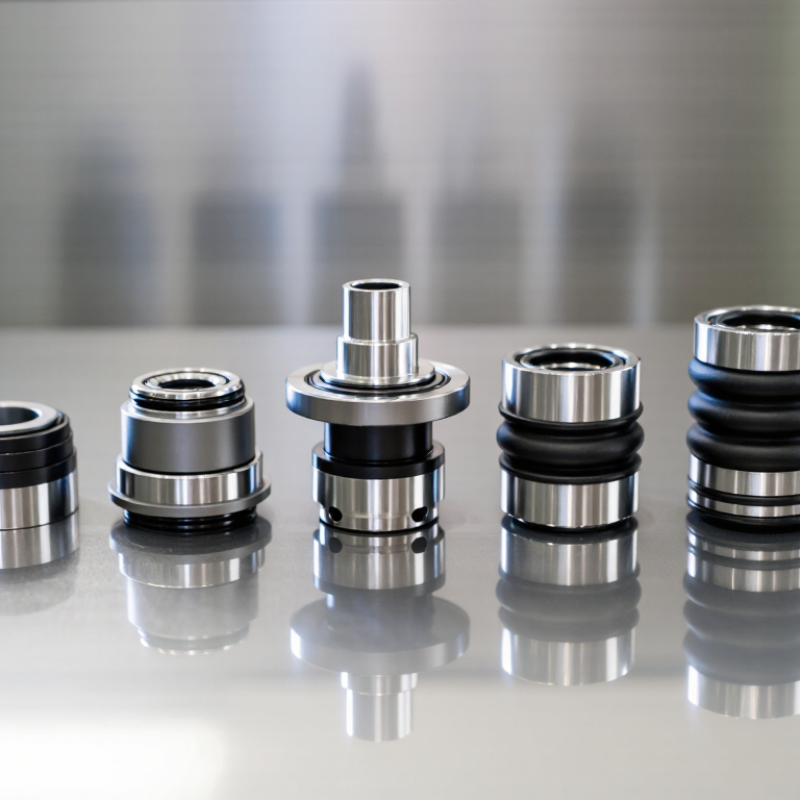
Mechanical shaft seals limit leakage where a rotating shaft passes through a stationary housing. A spring or other loading mechanism presses two flat faces together. One face rotates with the shaft; the other remains fixed. A very thin fluid film usually separates them, reducing friction while helping contain the process fluid. Too little lubrication can cause heat and wear. Too much leakage may signal damage or poor installation.
The “top 10” types are not one tidy, exclusive list. Seals are classified by different features, and categories can overlap. Common types include single, double, and tandem seals; balanced and unbalanced seals; pusher and metal-bellows seals; cartridge and component seals; split seals; and gas-lubricated seals. Single or double describes the arrangement. Balanced or unbalanced describes how pressure acts on the faces. Pusher and bellows designs differ in how they accommodate shaft movement. Cartridge seals arrive as a preassembled unit, while split seals can be fitted around some installed shafts. Gas-lubricated designs use a gas film instead of relying on liquid lubrication. No category alone guarantees suitability.
Tips: Check fluid properties, pressure, temperature, shaft speed, and alignment before choosing a seal. Look for dry running or uneven face wear during inspection. Even a well-selected seal can fail if installation is careless.
QUICK LINKS
CONTACT US
Office: (+86) 755 23040566
Tel: (+86) 158 9965 5195
E-mail: sale@pcbledmodule.com
Skype: Hans@Rocket-PCB
Whatsapp: 86 1589965 5195
Office Address: 2207,Bid 4,He Gu Shan Hui Cheng,35#,Guang Tian RoYanluo street, Song Gang Town,518105 SHENZHENG, CHINA
Plant ADD.: No 69, Lianfeng North Road, Xianxi Area, ChangAn Town, Dongguan, China.


Copyright © 2025 Rocket PCB Solution Ltd. | All Rights Reserved Sitemap Friendship link: CNC machining heat sink

