
English


China’s manufacturing base spans automotive parts, aerospace components, machinery, electronics, and medical devices. In these fields, Surface Engineering can influence wear resistance, corrosion protection, friction, appearance, and service life. The right partner may apply processes such as thermal spraying, physical vapor deposition, plating, or precision finishing. Not every company offers the same capabilities. Details matter.
This guide introduces ten Chinese companies active in surface engineering and explains what buyers may wish to examine. It considers factors such as process range, technical experience, quality controls, equipment, industry applications, and communication during project development. A company’s website can provide useful clues, but it cannot confirm every claim. Ask for relevant case studies, coating specifications, test methods, and sample results where appropriate. Small differences in substrate preparation or coating thickness can affect performance.
There is no single supplier that fits every application. A coating suited to a high-wear machine component may not meet the needs of a decorative consumer product. This overview is a starting point, not a substitute for technical evaluation. Some company information may change, and public materials can leave important gaps. That is worth remembering. Readers should confirm current capabilities, certifications, delivery arrangements, and application requirements directly with each supplier before making a decision.
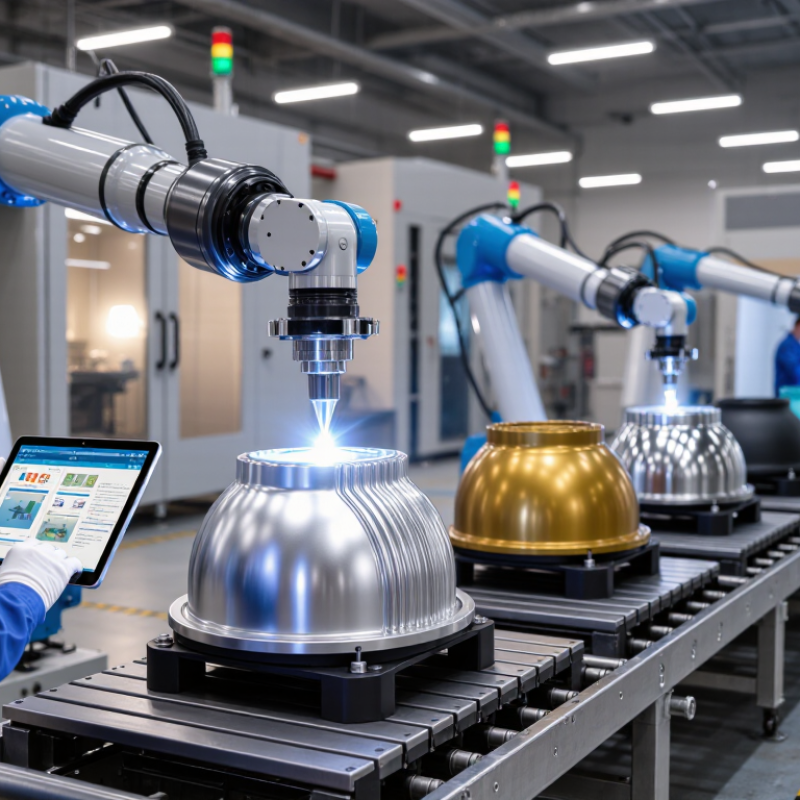
Surface engineering shapes China’s industrial landscape by helping components last longer under heat, friction, corrosion, and repeated loading. In factories, a treated gear may run more quietly, while a coated pump shaft can resist abrasive particles in process fluids. These improvements often come from practical methods such as thermal spraying, nitriding, electroplating, and precision surface finishing. Small details matter.
The value is not just a harder surface. Engineers must match the treatment to the base material, operating temperature, and expected wear pattern. A coating that performs well in a dry test may fail in a humid production line. Reliable suppliers therefore document process conditions and use measurements such as coating thickness, hardness, adhesion, and wear testing. Results depend on careful control, not a single impressive specification.
Across automotive, energy, machinery, and electronics manufacturing, surface engineering can reduce maintenance and extend component life. It can also add cost, energy use, and inspection steps, so the benefits need to be measured against the actual service conditions. Not always. A useful comparison of leading companies should examine technical range, testing discipline, production consistency, and support after delivery—not just the number of available processes. Even strong data has limits when real-world operating conditions change.
To avoid presenting unnamed or unverifiable company profiles, this table summarizes ten established surface-engineering processes and their industrial roles. It is a technology overview, not a ranking of companies.
| No. | Surface-engineering process | How it modifies the surface | Typical materials or components | Common industrial applications | Typical engineering purpose |
|---|---|---|---|---|---|
| 1 | Thermal spraying | Heated or accelerated coating material is deposited onto a prepared surface as a coating. | Steel structures, rolls, turbine components, and machine parts | Power generation, steel production, petrochemical equipment, and machinery maintenance | To improve wear, corrosion, or heat resistance, depending on the coating material and service conditions. |
| 2 | Physical vapor deposition (PVD) | Material is vaporized in a vacuum and condensed as a thin film on a component. | Cutting tools, dies, molds, and precision components | Metalworking, automotive manufacturing, electronics, and tooling | To add thin, functional coatings that can improve hardness, friction behavior, or wear resistance. |
| 3 | Chemical vapor deposition (CVD) | Chemical reactions of gaseous precursors form a solid coating on a heated substrate. | Cutting tools, semiconductor materials, and heat-resistant components | Toolmaking, electronics, and advanced materials production | To form uniform coatings; the achievable properties depend on the deposited material and process conditions. |
| 4 | Electroplating | An electric current deposits a metallic layer from an electrolyte onto a conductive workpiece. | Steel and other conductive components | Automotive parts, hardware, machinery, and electrical components | To provide a metallic finish or improve corrosion resistance, conductivity, or wear performance, depending on the plated metal. |
| 5 | Anodizing | An electrochemical process thickens the protective oxide layer on a metal surface, commonly aluminum. | Aluminum profiles, housings, panels, and components | Construction, transportation, consumer products, and electronics | To improve corrosion and wear resistance and, where specified, provide a surface suitable for coloring. |
| 6 | Nitriding | Nitrogen diffuses into the surface of a ferrous alloy to form a hardened surface layer. | Gears, crankshafts, dies, and other alloy-steel parts | Automotive, machinery, tooling, and general equipment manufacturing | To increase surface hardness and resistance to wear and fatigue while limiting dimensional change compared with some other hardening treatments. |
| 7 | Carburizing | Carbon diffuses into the surface of low-carbon steel, followed by hardening heat treatment. | Gears, shafts, bearings, and transmission components | Automotive, construction machinery, and industrial gear manufacturing | To produce a hard, wear-resistant case with a tougher core. |
| 8 | Laser cladding | A laser melts feedstock and a thin portion of the substrate to create a metallurgically bonded layer. | Valves, rolls, shafts, molds, and equipment components | Mining, energy, metallurgy, and repair or remanufacturing operations | To restore worn surfaces or apply localized layers selected for corrosion, wear, or heat resistance. |
| 9 | Shot peening | Small media impact the surface, inducing compressive residual stresses in the near-surface material. | Springs, gears, and fatigue-loaded metal components | Automotive, aerospace, rail, and machinery manufacturing | To improve fatigue performance when the process is properly controlled for the component and loading conditions. |
| 10 | Thermal barrier coatings | A heat-insulating ceramic coating is applied over a bond coat on a heat-exposed component. | Gas-turbine hot-section components and other high-temperature parts | Power generation, aviation, and industrial gas turbines | To reduce heat transfer to the underlying component; coating design and service life depend on operating conditions. |
QUICK LINKS
CONTACT US
Office: (+86) 755 23040566
Tel: (+86) 158 9965 5195
E-mail: sale@pcbledmodule.com
Skype: Hans@Rocket-PCB
Whatsapp: 86 1589965 5195
Office Address: 2207,Bid 4,He Gu Shan Hui Cheng,35#,Guang Tian RoYanluo street, Song Gang Town,518105 SHENZHENG, CHINA
Plant ADD.: No 69, Lianfeng North Road, Xianxi Area, ChangAn Town, Dongguan, China.


Copyright © 2025 Rocket PCB Solution Ltd. | All Rights Reserved Sitemap Friendship link: CNC machining heat sink

