Top 10 POS Machine Battery Suppliers Worldwide
Choosing a reliable Pos Machine Battery supplier affects uptime, transaction speed, and customer experience. A weak battery can shut down a busy checkout during a lunch rush. This guide examines ten respected suppliers serving markets worldwide.
The comparison focuses on practical evidence, not impressive claims alone. We review battery chemistry, rated capacity, cycle performance, voltage stability, and physical compatibility. Dimensions matter when a battery must fit inside a compact handheld terminal. Charging behavior matters too, especially for stores using shared docks throughout the day. Supplier documentation, quality systems, warranty terms, and technical support also influence each selection. Certifications and transport compliance receive careful attention, because battery safety cannot depend on attractive pricing.
Real-world conditions can change the result. A battery that performs well in a cool laboratory may lose capacity inside a warm delivery vehicle. Heavy Bluetooth use, bright screens, receipt printing, and constant wireless communication increase energy demand. Some suppliers publish detailed test methods, while others provide limited field data. That gap deserves caution. Our list is therefore a practical starting point, not a permanent ranking. Buyers should confirm connector design, firmware requirements, minimum order quantities, and regional service availability before purchasing. Small details matter.
We also consider manufacturers offering customization, replacement programs, and traceable production records. These features can reduce downtime for retailers managing hundreds of terminals. Still, no supplier is perfect. The best choice depends on device model, operating environment, budget, and expected daily transactions. Use this review to ask better questions and select a Pos Machine Battery with dependable evidence behind it.
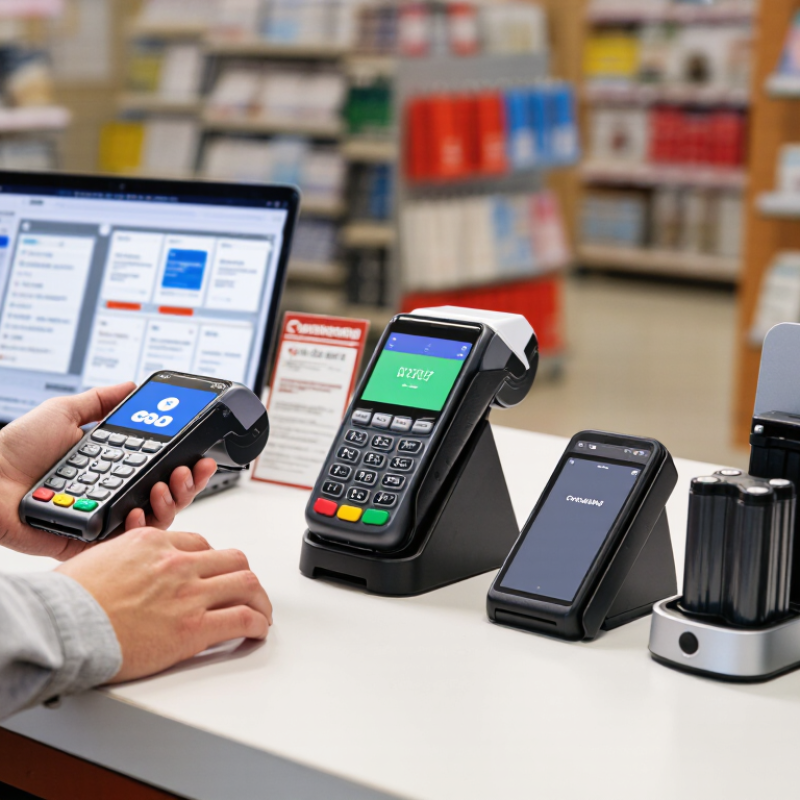
POS Machine Battery Types and Their Role in Payment Systems
Top 10 POS Machine Battery Suppliers Worldwide
POS machine batteries directly affect transaction speed, device mobility, and payment reliability. In daily retail use, a weak battery can interrupt checkout during busy periods. That creates queues, repeated charging, and frustrated staff.
Lithium-ion batteries remain common because they offer high energy density and stable output. Lithium-polymer cells provide flexible shapes for slim handheld terminals. Some larger countertop devices use rechargeable nickel-metal hydride batteries, although they are heavier and less efficient. Removable battery packs support quick replacement in delivery services and outdoor markets. Built-in batteries usually provide better protection against dust and accidental removal.
Battery quality involves more than capacity. A dependable pack needs a suitable battery management system, accurate temperature sensing, and protection against overcharging. In practical testing, battery performance should be checked under continuous wireless communication, receipt printing, and screen brightness. A battery rated for ten hours may deliver less in real transactions. This detail is easy to overlook.
Suppliers should provide traceable test reports, consistent cell grades, and clear cycle-life data. They should also explain storage conditions and replacement procedures. Safety certifications matter because terminals often charge for many hours each day. No battery choice is perfect. Higher capacity may increase weight, while a slimmer pack may reduce operating time. Procurement teams should compare real workload results, not only catalogue numbers. A careful field trial often reveals problems that specifications hide.
Top 10 POS Machine Battery Suppliers Worldwide
The Top 10 POS Machine Battery Suppliers Worldwide are best judged by performance, not marketing language. A reliable supplier should provide tested lithium-ion or lithium-polymer packs for the exact terminal model. Ask for capacity data, cycle-life results, charging limits, and safety documentation. In practice, a battery rated at 2,000 mAh may deliver less under constant wireless use. That difference matters during a busy checkout shift. Good suppliers also explain cell origin, assembly controls, and replacement procedures. Clear records build trust.
Across a worldwide comparison, the strongest ten supplier profiles usually share several traits. They maintain traceable production batches and consistent connector dimensions. They test protection circuits against overcharge, overheating, and deep discharge. They can support samples before large orders. Regional stock is useful when a payment terminal fails unexpectedly. Response time matters. So does technical language. Vague promises should reduce a supplier’s score. Independent testing remains valuable, even when factory reports look complete.
Buyers should compare warranty terms, minimum order quantities, transport conditions, and firmware compatibility. Battery swelling risk can increase when storage temperatures are ignored. A supplier should state storage ranges in plain numbers. I would also inspect one returned unit, not only a perfect sample. That step is easy to skip. It can reveal weak labels, loose wires, or inconsistent capacity. No supplier performs perfectly in every market, and published rankings can age quickly. Recheck certifications and delivery records before signing a contract.
Top 10 POS Machine Battery Suppliers Worldwide
| Rank | Supplier Code | Primary Production Region | Common Battery Chemistry | Typical Nominal Voltage | Typical Capacity Range | Expected Cycle Life | Safety and Transport Compliance | Customization Capability | Typical MOQ | Typical Production Lead Time |
| 1 | Supplier 01 | East Asia | Rechargeable lithium-ion | 3.7 V | 1,800–3,000 mAh | 500–800 cycles | UN 38.3; IEC 62133 testing commonly available | Connector, cable length, label, and pack dimensions | 500–1,000 units | 25–40 days |
| 2 | Supplier 02 | South Asia | Rechargeable lithium-ion | 3.7 V | 2,000–3,400 mAh | 500–700 cycles | UN 38.3; RoHS documentation commonly available | Battery-management protection, wiring, and enclosure layout | 300–800 units | 30–45 days |
| 3 | Supplier 03 | Western Europe | Rechargeable lithium-ion | 3.6–3.7 V | 1,500–2,600 mAh | 600–1,000 cycles | CE-related technical documentation; UN 38.3 | Low-volume engineering samples and molded pack designs | 100–500 units | 35–55 days |
| 4 | Supplier 04 | Southeast Asia | Rechargeable lithium-ion | 3.7 V | 1,800–3,500 mAh | 500–800 cycles | UN 38.3; IEC 62133 reports available on request | Custom tabs, thermistors, connectors, and protection boards | 500–1,500 units | 28–45 days |
| 5 | Supplier 05 | North America | Rechargeable lithium-ion | 3.7 V | 1,600–3,000 mAh | 500–800 cycles | UN 38.3; UL-recognized component options may be available | Replacement packs, firmware-compatible protection, and cable assemblies | 100–500 units | 30–50 days |
| 6 | Supplier 06 | Eastern Europe | Rechargeable lithium-ion | 3.6–3.7 V | 1,500–2,800 mAh | 500–700 cycles | CE documentation; UN 38.3 for international shipment | Small-batch customization and device-specific battery fitting | 100–300 units | 35–60 days |
| 7 | Supplier 07 | East Asia | Lithium iron phosphate for selected designs | 3.2 V | 1,000–2,500 mAh | 1,500–3,000 cycles | UN 38.3; RoHS and material declarations commonly available | Higher-cycle-life packs, protection circuits, and custom housings | 500–1,000 units | 35–55 days |
| 8 | Supplier 08 | Latin America | Rechargeable lithium-ion | 3.7 V | 1,800–3,000 mAh | 400–700 cycles | UN 38.3 through qualified logistics channels | Localized assembly, replacement packs, and connector adaptation | 200–600 units | 40–65 days |
| 9 | Supplier 09 | Middle East | Rechargeable lithium-ion | 3.7 V | 1,500–2,500 mAh | 400–700 cycles | UN 38.3; product labeling and transport files available | Regional replacement inventory and basic pack configuration | 200–500 units | 40–60 days |
| 10 | Supplier 10 | Oceania | Rechargeable lithium-ion | 3.7 V | 1,800–2,800 mAh | 500–800 cycles | UN 38.3; regional electrical and recycling documentation | Device-specific replacements, labels, and small-volume orders | 100–400 units | 35–60 days |
Supplier Technologies, Certifications, and Production Capabilities
Top 10 POS Machine Battery Suppliers Worldwide
A reliable supplier ranking should examine more than price and delivery promises. The strongest candidates usually provide lithium-ion or lithium-polymer packs designed for repeated daily charging. Their engineers should explain cell selection, protection circuits, thermal limits, and expected cycle life in clear language. Vague specifications deserve caution.
Certifications reveal production discipline, but they do not replace testing. Buyers should verify reports for IEC 62133, UN38.3, RoHS, and market-specific safety requirements. ISO 9001 can support process consistency, while factory audits should confirm calibration records, incoming inspection, and lot traceability. Ask for sample data, not only certificates. A polished document can still hide weak quality control.
Production capability also separates serious suppliers from small assemblers. Look for automated welding, battery management system programming, aging tests, capacity grading, and final inspection. A capable factory can customize connectors, dimensions, firmware settings, and charging limits without losing traceability. It should maintain spare-cell planning and stable replacement support for long POS machine lifecycles. However, no supplier is perfect. Some factories offer impressive laboratories but limited after-sales response. Others communicate well but lack scalable equipment. A balanced review should compare field performance, audit findings, response time, and verified production records. Small details matter: a loose connector, a warm charging shell, or inconsistent runtime can interrupt a sales counter at the busiest hour.
How to Select the Right POS Machine Battery Supplier
Top 10 POS Machine Battery Suppliers Worldwide
How to Select the Right POS Machine Battery Supplier
Selecting a POS machine battery supplier requires more than comparing prices. Check voltage, capacity, cell chemistry, connector design, and physical dimensions. A battery may fit the device but still deliver unstable runtime. Ask for test reports covering cycle life, charging temperature, protection circuits, and storage conditions. Clear traceability matters.
Request samples before placing a large order. Test them during busy sales periods, not only in a quiet office. Measure operating time, charging speed, heat, and performance after repeated use. Suppliers should explain their quality controls and provide consistent production records. Verify relevant safety certifications for your market, because documents alone cannot prove field reliability.
Review warranty terms, minimum order quantities, lead times, and replacement procedures. Communication is also a practical test. Do they answer technical questions clearly? Do they admit limitations? No scorecard is perfect. A supplier with the highest capacity may not offer the safest design. A low quote may hide weaker cells or poor support. One detail is easy to miss: confirm whether the battery is tested with your exact POS model. Small connector differences can cause expensive delays. Supplier rankings can guide research, but your own sample testing should influence the final decision.
Top 10 POS Machine Battery Suppliers Worldwide: How to Select the Right Supplier
The chart presents a practical procurement benchmark for comparing POS machine battery suppliers. The percentage values represent the recommended importance of each evaluation criterion in a supplier assessment. Safety certification, product reliability, battery life, and quality consistency should receive the greatest attention because they directly influence terminal uptime, user safety, and total operating cost.






