
English


Floating LNG Bunkering Station Pump Skid systems sit at a demanding junction: cryogenic storage, transfer lines, metering, and vessel operations. Their pumps must deliver stable flow while managing LNG near minus 162°C. Small design choices matter. Seal selection, vibration control, pipe supports, and emergency shutdown interfaces can affect reliability at the berth.
DNV’s Alternative Fuels Insight database recorded 264 orders for LNG-fueled vessels in 2024, reflecting continued investment in LNG-capable shipping. That figure describes vessel orders, not bunkering demand or pump-skid sales. Still, it signals why owners and operators are comparing suppliers closely. SEA-LNG executive Steve Esau has emphasized LNG’s established infrastructure and operational experience as practical advantages for maritime fuel use. This is a concise paraphrase of his public position, not a verbatim quotation.
This Top 10 supplier overview should help readers assess more than headline capacity. Compare cryogenic pump technology, skid footprint, materials, control integration, testing records, service reach, and documented marine projects. Ask for operating references. Check the details. A neat brochure cannot prove stable performance during real bunkering cycles. Supplier rankings also depend on project scope and regional support, so no single list can fit every port. That limitation deserves attention. A technically strong package may still be a poor choice if commissioning support or spare parts are far away.
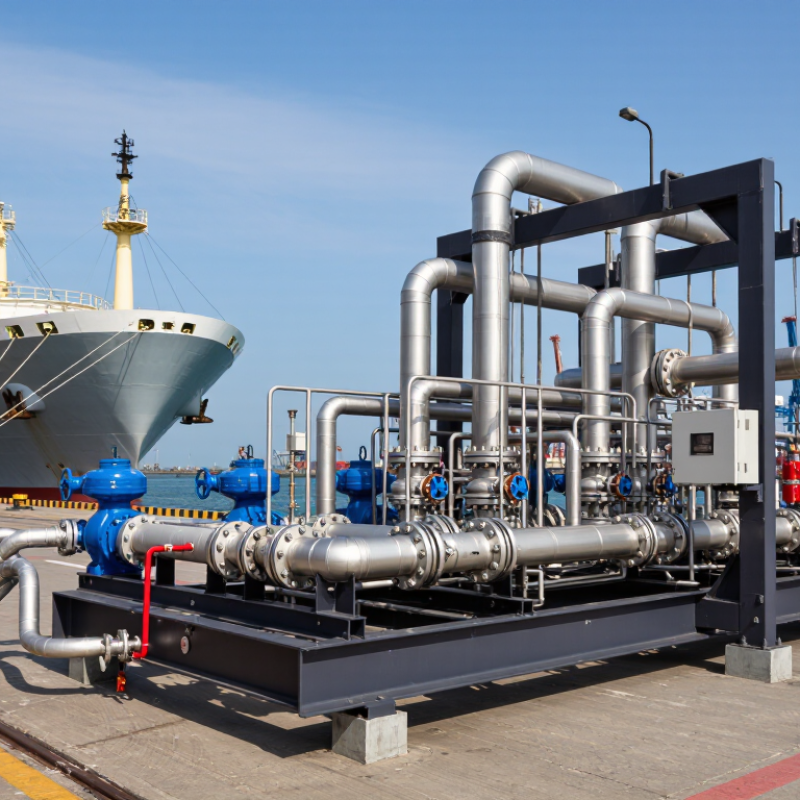
A floating LNG bunkering pump skid moves liquefied natural gas from a storage vessel to a receiving ship. Its purpose is to provide a controlled transfer at the required flow and pressure. The skid combines equipment on a compact structural frame, helping crews connect process lines and monitor operations in limited deck space. Conditions at sea can change quickly. Good layout matters.
Typical components include a cryogenic pump and drive motor, suction and discharge piping, isolation valves, pressure and temperature instruments, and control interfaces.
Depending on the design, filters, leak detection, emergency shutdown connections, and containment features may also be included. Materials and seals must suit cryogenic temperatures. The pump selection should match the transfer duty, available suction conditions, and expected operating range. A component list alone cannot confirm system suitability; engineering review and supplier documentation are still essential.
Tips: Check flow, pressure, and temperature ratings against the vessel’s operating plan. Inspect supports, connections, and instrument access before commissioning. Keep maintenance routes clear. A tidy skid can still hide awkward valve access, so walk through the layout with operators before finalizing it.
QUICK LINKS
CONTACT US
Office: (+86) 755 23040566
Tel: (+86) 158 9965 5195
E-mail: sale@pcbledmodule.com
Skype: Hans@Rocket-PCB
Whatsapp: 86 1589965 5195
Office Address: 2207,Bid 4,He Gu Shan Hui Cheng,35#,Guang Tian RoYanluo street, Song Gang Town,518105 SHENZHENG, CHINA
Plant ADD.: No 69, Lianfeng North Road, Xianxi Area, ChangAn Town, Dongguan, China.


Copyright © 2025 Rocket PCB Solution Ltd. | All Rights Reserved Sitemap Friendship link: CNC machining heat sink

