
English


Choosing among China’s top 10 Arc Welding Equipment manufacturers takes more than comparing prices or catalogues. Buyers need to examine machine stability, duty cycle, control features, service access, and documented quality practices. Small details matter. A feeder that delivers wire consistently can affect a long production shift. So can clear manuals and responsive technical support.
Sindo Kou, author of Welding Metallurgy, offers a useful principle: “Sound welding depends on controlling heat, materials, and joint conditions.” This is a paraphrase of the themes in his work, not a verbatim quotation. It points to a practical truth: equipment should match the process, material, and working environment. A compact inverter may suit field repairs, while a production line may need reliable automation and repeatable settings. There is no universal winner.
This guide compares manufacturers through product range, technical capability, manufacturing experience, certifications, and customer support. It also considers whether companies explain their specifications clearly. That matters. A polished brochure cannot replace verified performance data or a careful trial. Some claims are difficult to compare directly, and available information may be incomplete. Buyers should confirm details with manufacturers before making a decision. The ranking is a starting point, not a substitute for testing equipment against real jobs.
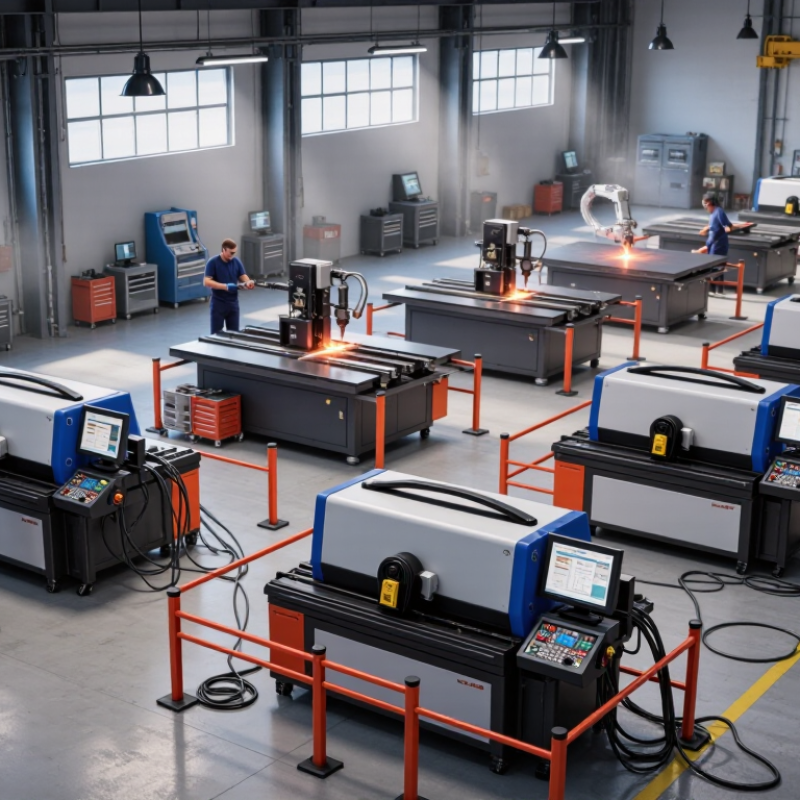
Arc welding equipment converts electrical energy into controlled heat, joining metal parts through a molten weld pool. In factories, power sources, torches, wire feeders, electrodes, and shielding gas work as one system. Operators adjust current, voltage, wire speed, and travel rate to suit material thickness and joint shape. Poor settings can cause spatter, porosity, or weak penetration. Small defects matter.
The equipment supports production of vehicle frames, machinery, structural steel, and pressure vessels. Automated welding cells help maintain repeatable bead placement on high-volume lines, while manual systems remain useful for repairs and irregular assemblies. The International Federation of Robotics reported 541,302 industrial robot installations worldwide in 2023 in World Robotics 2024. Not every robot welds, but the figure reflects manufacturing’s growing use of automation. The American Welding Society has projected that the United States will need 330,000 welding professionals by 2028. Equipment alone cannot close that skills gap.
On a shop floor, stable arc starts and consistent wire feeding can reduce rework and downtime. Yet automation is not a cure-all. Fixtures, surface preparation, ventilation, and operator training still shape weld quality. A rushed setup may erase the gains. Manufacturers should match equipment capacity to the material, duty cycle, and actual production mix, then verify results through inspection.
QUICK LINKS
CONTACT US
Office: (+86) 755 23040566
Tel: (+86) 158 9965 5195
E-mail: sale@pcbledmodule.com
Skype: Hans@Rocket-PCB
Whatsapp: 86 1589965 5195
Office Address: 2207,Bid 4,He Gu Shan Hui Cheng,35#,Guang Tian RoYanluo street, Song Gang Town,518105 SHENZHENG, CHINA
Plant ADD.: No 69, Lianfeng North Road, Xianxi Area, ChangAn Town, Dongguan, China.


Copyright © 2025 Rocket PCB Solution Ltd. | All Rights Reserved Sitemap Friendship link: CNC machining heat sink

