

loading

BLOG

7 Tips for Buying a Glass Sorting Machine

A Glass Sorting Machine is not a purchase you can judge by its brochure alone. Glass color, labels, ceramics, moisture, and feed consistency all affect sorting performance. A line that handles clear container glass may struggle when green and amber fragments arrive mixed with fines. Small details matter. Before comparing models, define the material you process, the purity you need, and the tonnes per hour your plant must sustain.

For transparency, the following is an editorial composite, not a sourced quotation from a real, named specialist: glass-recycling engineer Daniel Mercer says, “Buy for the feed you have, not the feed you hope to receive.” Use representative samples when requesting a trial, and ask how the system performs across changing particle sizes. Check sensor configuration, ejection accuracy, maintenance access, and the supplier’s service response. A machine’s headline capacity means little if frequent cleaning or calibration slows your actual line.

Price deserves scrutiny, but so do operating costs, operator training, spare parts, and integration with existing conveyors. Ask for test results on your own cullet, including recovery and reject rates, then confirm how those figures were measured. The numbers can look tidy on paper. Real feed is less tidy. Some buyers also overlook noise, dust control, and the room needed for safe maintenance. This guide’s seven tips will help you compare equipment with practical questions, not impressive claims alone—and leave space to reconsider assumptions before committing.
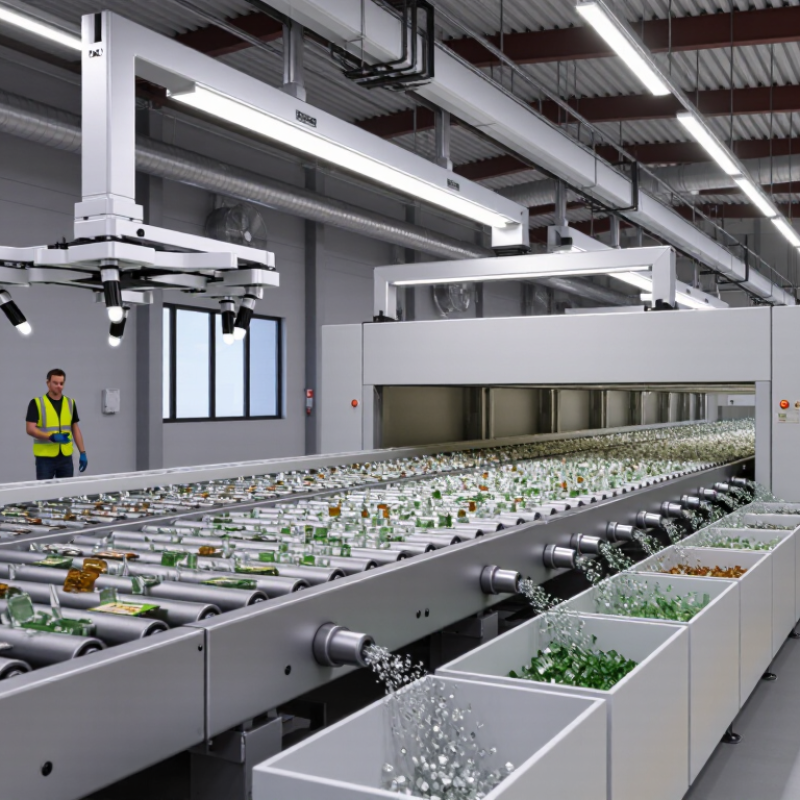
7 Tips for Buying a Glass Sorting Machine

Define feedstock and capacity against EU glass recycling targets: 70% by 2025, 75% by 2030

Before selecting a glass sorting machine, define the feedstock and the target tonnage it must process. The EU Packaging and Packaging Waste Directive sets glass packaging recycling targets of 70% by 2025 and 75% by 2030. Eurostat’s Packaging Waste Statistics report a glass packaging recycling rate of about 75% for the EU in 2022. That headline figure hides local differences. Bottle colors, ceramics, stones, and metal caps can vary sharply between collection routes. Inspect representative loads, including wet or heavily contaminated material, before specifying optical sorting stages. Small details matter.

Size capacity around measured supply, not the largest number on a supplier’s brochure. Record hourly and seasonal peaks, then distinguish incoming tonnes from saleable cullet after rejects and process losses. A line rated for 10 tonnes per hour may deliver less clean glass if feed is mixed or uneven. Ask for test results using your own samples, and check how performance is measured. Is it purity, recovery, or both? The European Commission’s recycling targets concern packaging waste, not an individual plant’s output, so connect machine capacity to your facility’s documented mass balance. I would also revisit assumptions after commissioning; feedstock changes, and forecasts are rarely perfect.

Match sorting technology to glass color, particle size, and contamination

A glass sorting machine must match the material you actually process, not just the colors listed in a brochure. Clear, green, and amber glass may need separate detection settings, especially when pieces are dusty or partly covered by labels. Ask how the sensors distinguish colors under changing light, then test them with a sample from your own line. Small details matter. A few mislabeled fragments can affect the quality of an entire batch.

Particle size changes the sorting challenge. Large, separated pieces are easier for cameras or optical sensors to inspect than tiny shards moving close together. Check the machine’s effective size range and compare it with your screens and conveyor speed. Very fine glass may overlap or pass through too quickly for reliable identification. That sounds obvious, but it is easy to overlook when focusing on rated throughput.

Contamination also matters. Ceramics, stones, and heat-resistant glass can resemble ordinary glass, while metal or paper may need different removal equipment. Ask which contaminants the system can detect and which require upstream cleaning. Run trials with realistic levels of dirt, moisture, and mixed colors; clean samples alone can give a misleading result. I would not assume one setting will suit every batch. Record both recovery and reject rates, since improving purity can sometimes send usable glass into the reject stream.

7 Tips for Buying a Glass Sorting Machine - Match sorting technology to glass color, particle size, and contamination

Tip Feed or sorting goal Technology to consider What to verify before buying Practical acceptance check
1 Separate clear, green, and amber glass into distinct product streams. Visible-light color cameras are commonly used to identify glass by color. The lighting and camera setup should suit the feed and target colors. Ask which colors the system can distinguish in your actual material, including mixed-color pieces, labels, and surface dirt. Run a representative sample and measure both product purity and the amount of saleable glass lost to the reject stream.
2 Process a defined particle-size range, from fine cullet to coarser fragments. Optical sorters are configured for particular size ranges. Screen and size the feed so particles can be presented and identified consistently. Confirm the machine’s tested minimum and maximum particle sizes, required feed preparation, and performance at the smallest and largest sizes you handle. Test each important size fraction separately; do not rely only on results from a blended sample.
3 Remove ceramics, stones, and porcelain (CSP), which can resemble glass in a mixed stream. Ask about sensor options designed to distinguish non-glass materials from glass. The suitable sensor depends on particle size, presentation, and material mix. Check whether the system can detect the specific CSP pieces in your feed, including small fragments and pieces with glass-like colors. Include representative CSP contaminants in a trial and verify removal without excessive rejection of usable glass.
4 Handle metal contamination such as ferrous pieces, aluminum, or metal closures. A magnetic separator can remove ferrous metal; eddy-current separation is commonly used for non-ferrous metals. Optical detection may be appropriate for some remaining contaminants. Determine which contaminants need removal and whether pre-separation is required before optical sorting. Test the full process line, since upstream metal removal can affect the optical sorter’s feed and results.
5 Sort dirty, wet, or label-covered glass without compromising identification. Optical performance depends on what the sensors can see. Screening, washing, drying, or label removal may be needed for consistent results. Ask how dust, moisture, residue, labels, and changing ambient conditions affect detection and cleaning requirements. Use samples that reflect normal feed variation, not only clean, hand-selected material.
6 Meet required throughput while keeping particles sufficiently separated for detection. A belt or chute-based optical sorter may suit the application. Actual capacity depends on particle size, feed presentation, and the number of sorting targets. Request demonstrated throughput for your material and target quality—not just a maximum nameplate figure. Measure sustained throughput, purity, and recovery together during a trial at realistic feed rates.
7 Choose a system that can be operated, cleaned, and maintained reliably. The complete setup includes sensors, feed preparation, ejection hardware, controls, and dust management; all can influence sorting consistency. Check access for cleaning, compressed-air requirements, wear parts, maintenance intervals, training, and support availability. Ask for a written test report using your sample, with agreed methods for measuring purity, recovery, and throughput.

Compare throughput, recovery, and purity using representative feed trials

A glass sorting machine should be tested on material that resembles your actual feed, not a clean sample prepared for a sales demonstration. Collect representative loads across different shifts, including fines, mixed colors, labels, and occasional ceramics. Record moisture and particle-size range; both can affect separation. Keep the feed rate steady, and weigh the input and each output stream. Small details matter.

Compare throughput, recovery, and purity from the same trial. Throughput is the amount processed per hour, but a high figure means little if usable glass is lost. Calculate recovery as the target glass captured divided by target glass in the feed. Measure purity by checking the sorted product for unwanted colors and contaminants. Use a consistent sampling method, and repeat the test. One run is not enough. A hand-sorted check can help verify the results, though it takes time and may introduce its own variation.

Ask for results at more than one operating speed. A faster belt may raise throughput while reducing purity, especially when pieces overlap or arrive in bursts. Note stoppages, adjustments, and rejected material, not just the best reading. Compare the numbers against your required output quality and daily volume. Trial conditions are never perfect. That is worth admitting, and documenting.

Verify integration, uptime, and maintenance with written supplier guarantees

A glass sorting machine earns its place only when it fits the line around it. Verify feed width, conveyor speed, discharge layout, electrical load, control signals, and reject-bin capacity against the supplier’s drawings. Ask for a site acceptance test using your actual cullet, including labels, ceramics, and mixed colors. Define target purity and throughput before signing, then document how each will be measured. Get it in writing. The U.S. EPA’s Advancing Sustainable Materials Management: 2018 Fact Sheet estimated that 31.3% of glass containers were recycled in the United States. That figure shows the value of recovering usable glass, but it cannot predict your plant’s results.

Set an uptime guarantee around an agreed production schedule, not vague “availability.” Specify the measurement period, exclusions, minimum operating rate, alarm logs, and remedy if targets are missed. Clarify what counts as planned maintenance, who supplies wear parts, and how quickly technicians respond. Request service intervals, a critical-spares list, and written operator training. Make guarantees conditional on realistic feed specifications; dirty or wet input can affect results. A clean demonstration may not reveal dust, jams, or shift-change issues. Test those conditions. Have maintenance and controls staff review the agreement; one overlooked interface can become an expensive dispute.

7 Tips for Buying a Glass Sorting Machine

Example buyer-priority ratings (out of 10) for evaluating supplier guarantees. These illustrative scores are not industry benchmarks.

Before purchase, document interface requirements, acceptance-test criteria, uptime measurement and exclusions, response times, spare-parts availability, maintenance schedules, and operator training in the supplier agreement.

Calculate lifecycle costs, including energy, labor, rejects, and spare parts

A glass sorting machine’s purchase price is only the opening figure. Build a lifecycle estimate for its expected service years, using actual throughput and operating hours. Record electricity use at normal feed rates, not just the rated load. A machine beside a dusty conveyor may use more power than a clean test suggests. Small gap, real cost.

Tip: Price energy, labor, rejects, and spares together. Estimate energy from hourly consumption and your electricity tariff. Include time spent cleaning lenses, clearing jams, and checking calibration. Then measure rejects: a small increase in good glass sent to waste can outweigh a lower purchase price. Use current plant data where possible. Assumptions can look precise and still be wrong.

Tip: Request a spare-parts list and realistic replacement intervals. Include belts, lighting modules, air filters, sensors, and service callouts. Check local availability, and include delivery delays in your downtime estimate. Compare annual costs using the same tonnage basis. Leave room for unexpected wear. It is not elegant, but safer than assuming maintenance costs stay flat. After a trial run, update the estimate with measured energy use, labor minutes, and reject rates.

Chat Online
Chat Online
Leave Your Message inputting...
Thank you for your attention. Please kindly describe your question first, or please send your inquiry to our email sale@pcbledmodule.com, and we will reply to you ASAP. Welcome, what can I help you?
Sign in with:



