
English


Buying a Steel Pipe Making Machine is not just a capacity decision. It affects product consistency, labor needs, energy use, and the time required to change pipe sizes. Global buyers should compare real production requirements with machine specifications—not rely on brochure figures alone. A quoted output rate may depend on steel grade, wall thickness, forming speed, and operator skill. Ask suppliers to explain the conditions behind their numbers.
Steel machinery specialist Elena Ward puts the principle this way: “Choose the line your team can run, maintain, and verify—not simply the fastest line on paper.” Use that as a practical question, not a substitute for documented evidence. Request sample pipe, inspect weld quality, and clarify which tooling, controls, and commissioning services are included. Check spare-part availability and response times in your region. A short video call is useful; a witnessed acceptance test is better. Details matter.
This guide outlines seven buying tips for global buyers, from defining output needs to assessing technical support. It also points to questions worth raising before signing a purchase agreement. Some details may still be uncertain until a supplier demonstrates the equipment with your material and specifications. That is worth acknowledging. A careful comparison can reveal gaps early—and help buyers choose a Steel Pipe Making Machine that fits their plant, people, and production plans.
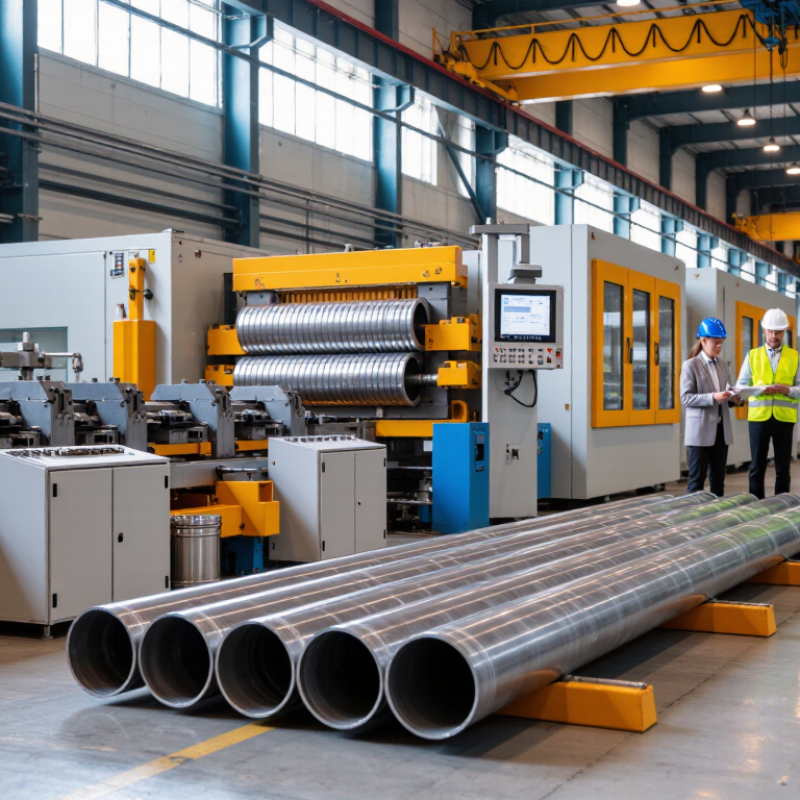
Before comparing quotes, write down the pipe range: outside diameter, wall thickness, steel grade, length, and end finish. These details shape the forming stands, welding system, sizing section, and cutting equipment. A line designed for thin decorative tubing may not handle heavy structural pipe reliably. Small details matter.
Match the machine to recognized product requirements. ASTM A500/A500M covers cold-formed welded and seamless carbon steel structural tubing; ISO 3183 specifies steel pipe for pipeline transportation systems. They are not interchangeable. Confirm the required standard, grade, dimensional tolerances, and inspection steps with your customers. World Steel Association’s World Steel in Figures 2024 reports 1,892.2 million tonnes of crude steel production in 2023. That figure signals the industry’s scale, not your likely pipe demand. Base capacity on actual orders and product mix.
Ask suppliers for output rates at your most demanding combination of diameter and wall thickness, not just the fastest advertised speed. Specify annual shifts, expected changeovers, scrap allowance, and acceptable downtime. A machine’s theoretical speed can look impressive on paper. Saleable output is what pays. I would also leave room for uncertainty: forecasts change, and a narrow product range can become a costly constraint. Request sample production data, weld-quality records, and a trial using your own material before final acceptance.
| Tip | Specification to Define | Useful Planning Data | Buyer Action |
|---|---|---|---|
| 1. Set the pipe size range | Minimum and maximum outside diameter, wall thickness, and finished pipe length. | As an initial planning example for a small-to-medium ERW line, a product range might be approximately 20–76 mm outside diameter and 0.8–3.0 mm wall thickness. Actual limits depend on the mill design, material, and tooling. | List the smallest, largest, and most frequently produced sizes. Ask the supplier to confirm capability across the full diameter-and-thickness combination, not just at the range limits. |
| 2. Specify material and grade | Steel type, grade, strip width and thickness, coil weight, and applicable material standard. | Common ERW feedstock includes low-carbon steel strip. Typical grades and requirements vary by market and end use; examples include structural and general-purpose carbon-steel specifications. | Provide the material certificates or relevant grade standards. Confirm that the line’s forming, welding, and sizing sections suit the strip thickness and strength you intend to process. |
| 3. Identify end use and product standard | Application, dimensional tolerances, weld requirements, inspection criteria, and required product standard. | Structural, furniture, mechanical, and fluid-service pipes can have different requirements. The applicable standard depends on the destination market and intended use. | Name the target standard and product class before requesting a quotation. Confirm which tests and inspections are included in the proposed production and quality-control setup. |
| 4. Calculate realistic production demand | Required saleable output by product size, shift pattern, and annual operating days. | Plan from saleable tonnes per year rather than relying only on a stated maximum line speed. Net output is affected by pipe size, changeovers, stops, scrap, and operating hours. | Share a product-mix forecast and shift schedule. Ask for estimated output by representative sizes, together with the assumptions for working hours, availability, and yield. |
| 5. Match line speed to the product mix | Required operating speed for each pipe size and thickness, plus the expected production mix. | Line speed is not a single fixed production figure: heavier or larger products and downstream operations can limit practical output. Maximum speed should be evaluated alongside weld quality and finishing capacity. | Request speed and output estimates for the sizes you expect to run most often. Clarify whether quoted figures are maximum mechanical speeds or sustained production rates. |
| 6. Define changeover and tooling needs | Number of product sizes, changeover method, roll sets, and expected frequency of size changes. | More product sizes can require additional forming and sizing tooling. Changeover time depends on the mill layout, tooling arrangement, setup method, and operator procedure. | Provide a size list and anticipated batch sizes. Ask which tooling is included, what changes require manual adjustment, and how changeover time is estimated. |
| 7. Check site and utility requirements | Available floor space, power supply, compressed air, cooling water, extraction, and material-handling capacity. | Utility loads and layout are machine-specific. The complete line may also need space for coil storage, an uncoiler, finishing equipment, inspection, and finished-pipe handling. | Request a layout drawing and utility schedule before preparing the site. Confirm local electrical compatibility, foundation requirements, safety provisions, and the scope of installation support. |
QUICK LINKS
CONTACT US
Office: (+86) 755 23040566
Tel: (+86) 158 9965 5195
E-mail: sale@pcbledmodule.com
Skype: Hans@Rocket-PCB
Whatsapp: 86 1589965 5195
Office Address: 2207,Bid 4,He Gu Shan Hui Cheng,35#,Guang Tian RoYanluo street, Song Gang Town,518105 SHENZHENG, CHINA
Plant ADD.: No 69, Lianfeng North Road, Xianxi Area, ChangAn Town, Dongguan, China.


Copyright © 2025 Rocket PCB Solution Ltd. | All Rights Reserved Sitemap Friendship link: CNC machining heat sink

