

Outdoor lighting should do more than brighten a path. It should work quietly, reliably, and with little daily attention. Solar Post Lights offer a practical way to frame driveways, garden gates, patios, and walkways. During daylight, their panels collect sunlight. At dusk, built-in sensors activate the lamps automatically. This simple cycle can make an entrance feel safer and more welcoming. A warm glow on a wooden fence can also improve a home’s evening character.
From an installation perspective, Solar Post Lights avoid trenching, outdoor wiring, and nearby electrical outlets. That can reduce disruption during a landscape upgrade. However, performance depends heavily on placement. A shaded corner may produce weak illumination after a cloudy afternoon. Battery capacity, panel angle, weather resistance, and LED quality all deserve attention. Look for clear product specifications and credible safety testing. A reputable manufacturer should explain operating time, charging conditions, and replacement parts. These details matter more than attractive product photography.
Their environmental advantage is practical rather than absolute. They use renewable daylight, but batteries and electronic components still require responsible disposal. Good design choices include spacing fixtures evenly and aiming light downward. This limits glare and preserves the calm of the surrounding space. Solar Post Lights are not perfect for every property. In northern seasons or heavily shaded yards, wired lighting may provide steadier output. Still, when matched with realistic expectations, they can deliver dependable, low-maintenance illumination. The smartest choice begins with observing the site, not buying the brightest fixture.
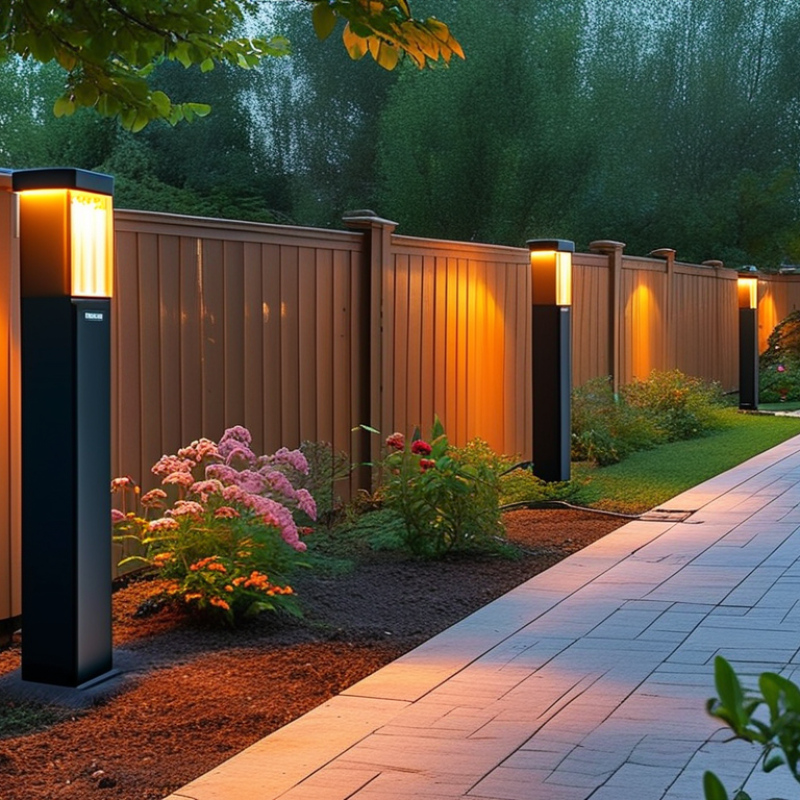
The panel’s position matters more than many homeowners expect. A post beneath tree branches may receive attractive daylight but insufficient charging energy. Shadows from fences can create the same problem. During a site check, look for several hours of direct sun and keep the panel reasonably clean. Dust, pollen, and bird marks reduce available light. Small details matter.
Battery capacity affects brightness and runtime. A larger battery may support longer winter nights, but it also costs more and needs suitable charging conditions. Some controls add motion detection or adjustable brightness, which can reduce unnecessary energy use. I have seen settings left at maximum brightness, draining the battery before sunrise. That choice is convenient, but not always smart.
LEDs usually provide steady illumination, yet their color temperature changes how a path feels. Warm light can appear comfortable near seating areas, while cooler light may improve visibility along steps. Performance remains imperfect in heavy shade, short winter days, or prolonged rain. Those limits deserve honest attention before installation.
Solar post lights work through a simple daily cycle. A photovoltaic cell absorbs sunlight during the day and converts it into electrical energy. That energy charges an internal rechargeable battery. At dusk, a light sensor activates the LED automatically. The battery then powers the lamp through the night, without trenching or household wiring.
This system is efficient, but not flawless. Short winter days, heavy shade, dust, and cloudy weather reduce charging time.
The U.S. Department of Energy reports that LEDs use at least 75% less energy and last up to 25 times longer than incandescent bulbs.
That efficiency helps small batteries provide useful illumination. The International Energy Agency also reported about 510 gigawatts of renewable capacity additions worldwide in 2023, showing the growing role of solar technology. Still, a small post light cannot replace strong security lighting.
Tips: Place each panel where it receives several hours of direct sunlight. Keep leaves and dust off the surface. Check the battery’s replacement cycle before installation. Warm-white LEDs usually create a softer pathway glow. Cool-white light can feel harsher. One detail is easy to overlook: decorative brightness may look attractive, yet it often provides limited visibility. Reviewing the light’s lumen rating and nighttime runtime is more reliable than judging appearance alone.
Why Are Solar Post Lights a Smart Outdoor Lighting Choice?
Solar post lights pair a small photovoltaic panel with efficient LED technology. The U.S. Department of Energy reports that LEDs use up to 75% less energy than incandescent lighting. They can also last up to 25 times longer, according to the same Energy Saver guidance. That matters outdoors. Lower consumption helps a compact battery power evening illumination without a wired connection.
A typical light collects sunlight during the day, stores energy, and switches on at dusk. This design can reduce trenching, cabling, and electricity use for pathways or garden entrances. The International Energy Agency has reported that lighting represents about 15% of global electricity consumption. Efficient outdoor fixtures can support broader energy-saving efforts, especially across many properties.
The calculation is not perfect. Solar panels charge slowly under shade, dust, or short winter daylight. A cloudy week may produce dimmer output than expected. Battery capacity also declines over time, and bright decorative settings consume energy faster. Practical experience suggests placing posts where panels receive several hours of direct sunlight. Regular cleaning helps, but it does not solve every seasonal limitation. A thoughtful installation balances appearance, nighttime safety, panel exposure, and realistic brightness expectations.
| Evaluation Dimension | Traditional Incandescent Post Light | Grid-Powered LED Post Light | Solar-Powered LED Post Light | Practical Advantage |
|---|---|---|---|---|
| Typical lamp power used for comparison | 60 W incandescent bulb | 9 W LED bulb providing a comparable general-purpose lighting level | Integrated LED powered by a rechargeable battery | LED technology delivers similar illumination with substantially lower power demand. |
| DOE-reported LED energy advantage | Baseline | LEDs use at least 75% less energy than incandescent lighting for comparable light output | Uses the same LED efficiency advantage, plus solar charging | Lower electricity consumption can reduce operating costs and environmental impact. |
| Grid electricity used during operation | Required | Required | None during normal operation | Solar post lights can operate without trenching or connecting to an outdoor electrical circuit. |
| Estimated annual grid electricity consumption* | 175.2 kWh | 26.3 kWh | 0 kWh from the grid | The LED comparison uses approximately 85% less electricity than the 60 W incandescent example. |
| Illustrative annual electricity cost* | $28.03 | $4.20 | $0.00 for grid electricity | Actual savings depend on local electricity prices, sunlight, usage, and system performance. |
| Installation requirements | Electrical wiring, compatible socket, and replacement bulb | Electrical wiring, compatible socket, and replacement bulb or fixture | Suitable location with adequate direct sunlight; no utility wiring required | Solar installation can be useful for pathways, gardens, driveways, and areas where wiring is difficult. |
| Light activation | Manual switch, timer, or motion sensor | Manual switch, timer, or motion sensor | Typically dusk-to-dawn sensor, timer, or motion sensor | Automatic controls can reduce unnecessary nighttime operation. |
| Dependence on weather and daylight | Low; depends mainly on the electrical supply | Low; depends mainly on the electrical supply | Higher; several cloudy days can reduce battery charge and nighttime runtime | Place the solar panel away from shade and clean it periodically for better charging performance. |
| Maintenance considerations | Frequent bulb replacement and cleaning | Less frequent replacement; periodic cleaning | Panel cleaning and eventual rechargeable battery replacement | Solar lights avoid wiring maintenance but still require battery and panel care. |
| Best use case | Existing wired fixtures where low initial cost is the main priority | Locations requiring dependable, high-duration lighting from the electrical grid | Decorative or pathway lighting where simple installation and off-grid operation are priorities | The best option depends on brightness, reliability, sunlight availability, and installation conditions. |
| *Illustrative calculation assumes one light operating 8 hours per night for 365 nights. Annual cost uses an electricity rate of $0.16 per kWh. Solar figures exclude the energy used to manufacture the product and any backup charging from the grid. | ||||
| Key takeaway: Solar post lights combine efficient LED illumination with on-site solar charging. They can reduce grid electricity use to zero during normal operation, while LEDs independently provide a major efficiency advantage over incandescent lighting. Performance is strongest when the panel receives sufficient direct sunlight and the light is matched to the required brightness and runtime. | ||||
Solar post lights can make outdoor spaces safer and more inviting without trenching electrical cables. Their independent solar panels collect daylight, while built-in batteries power the light after sunset. They suit pathways, driveways, garden borders, and entrances where wiring would be difficult.
Weather resistance is a major reason to consider them. An IP65 rating means the housing is dust-tight and protected from water jets. Fine grit cannot easily enter the enclosure. Heavy rain should not stop normal operation. However, IP65 does not mean the light can be submerged. Avoid placing it in areas that regularly flood or collect standing water.
Small details still matter. I have seen outdoor lights perform well after repeated rain, yet fail when water pooled around a poorly sealed base. Keep the solar panel clear of leaves and aim it toward open daylight. Check the housing, cable openings, and mounting screws during seasonal maintenance. Cold, shade, and several cloudy days can also reduce battery performance. That limitation is easy to overlook. A light may be weather-resistant but still need thoughtful placement and occasional cleaning. Using IP65 as a starting point, rather than a guarantee against every outdoor problem, leads to a more dependable installation.
IP65 means the enclosure is dust-tight and protected against water jets from any direction. This makes it suitable for many outdoor environments, although IP65-rated products are not designed for immersion in water.
Solar post lights can simplify outdoor lighting where trenching is costly or disruptive. Their performance, however, begins with careful site planning. NREL solar-resource data can show regional sunlight patterns, helping homeowners estimate daily solar availability before installation. This information is useful, but it is not a complete site assessment.
Measure the proposed location throughout the day. A post beside a tall fence may receive strong morning sun but heavy afternoon shade. Trees, rooflines, and seasonal shadows can reduce charging time. Place the panel toward the most open sky, while keeping the light near the walkway or driveway. NREL data can guide sizing, yet local observations should influence the final choice. A cloudy winter week may expose an undersized battery. That is worth noticing.
Tips: Check sunlight at 9 a.m., noon, and 3 p.m. Mark winter shadows if possible. Choose a larger panel or battery for shaded areas. Keep expectations realistic. A brighter fixture is not always better. Select lighting that matches the path’s safety needs, rather than relying on maximum output. Use measured distances and expected nightly hours when comparing sizes. Even experienced installers can miss reflected shade from nearby walls, so review the location after installation.
QUICK LINKS
CONTACT US
Office: (+86) 755 23040566
Tel: (+86) 158 9965 5195
E-mail: sale@pcbledmodule.com
Skype: Hans@Rocket-PCB
Whatsapp: 86 1589965 5195
Office Address: 2207,Bid 4,He Gu Shan Hui Cheng,35#,Guang Tian RoYanluo street, Song Gang Town,518105 SHENZHENG, CHINA
Plant ADD.: No 69, Lianfeng North Road, Xianxi Area, ChangAn Town, Dongguan, China.


Copyright © 2025 Rocket PCB Solution Ltd. | All Rights Reserved Sitemap Friendship link: CNC machining heat sink