
English


A Permanent Formwork Magnet is a reusable fixing device that holds formwork against a steel casting table during precast concrete production. Its magnetic force helps keep the mould in position while concrete is placed and compacted. Many systems use a mechanical button or lever to engage and release the magnet, though designs vary by manufacturer. The principle is simple. The practical details are not. Table thickness, surface condition, magnet capacity, and formwork geometry can all affect performance. A magnet that fits one setup may not suit another.
The wider context is resource efficiency. The United Nations Environment Programme and Global Alliance for Buildings and Construction reported in the 2024 Global Status Report for Buildings and Construction that buildings and construction account for 32% of global energy use and 34% of energy- and process-related carbon dioxide emissions. Those figures describe the sector, not the impact of formwork magnets specifically. Still, they underline why production methods deserve careful attention. In a precast plant, secure, repeatable formwork positioning can support consistent casting workflows and reduce avoidable adjustments. It is not a substitute for sound engineering. Buyers should check manufacturer data, rated holding force, release method, and compatibility with their casting bed before choosing a system. That distinction is easy to miss. This guide explains how a Permanent Formwork Magnet works, where it is used, and which practical checks matter most.
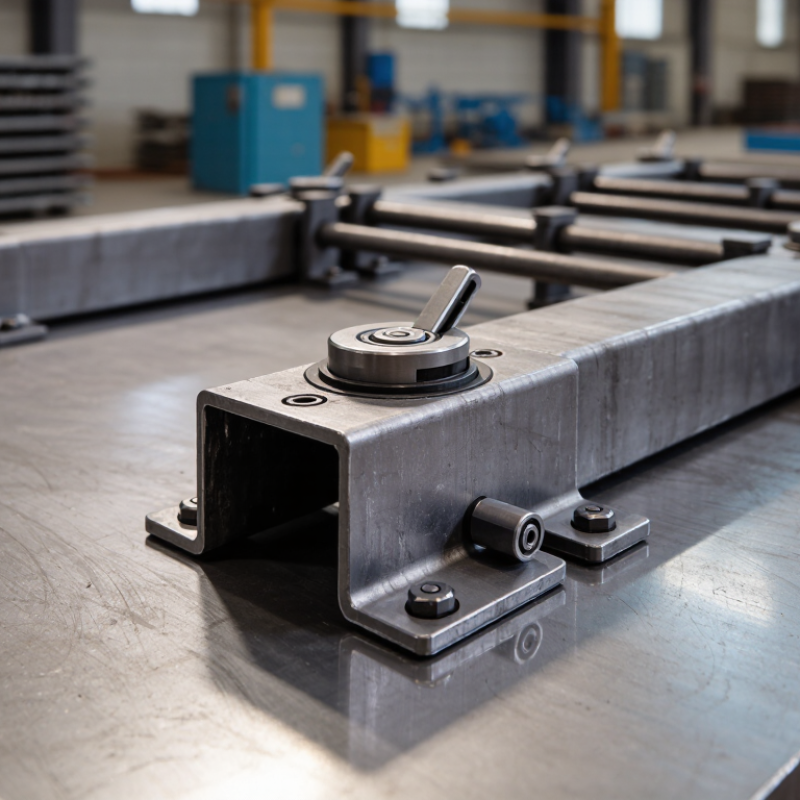
A permanent formwork magnet is a reusable fixture that holds steel side rails on a steel casting bed during precast concrete production. Its permanent magnets create the holding force; a mechanical switch or lever usually activates or releases the unit. No electrical supply is needed to maintain the magnetic force. In practice, an operator places the magnet against the bed, positions the rail, then engages the fixture. The rail forms the concrete edge. Simple, but not effortless.
The purpose is to keep formwork in position while concrete is placed and vibrated, then allow quicker repositioning for another casting setup. A magnet’s actual holding capacity depends on factors such as bed flatness, cleanliness, rail geometry, and applied loads. Concrete pressure matters. So does vibration. “Permanent” can be misleading: the magnet is reusable, but its setup still needs checking. UNEP and GlobalABC reported that buildings and construction produced 37% of global energy- and process-related CO2 emissions in 2022. That sector-wide figure does not measure magnet performance, but it reinforces the value of controlling material waste and rework. A well-positioned magnet can support repeatable setups; it cannot replace load checks or careful placement.
QUICK LINKS
CONTACT US
Office: (+86) 755 23040566
Tel: (+86) 158 9965 5195
E-mail: sale@pcbledmodule.com
Skype: Hans@Rocket-PCB
Whatsapp: 86 1589965 5195
Office Address: 2207,Bid 4,He Gu Shan Hui Cheng,35#,Guang Tian RoYanluo street, Song Gang Town,518105 SHENZHENG, CHINA
Plant ADD.: No 69, Lianfeng North Road, Xianxi Area, ChangAn Town, Dongguan, China.


Copyright © 2025 Rocket PCB Solution Ltd. | All Rights Reserved Sitemap Friendship link: CNC machining heat sink

