
English


A lithium rv battery can transform how an RV handles power, but the upgrade is not automatically worthwhile. Most RV lithium options use lithium iron phosphate chemistry, often called LiFePO4. Compared with many lead-acid batteries, they can weigh less, deliver more usable capacity, and recharge faster when the system supports it. That can mean fewer generator hours and more energy for lights, a refrigerator, or a quiet evening off-grid. Small changes matter.
RV electrical educator Mike Sokol offers a practical warning: “A lithium battery is not always a drop-in replacement.” The battery must work with the RV’s charger, inverter, wiring, and battery monitor. Cold-weather charging also needs attention; some batteries require protection that prevents charging at low temperatures. Compatibility is easy to overlook. So is the total cost.
This guide explains what a lithium rv battery is, how it differs from lead-acid, and which features deserve a closer look. It also weighs real benefits against installation costs and limitations. For example, a lighter battery may free up payload, while a compatible charging system may add expense. The right choice depends on how you travel, how much power you use, and whether your current equipment can support the change. There is no universal answer. I would not treat longer service life as guaranteed; usage, temperature, charging, and product quality all matter. With those details in view, you can decide whether lithium fits your RV—or whether a simpler battery setup makes more sense.
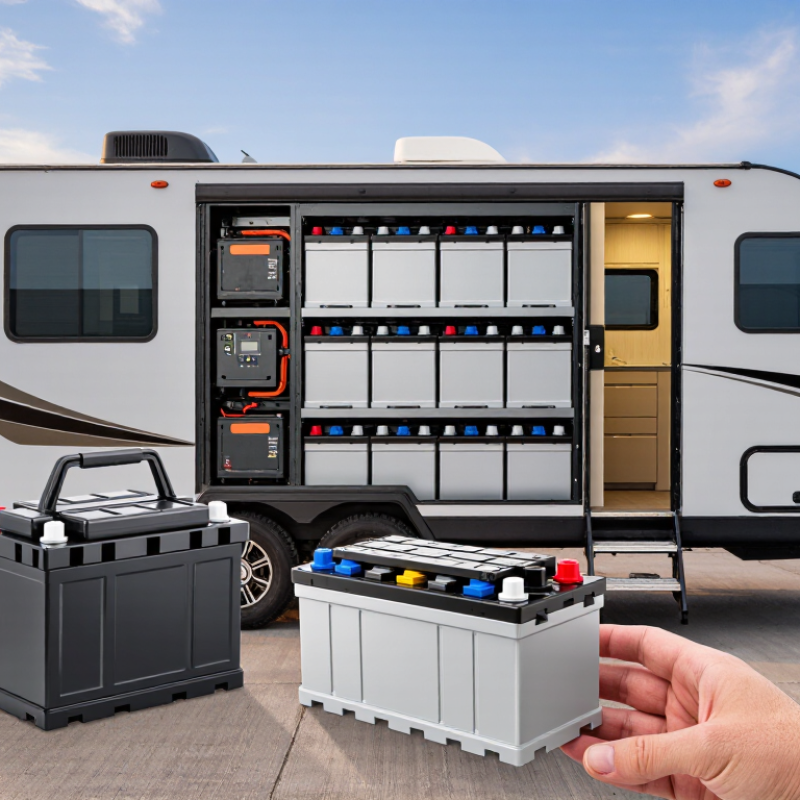
A lithium RV battery is a rechargeable battery that stores electricity for lights, a refrigerator, water pump, and other onboard equipment. Many RV models use lithium iron phosphate chemistry, often called LiFePO4, though “lithium” can describe several chemistries. They differ in performance and operating limits.
Inside the case, individual cells hold and release energy. A built-in battery management system monitors conditions such as voltage and temperature. It can limit charging or disconnect the battery if readings move outside its safe range. That protection matters, but it does not make every charger compatible. Check the battery’s specifications and your RV’s converter before installation.
Capacity is commonly listed in amp-hours, while voltage helps indicate the system it suits. A 100-amp-hour battery is not automatically right for every RV; daily power use and available charging sources matter. Lithium batteries can weigh less than comparable lead-acid batteries and may provide more usable capacity, but they often cost more upfront. Cold-weather charging also needs attention, since some batteries restrict charging at low temperatures. The details are easy to overlook. I would not choose one by capacity alone; check its charge limits, mounting requirements, and warranty terms.
QUICK LINKS
CONTACT US
Office: (+86) 755 23040566
Tel: (+86) 158 9965 5195
E-mail: sale@pcbledmodule.com
Skype: Hans@Rocket-PCB
Whatsapp: 86 1589965 5195
Office Address: 2207,Bid 4,He Gu Shan Hui Cheng,35#,Guang Tian RoYanluo street, Song Gang Town,518105 SHENZHENG, CHINA
Plant ADD.: No 69, Lianfeng North Road, Xianxi Area, ChangAn Town, Dongguan, China.


Copyright © 2025 Rocket PCB Solution Ltd. | All Rights Reserved Sitemap Friendship link: CNC machining heat sink

