
English


A Winch Rocker Switch looks simple on a dashboard: a compact toggle, a few terminals, and two short wire runs. Yet those connections control a powerful recovery system. A loose ground can leave the winch unresponsive; incorrect wiring can damage the switch or create a hazard. Small details matter.
This guide explains how to identify the switch terminals, follow the winch manufacturer’s wiring diagram, and connect control wires without confusing them with the heavy battery cables. You’ll see why wire gauge, secure terminals, and a properly rated circuit protection device deserve attention. Before touching the wiring, disconnect power and check the winch and switch manuals. Keep the work area dry. Label each wire. Then verify the connections before restoring power. It is tempting to rely on wire colors alone. Don’t. Colors vary between products.
A credible expert quotation should be verified against its original source. No source article or attributable expert statement was provided, so this introduction does not invent a name or quote. Insert a confirmed quotation here: “[Verified expert’s exact words],” says [Expert Name], [relevant qualifications or organization]. That extra check may feel fussy. It protects readers from false authority. Wiring also rewards a second look: a switch can click normally while a terminal remains loose. The following steps focus on careful identification and manufacturer-approved connections, not guesswork.
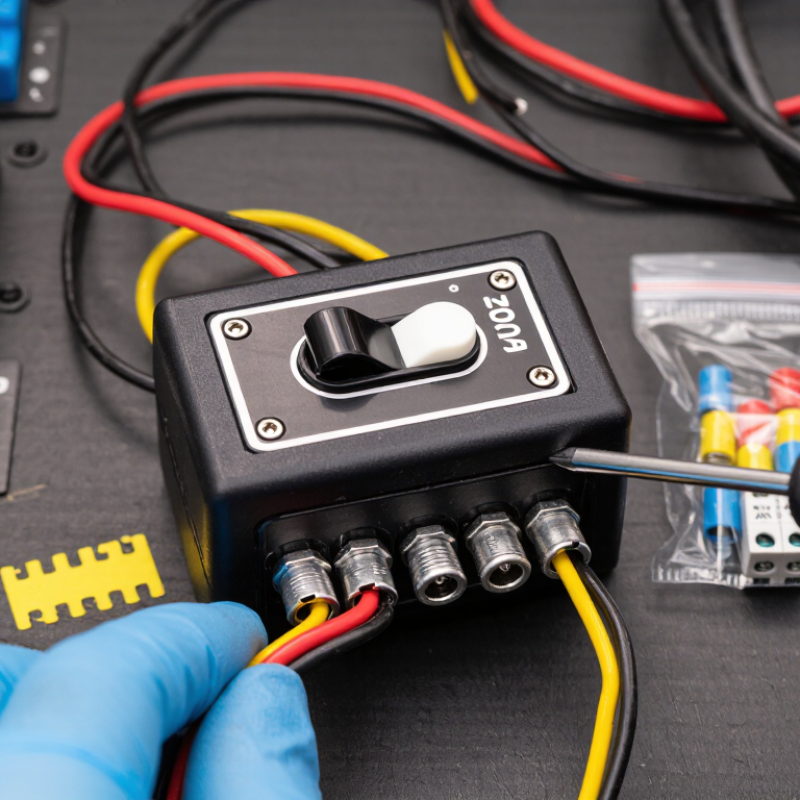
A winch rocker switch usually controls a solenoid, not the winch motor’s heavy current. Two common types are momentary and maintained switches. A momentary switch powers a direction only while you press it, then springs back to neutral. A maintained switch stays in position until moved again. For most winch controls, momentary operation helps prevent accidental, sustained movement.
Many rocker switches use a double-pole, double-throw arrangement to reverse the control signals for “in” and “out.” Other models send separate signals to a solenoid pack. Check the switch diagram and terminal markings before connecting wires; similar-looking switches may have different internal layouts. Labels can mislead. Disconnect the battery before work, use wire suited to the control circuit, and protect that circuit with the specified fuse. Never route motor-current cables through a switch unless it is explicitly rated for that load.
Tips: With the battery disconnected, identify power, ground, and direction terminals from the wiring diagram. Secure connections against vibration, then test each direction briefly in a clear area. If the winch moves opposite to the rocker label, stop and recheck the control wiring. It is easy to assume the colors match; they may not.
QUICK LINKS
CONTACT US
Office: (+86) 755 23040566
Tel: (+86) 158 9965 5195
E-mail: sale@pcbledmodule.com
Skype: Hans@Rocket-PCB
Whatsapp: 86 1589965 5195
Office Address: 2207,Bid 4,He Gu Shan Hui Cheng,35#,Guang Tian RoYanluo street, Song Gang Town,518105 SHENZHENG, CHINA
Plant ADD.: No 69, Lianfeng North Road, Xianxi Area, ChangAn Town, Dongguan, China.


Copyright © 2025 Rocket PCB Solution Ltd. | All Rights Reserved Sitemap Friendship link: CNC machining heat sink

