English


Choosing the right Lightning Arrestor is a reliability decision, not a simple product comparison. A rooftop unit may face direct strikes, while a transformer may experience repeated surge currents through connected cables. These conditions demand different protection strategies. The wrong device can fail silently, leaving equipment exposed during the next storm.
Lightning is extremely energetic. The U.S. National Oceanic and Atmospheric Administration’s National Severe Storms Laboratory reports that a lightning channel can reach about 50,000°F, roughly five times hotter than the Sun’s surface. That figure explains why arrestor selection requires more than checking voltage alone. Engineers should examine system voltage, grounding quality, impulse current, energy capability, response characteristics, and installation location. Small details matter.
Standards provide a stronger foundation. IEEE Standard C62.11 defines performance requirements for metal-oxide surge arresters, while IEC 60099-4 addresses metal-oxide surge arresters without gaps for alternating-current systems. Vaisala’s Annual Lightning Report also demonstrates the value of measured lightning data when assessing regional exposure and storm frequency. These sources offer authority, but they cannot replace site experience. Soil resistance may vary across one facility. Cable length can also change the surge path.
A careful choice balances protection, coordination, maintenance, and cost. It should match the equipment’s insulation level and temporary overvoltage conditions. It should also tolerate the local environment, including heat, moisture, pollution, and altitude. No guide removes every uncertainty. That is worth admitting. A technically impressive arrestor can still underperform if grounding is poor or installation practices are careless. The best selection process combines recognized standards, verified test data, field inspection, and a clear understanding of how lightning actually enters the system.
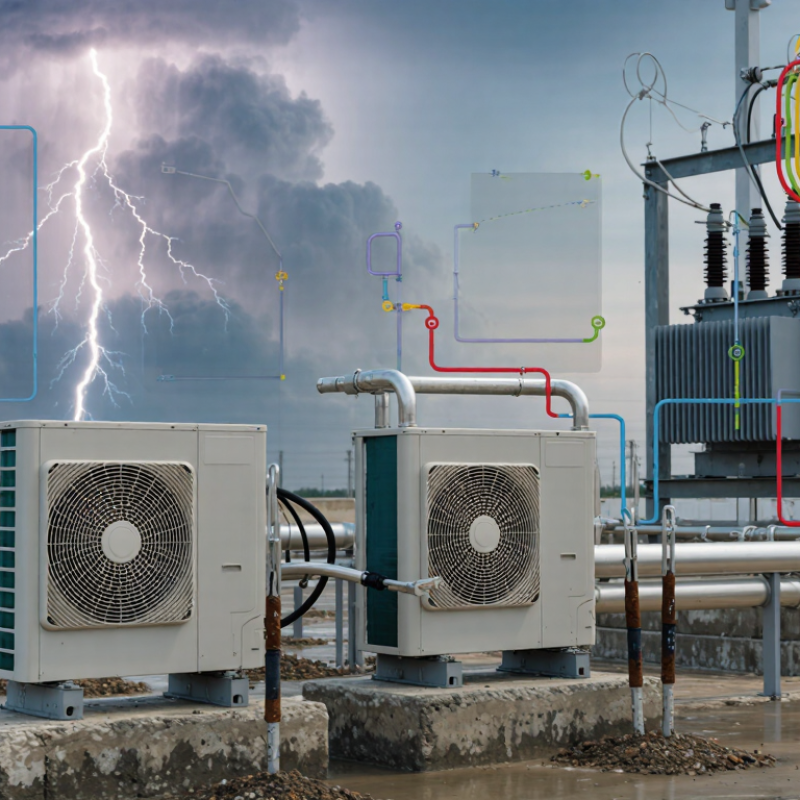
Choosing the right lightning arrestor begins with understanding its role. It is not a magical shield. It provides a controlled path for surge energy to reach earth. During a nearby strike, voltage can rise sharply on power, control, or communication lines. The arrestor limits this rise before insulation and sensitive equipment suffer damage. Its performance depends on grounding, bonding, and installation distance. A high-quality device cannot correct a weak earth connection. That detail is often underestimated.
Selection should match system voltage, temporary overvoltage exposure, discharge capacity, and response behavior. Review the equipment’s insulation level and the site’s lightning exposure. A rooftop array, factory panel, and rural pump may need different protection. In practice, technicians inspect conductor length, enclosure condition, and signs of heat or moisture. These details matter. Simple installation errors can undermine otherwise suitable protection. No choice is perfect without site measurements and maintenance records. Rechecking assumptions is worthwhile.
Tips: Keep leads short and straight. Use proper conductor sizes. Bond metal structures to the same grounding system. Check the arrestor after major storms. Replace it when its indicator changes or damage appears. Follow recognized electrical standards and technical data. Ask a qualified professional to verify coordination with upstream protection. A device may look intact while its internal components are exhausted. That possibility deserves attention.
QUICK LINKS
CONTACT US
Office: (+86) 755 23040566
Tel: (+86) 158 9965 5195
E-mail: sale@pcbledmodule.com
Skype: Hans@Rocket-PCB
Whatsapp: 86 1589965 5195
Office Address: 2207,Bid 4,He Gu Shan Hui Cheng,35#,Guang Tian RoYanluo street, Song Gang Town,518105 SHENZHENG, CHINA
Plant ADD.: No 69, Lianfeng North Road, Xianxi Area, ChangAn Town, Dongguan, China.


Copyright © 2025 Rocket PCB Solution Ltd. | All Rights Reserved Sitemap Friendship link: CNC machining heat sink