
English


Choosing the right Crushing Machine is a production decision, not merely a purchasing decision. Material hardness, feed size, moisture, capacity, and final product shape all influence the result. A machine that performs well in a dry granite quarry may struggle with sticky limestone. Small details matter. The wrong choice can increase energy use, downtime, and liner wear.
Industry data shows why careful selection matters. The U.S. Geological Survey’s Mineral Commodity Summaries 2025 estimated U.S. crushed stone production at roughly 1.5 billion metric tons in 2024. This scale reflects constant demand for reliable aggregate processing. Grand View Research also identifies construction growth, infrastructure investment, and mining activity as major drivers of the global crushing equipment market. However, market forecasts vary between research firms. That difference deserves attention, rather than blind acceptance.
This guide explains how to compare jaw, cone, impact, and gyratory crushers for specific operating conditions. It considers reduction ratios, throughput, maintenance access, operating costs, and safety controls. A quarry manager may prioritize ruggedness and simple servicing. A recycling contractor may need mobility and strong metal separation. Neither application has one universal answer. Field experience, manufacturer test results, and verified performance data should support the final decision. Even experienced teams sometimes underestimate moisture or fluctuating feed sizes. That mistake is avoidable. A practical evaluation begins with representative material samples, realistic production targets, and clear lifecycle-cost calculations.
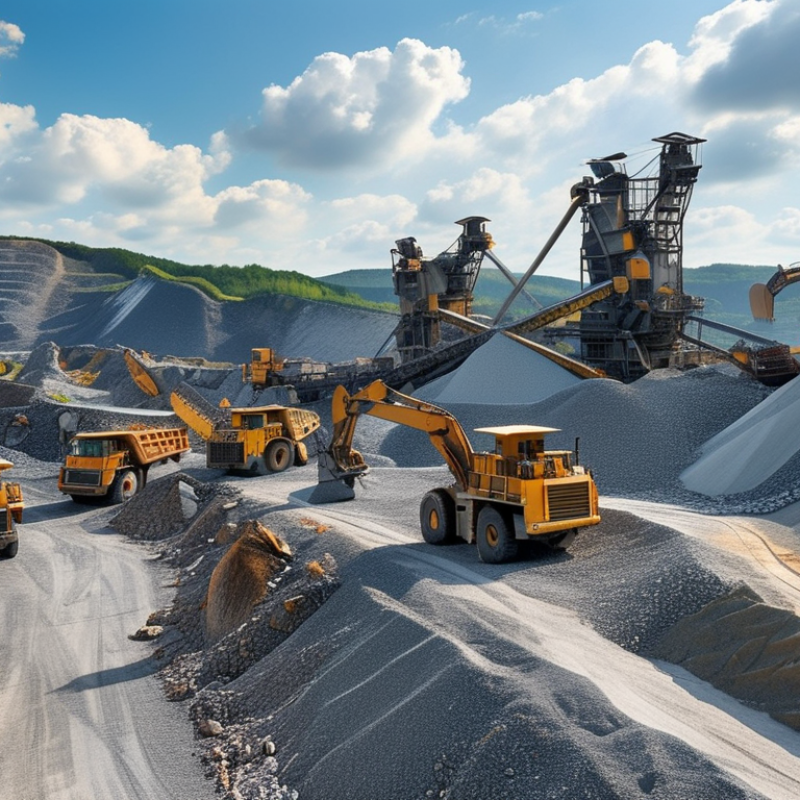
Start with the feed. A jaw crusher is commonly used for primary crushing because it accepts large, irregular stones. Its simple compression action suits hard rock and recycled concrete. A gyratory crusher handles very high capacities, but it usually needs more space and careful installation.
Measure the largest feed size before choosing. Guessing here can create blockages, downtime, and unnecessary repairs.
Cone crushers reduce already-processed material into a more uniform shape. They work well with abrasive stone and are useful in secondary or tertiary stages.
Impact crushers use rapid blows, producing cubical particles from softer or moderately hard material. They can perform well with concrete, limestone, and certain recycled aggregates.
Moisture changes everything. Wet, sticky feed may clog impact chambers or screens, even when the machine appears powerful enough.
I have seen a production plan fail because output size was treated as the only target.
Capacity, reduction ratio, moisture, abrasiveness, and maintenance access must be checked together.
A small jaw crusher may be practical for a limited site, while a cone unit may better support continuous production.
Review sample material through controlled testing when possible. That choice matters.
Also check wear patterns after several shifts, not just on installation day.
The first selection may need adjustment.
Real operating data often challenges the original calculation.
QUICK LINKS
CONTACT US
Office: (+86) 755 23040566
Tel: (+86) 158 9965 5195
E-mail: sale@pcbledmodule.com
Skype: Hans@Rocket-PCB
Whatsapp: 86 1589965 5195
Office Address: 2207,Bid 4,He Gu Shan Hui Cheng,35#,Guang Tian RoYanluo street, Song Gang Town,518105 SHENZHENG, CHINA
Plant ADD.: No 69, Lianfeng North Road, Xianxi Area, ChangAn Town, Dongguan, China.


Copyright © 2025 Rocket PCB Solution Ltd. | All Rights Reserved Sitemap Friendship link: CNC machining heat sink