

loading

BLOG

How to Choose a Spy Camera Detector in 2026?

Choosing a Spy Camera Detector in 2026 requires more than comparing prices or counting detection modes. A hotel room may appear ordinary, yet a charger, smoke alarm, or wall adapter can conceal unusual electronics. The right device should help you inspect these details calmly and lawfully. It should not encourage confrontation, unauthorized searches, or careless handling of another person’s property.

Robert Siciliano, a security awareness expert, has expressed a useful principle: “The best security is layered security.” That idea applies directly here. A reliable Spy Camera Detector may combine radio-frequency scanning, infrared lens reflection, magnetic sensing, and visual inspection. Each method has limits. RF scanning can react to Wi-Fi routers. Infrared tools may perform poorly in bright sunlight. Lens detection can miss a camera hidden behind tinted plastic. No single feature proves that a camera exists.

Look for clear specifications, adjustable sensitivity, battery information, and practical testing guidance. A device with a bright indicator but vague technical details deserves caution. So does an app promising perfect detection. Real-world use is less dramatic. You may stand beside a bedside lamp, move slowly, and check several angles. False alarms happen. They are frustrating, but they provide useful feedback when interpreted carefully.

This guide examines detection range, signal coverage, infrared performance, portability, privacy safeguards, and after-sales support. It also considers independent testing and user experience, not only manufacturer claims. The goal is a balanced choice for lawful personal privacy checks. Some recommendations may still need reconsideration as technology changes. That is honest. Spy cameras evolve quickly, and detector performance is never absolute.
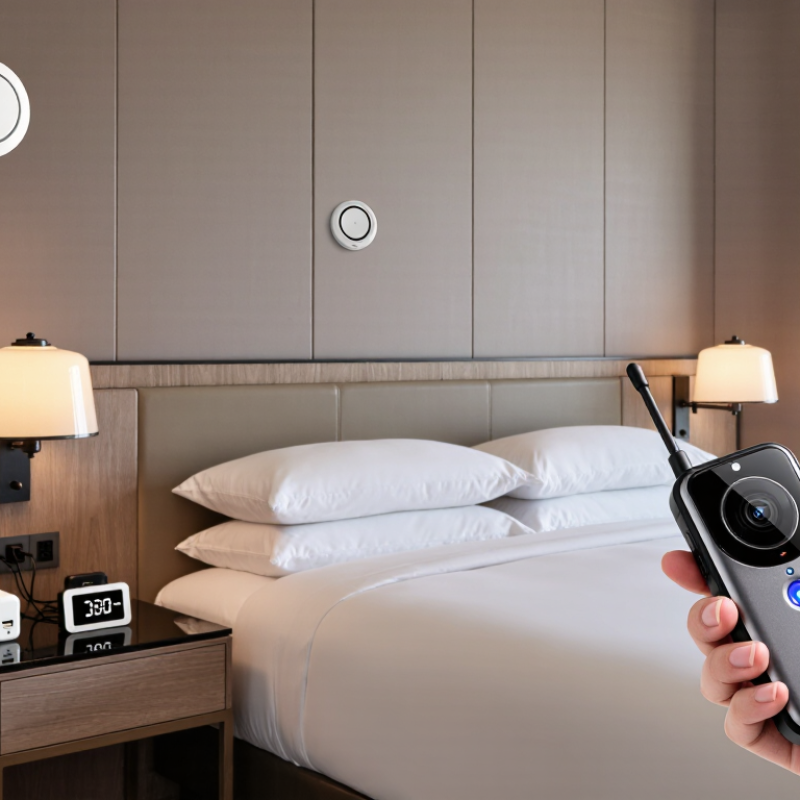
How to Choose a Spy Camera Detector in 2026?

What a Spy Camera Detector Is and How It Works

How to Choose a Spy Camera Detector in 2026?

A spy camera detector is a privacy inspection tool. It helps identify hidden lenses or wireless signals in nearby spaces. Most models use two detection methods: radio-frequency scanning and optical lens reflection. RF scanning looks for transmissions from cameras connected to wireless networks. Optical detection uses bright LEDs and a viewing filter. A hidden lens may appear as a small, sharp glint. The result can feel surprisingly simple. That is the uncomfortable part.

An RF sensor may react to routers, phones, wireless speakers, or other normal devices. A lens finder cannot detect a camera with no visible lens path. It may also miss cameras that record locally without transmitting. In a dim room, hold the detector near eye level and move slowly across shelves, vents, clocks, and smoke alarms. Keep the room quiet. False alerts happen.

When choosing a detector in 2026, consider adjustable sensitivity, optical and RF modes, battery life, and a clear display. A device with separate controls is easier to test and understand. Practical manuals matter too. They explain range, interference, and testing limits. I would also check whether the product provides measurable signal information instead of vague warning lights. Even experienced users can misread reflections or wireless activity. Use the detector as one inspection tool, not final proof. Document unusual findings and verify them carefully.

Which Hidden Camera Detection Methods Matter Most in 2026

Choosing a Spy Camera Detector in 2026?

In 2026, detection method coverage matters more than a flashy sensitivity number. Fortune Business Insights valued the global video surveillance market at about $55.7 billion in 2023. Grand View Research gave a higher estimate, showing why market definitions can differ. More connected cameras also mean more detection challenges.

Optical lens reflection remains essential. A focused flashlight can reveal a small glass glint behind a clock, vent, or smoke detector. Infrared scanning adds value in dark rooms, especially when a camera uses invisible night illumination. However, infrared is not proof of a camera. Some remote controls and sensors can react similarly.

RF scanning detects wireless transmissions, but it can miss wired cameras or devices that transmit only occasionally. Network discovery is useful on hotels, offices, and rentals with shared internet access. It cannot reliably identify a camera using cellular service or local storage. Physical inspection still matters. Check unusual holes, warm adapters, loose panels, and objects facing beds or desks.

The strongest choice combines optical, infrared, RF, and network checks. No detector is magic. Cheap RF meters can produce distracting alerts near routers and smart appliances. In practical testing, a quiet room, a slow sweep, and repeated checks often outperform rushed scanning. I would also question products promising complete detection. That claim sounds convenient, but it is rarely technically honest. Reports from the National Institute of Standards and Technology emphasize verification, controlled testing, and documented limitations—habits worth applying before trusting any detector.

How to Choose a Spy Camera Detector in 2026?

Which hidden camera detection methods matter most? Compare the clues each method can reveal.

How to read this chart: A score of 1 means the method can reveal that type of clue; 0 means it generally cannot. These are capability indicators, not success rates. Results depend on camera design and conditions. Combining methods is more reliable than relying on RF detection alone, since a camera may not be transmitting.

How to Match Detector Features to Your Environment

How to Choose a Spy Camera Detector in 2026?

How to Match Detector Features to Your Environment

Choosing a spy camera detector starts with the room, not the product label. A hotel bedroom may need a lens finder for dark corners, smoke alarms, and glossy fixtures. An office creates different problems. Wireless networks, computers, and smart lighting can trigger RF alerts. Choose adjustable sensitivity, frequency scanning, and a clear signal-strength display.

For a quiet meeting room, prioritize low-noise detection and visible alerts. For a vehicle, compact size and vibration resistance may matter more than a large screen. Optical scanning can reveal reflected light from a lens, but bright windows may confuse it. Test from several angles. RF tools also have limits. They may miss a camera that stores footage locally or remains inactive. That gap deserves honest attention.

Before buying, check detection ranges under realistic conditions, not only laboratory claims. Walk past routers, chargers, and LED lamps to see whether alerts stay stable. A headphone output can help in noisy spaces, while event logs support later review. Use a second method when the situation matters. No single feature proves that a room is clear. I would rather accept a slower inspection than trust a dramatic alarm. This is less convenient, but more dependable.

How to Choose a Spy Camera Detector in 2026? - How to Match Detector Features to Your Environment

Environment Potential challenge Useful detector features How to use them Important limitation
Hotel room or short-term rental Small rooms may contain many ordinary electronic devices, creating distracting signals. Adjustable radio-frequency (RF) sensitivity, signal-strength display, and an optical lens-reflection finder. Check likely concealment points visually, then scan slowly and compare readings near suspected objects with readings elsewhere in the room. RF detection can locate active transmitters, but it cannot reliably identify a device by itself. A camera that is off or recording locally may not transmit.
Meeting room or office Wi-Fi networks, phones, wireless peripherals, and other authorized electronics can produce RF activity. Frequency-range information, adjustable sensitivity, and the ability to scan in sections. Record or note normal background activity first. Investigate persistent or unusually localized readings rather than treating every signal as suspicious. RF readings do not prove that a camera is present; common wireless equipment can create similar signals.
Bedroom or other dark room Small camera lenses may be difficult to see among reflective surfaces and low light. Optical lens finder with visible illumination and a viewfinder or viewing window. Dim the room when practical and inspect likely positions from different angles. Look for a distinct lens reflection and verify it visually. Reflection methods need a usable line of sight and can produce reflections from ordinary glass, polished surfaces, or other lenses.
Large home or multi-room property Coverage takes time, and walls or furnishings can make signals harder to localize. Portable design, clear signal-strength feedback, and controls that are easy to use during a systematic search. Search one room at a time. Check objects with a plausible view of private areas, and repeat a scan from more than one position. Walls, distance, interference, and device placement can affect RF readings. A single pass cannot establish that an area is clear.
Vehicle Metal surfaces and vehicle electronics can complicate signal interpretation and physical inspection. Portable RF scanning plus a bright optical inspection aid; a separate magnetic-field sensor may help locate some magnet-attached objects. Inspect the cabin and accessible areas methodically, comparing readings around suspected items with the vehicle’s normal electronic background. A magnetic-field sensor detects magnetic materials, not cameras specifically. RF activity from the vehicle’s own systems can also cause readings.
Area with weak or no network access A device may record to local storage instead of sending data over a wireless network. Optical lens detection and careful physical inspection, supplemented by RF scanning where appropriate. Prioritize a visual search of objects with an unobstructed view of sensitive spaces, then use a lens finder to check suspicious openings. An offline or powered-off camera may produce no detectable RF signal. No handheld detector guarantees detection of every concealed device.
Shared or electronics-heavy space Many legitimate transmitters can make it difficult to distinguish relevant signals from background activity. Adjustable sensitivity, frequency-range details, and a way to observe whether signal strength changes with distance or position. Reduce avoidable sources of interference when possible, establish a baseline, and investigate readings that remain localized during repeat checks. Signal patterns are clues, not identification. Results depend on the detector’s supported frequencies and the transmitter’s operating state.

Selection tip: Match the detector to the search task. RF scanners look for radio transmissions, while optical finders help reveal lens reflections; each method has different blind spots. Check the device’s documented frequency coverage and operating instructions, and use visual inspection as a complementary step.

How to Evaluate Accuracy, Privacy, Range, and Ease of Use

A detector’s accuracy depends on what it can sense. Lens-finding tools, radio-frequency scanners, and magnetic sensors detect different things. A radio scanner may miss a device that is switched off or stores footage locally. Test it against a known household signal, then repeat from different angles. Treat advertised accuracy cautiously. Numbers can mislead.

Range claims need context. Walls, mirrors, appliances, and nearby Wi-Fi can weaken or confuse readings. Check a quiet room, then a busier one, and note where alerts change. A useful detector explains signal strength instead of giving only a vague warning.

Privacy matters, too. Prefer tools that work without an account, disclose what their app collects, and let you delete stored data. IBM’s 2024 Cost of a Data Breach Report estimated the global average breach cost at $4.88 million; that is a business figure, not a household risk estimate, but it underlines why data handling deserves scrutiny.

Ease of use shows up under pressure. Look for readable indicators, plain instructions, and a quick way to silence false alarms. Verizon’s 2024 Data Breach Investigations Report found a human element in 68% of breaches. Clear controls can reduce avoidable mistakes, though no gadget replaces careful checking.

I would still question any device promising certainty; the room, its materials, and the detector’s limits all matter. A little doubt is useful.

How to Compare Models and Choose the Right Detector for Your Needs

Choosing a spy camera detector in 2026 requires more than comparing price and appearance. Compare how each model detects signals, lenses, and unusual magnetic activity. A reliable detector should offer adjustable sensitivity, clear alerts, and stable performance in crowded rooms. Check its detection range in metres, not only its advertising claims. Some models work well near wireless devices but struggle behind thick walls. Others find lens reflections but react strongly to glass, polished furniture, or sunlight.

Tips: Test the detector in your own environment before trusting it. Turn off nearby routers and repeat the scan. Walk slowly around smoke alarms, picture frames, power outlets, and air vents. Keep notes about false alerts. Small details matter. Read independent test results and examine the return policy. A short battery life can become frustrating during a large property inspection. A simple display may also be safer than a complex interface when you are working quickly.

Choose features according to your needs, not the longest specification list. For a hotel room, portability and lens detection may matter most. For an office, frequency coverage and battery endurance deserve more attention. For repeated professional inspections, calibration options and documented testing are valuable. No detector is perfect. I have found that reflective surfaces can create confusing results, even with sensitive equipment. Treat every alert as a signal for closer inspection, not proof of a hidden device. Ask whether the model explains its limits clearly. That honesty often reveals more than a dramatic sensitivity claim.

Chat Online
Chat Online
Leave Your Message inputting...
Thank you for your attention. Please kindly describe your question first, or please send your inquiry to our email sale@pcbledmodule.com, and we will reply to you ASAP. Welcome, what can I help you?
Sign in with: