
English


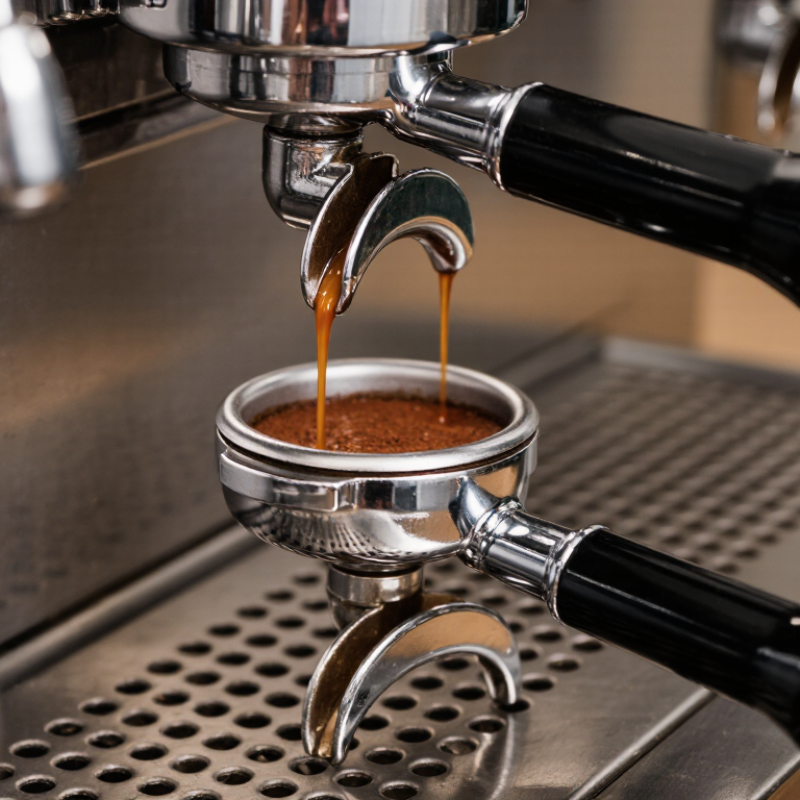
A Filter Basket is the small perforated cup that holds ground coffee inside an espresso machine’s portafilter. It may look simple, but its shape, hole pattern, and capacity can influence how water moves through the coffee. The machine supplies the pressure; the basket helps distribute water across the compact bed of grounds. Small part. Real impact.
During brewing, hot water passes through the coffee and exits through the basket’s tiny openings. A well-prepared bed can encourage a more even flow, while uneven tamping, an unsuitable dose, or blocked holes may contribute to channeling. That can produce a shot that tastes unexpectedly sour, bitter, or thin. The basket is only one part of the process, though. Coffee freshness, grind size, water temperature, and machine performance matter too.
Basket designs vary. Some have a single wall, while others use a double wall that can help create crema with less precise grinding. Sizes also differ, so matching the basket to the portafilter and the intended coffee dose is important. A clean basket matters: oily residue and trapped grounds can affect flow and flavor over time. Check the manufacturer’s guidance before changing dose or using a different basket. There is no universal “best” option for every coffee or machine. Even experienced users sometimes misread a slow shot; the basket may not be the only cause. Understanding what it does makes troubleshooting more practical, not foolproof.
A filter basket is a removable screen that catches solids while liquid or gas passes through. Its body often uses a perforated metal plate for strength, with a finer mesh liner to capture smaller particles. The plate supports the mesh; the mesh sets the practical filtration limit. Small openings matter. ASTM E11 specifies test-sieve openings of 850 micrometres for No. 20 and 150 micrometres for No. 100. These figures offer useful reference points, but a sieve is not identical to every industrial basket screen.
As fluid enters, debris collects on the basket’s upstream surface. A clean basket allows flow with little resistance; a loaded one can increase pressure drop and reduce flow. Operators can compare pressure readings across the housing and inspect the basket during scheduled maintenance. Look for bent perforations, torn mesh, and debris packed near the outlet. Fine mesh catches more particles, but it may clog sooner. That trade-off is easy to underestimate. The U.S. Department of Energy’s Improving Pumping System Performance sourcebook notes that flow resistance affects pumping-system energy use, so a clogged basket can have consequences beyond filtration. Basket selection should match particle size, flow rate, and cleaning access. I would not treat mesh size alone as proof of performance: installation gaps and damaged seals can let debris bypass the screen.
QUICK LINKS
CONTACT US
Office: (+86) 755 23040566
Tel: (+86) 158 9965 5195
E-mail: sale@pcbledmodule.com
Skype: Hans@Rocket-PCB
Whatsapp: 86 1589965 5195
Office Address: 2207,Bid 4,He Gu Shan Hui Cheng,35#,Guang Tian RoYanluo street, Song Gang Town,518105 SHENZHENG, CHINA
Plant ADD.: No 69, Lianfeng North Road, Xianxi Area, ChangAn Town, Dongguan, China.


Copyright © 2025 Rocket PCB Solution Ltd. | All Rights Reserved Sitemap Friendship link: CNC machining heat sink

