How to Determine the Breaking Capacity of RCDs?
Understanding the breaking capacity of Residual Current Devices (RCDs) is essential for electrical safety. The Breaking Capacity Of Rcd refers to its ability to interrupt fault currents during an electrical fault. This parameter is crucial in protecting both people and equipment from electrical hazards.
RCDs are designed to detect imbalance in electrical currents. However, not all RCDs are the same. Each device has a specific breaking capacity that can vary significantly. Choosing the right RCD involves understanding its specifications, installation requirements, and operational environment. For example, industrial settings may require RCDs with a higher breaking capacity due to the larger loads and potential fault currents.
It’s important to note that improper selection of an RCD can lead to insufficient protection. For instance, using an RCD with too low a breaking capacity in a heavy-duty application may result in failure to trip, posing serious risks. Therefore, identifying the correct breaking capacity of RCDs not only ensures compliance with safety standards but also protects lives and property.
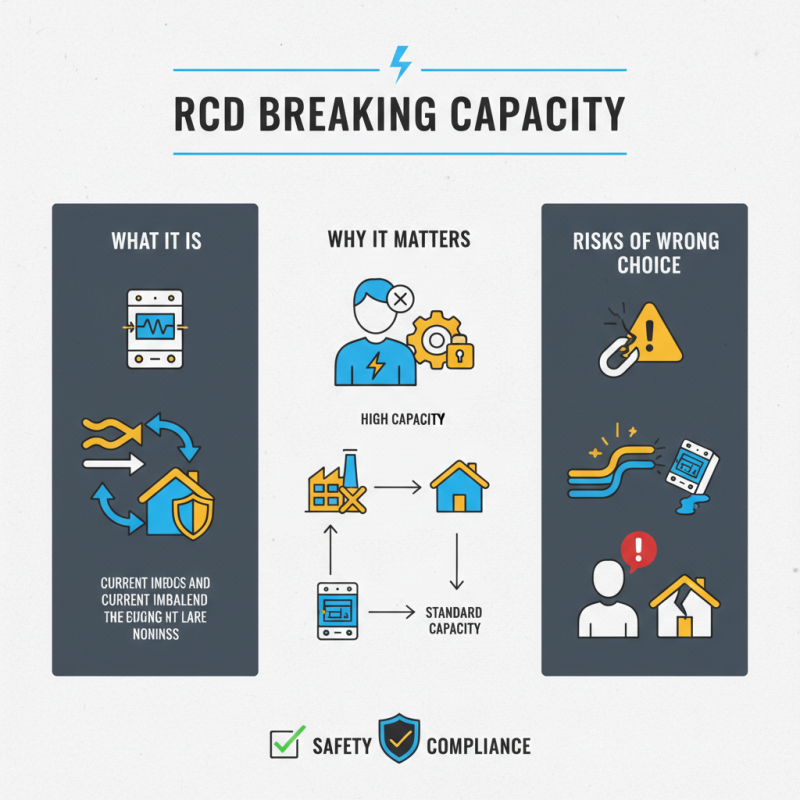
Understanding Residual Current Devices (RCDs) and Their Functions
Residual Current Devices (RCDs) are crucial for electrical safety. They detect imbalances in current flow. This helps prevent electric shock and reduces fire risks. Understanding RCDs can enhance safety at home and in workplaces.
RCDs monitor the current flowing through live and neutral wires. If these currents differ, the RCD trips. This occurs when there's a fault, such as a person touching a live wire. The device reacts quickly to protect lives.
Determining the breaking capacity of an RCD involves checking its specifications. Users must ensure it is suitable for their system. Regular testing is essential. However, some might neglect this. Consistent testing can save lives. Awareness and understanding of RCD functions are key to safe practices.
Importance of Breaking Capacity in Electrical Safety Standards
In electrical safety, the breaking capacity of Residual Current Devices (RCDs) is crucial. This term refers to the maximum current an RCD can interrupt during a fault. Understanding this limit helps prevent dangerous situations. RCDs with inadequate breaking capacity may fail under high fault currents, leading to severe electrical shocks or fires.
Breaking capacity is essential for compliance with safety standards. Regulations often require specific ratings for different applications. An industrial setting, for instance, demands higher breaking capacity than a residential one. Users must assess the potential fault currents in their environments. Proper evaluation ensures that the chosen RCD effectively safeguards people and property.
Many overlook the technicalities of breaking capacities. A common mistake is assuming all RCDs are the same. This reflects a gap in knowledge about electrical safety standards. Training in this area is vital. Professionals should stay updated on the latest regulations. Regular reviews of RCD installations can help enhance safety measures. Addressing these details can prevent serious accidents in the future.
Factors Influencing the Breaking Capacity of RCDs
The breaking capacity of Residual Current Devices (RCDs) is influenced by various factors. Understanding these elements is crucial for safety and compliance. RCDs are designed to prevent electric shocks and electrical fires. Their effectiveness is measured by their ability to interrupt current flow when a fault occurs.
Key factors affect breaking capacity. One significant factor is the type of load. Resistive loads behave differently under fault conditions compared to inductive ones. Professional reports estimate that 60% of electrical failures occur in circuits with inductive loads. Another critical factor is the ambient temperature; RCDs operating in high temperatures can lose efficiency. Research indicates that RCDs may decrease in breaking capacity by 10% per 10°C increase in temperature.
Tips: Always assess the electrical load types in your setup. Consult with a qualified electrician for precise calculations of breaking capacity.
Installation conditions also matter. Moisture and dust can affect RCD performance. A dirty RCD may not trip as expected. A report from electrical safety organizations highlights that clean environments can improve device reliability. These factors must be evaluated regularly to ensure optimal performance. Regular inspections are essential. Not every installation meets the required standards. Ensuring compliance helps maintain safety and efficiency.
Methods for Calculating the Breaking Capacity of RCDs
Determining the breaking capacity of Residual Current Devices (RCDs) is crucial for electrical safety. Breaking capacity refers to the maximum current that an RCD can interrupt without damage. To calculate this, several methods can be employed, focusing on system design and specific load conditions.
One effective method involves analyzing the electrical system's characteristics. This includes the system voltage and the anticipated fault current. Understanding these factors helps in selecting an RCD with appropriate ratings. Additionally, users must consider the installation environment. Extreme conditions can affect performance.
It's also essential to evaluate existing equipment and their ratings. Keep in mind that not all settings are ideal. Under certain conditions, RCDs may not perform as expected. Regular testing and maintenance protocols can significantly enhance reliability. Yet, users often overlook these, leading to potentially hazardous situations. Balancing safety with accurate calculations ensures optimal performance and longevity of RCDs in practical applications.
How to Determine the Breaking Capacity of RCDs? - Methods for Calculating the Breaking Capacity of RCDs
| Method | Description | Typical Values (kA) | Advantages | Limitations |
| Short Circuit Testing | Involves simulating a fault condition to determine the RCD's response time and breaking capacity. | 6 to 10 kA | Provides accurate real-world performance metrics. | Requires specialized equipment and expertise. |
| Manufacturer Specifications | Utilizes data provided by the manufacturer regarding breaking capacity ratings. | Up to 30 kA | Quick and easy reference for standard ratings. | May not reflect actual performance in specific environments. |
| Calculation Based on System Parameters | Calculates breaking capacity considering overall system parameters such as circuit impedance. | Varies based on installation | Tailored to specific installation circumstances. | Complex calculations may be required. |
| Simulations | Uses software simulations to predict breaking capacity in various scenarios. | Variable | Can simulate multiple fault conditions quickly. | Requires software proficiency and may not replace real testing. |
Industry Standards and Regulations Governing RCD Performance
When assessing the breaking capacity of Residual Current Devices (RCDs), understanding industry standards is crucial. RCDs must comply with safety regulations to ensure effectiveness. These standards determine how RCDs function under different fault conditions. They indicate the maximum current an RCD can interrupt without risking failure. Compliance with standards ensures reliable protection against electric shock and fire hazards.
Key regulations include IEC 61008 and IEC 61009, which outline performance requirements for RCDs. These documents guide manufacturers and users alike. They detail testing processes to determine breaking capacity. RCDs that meet these standards provide confidence in safety measures. However, not all devices adhere to the latest regulations. Regular checks are necessary for always ensuring effectiveness. Some RCDs may fail when exposed to unexpected fault currents.
Awareness of local regulations is also important. Different regions may have unique requirements. Understanding these nuances helps in selecting the right RCD for your application. It's vital to stay updated on changes in these standards. Ignoring them can lead to inadequate safety measures. Achieving the optimal balance of safety and performance requires vigilance and knowledge.