
English


Choosing a Reaction Injection Molding supplier can shape a product’s quality, cost, and path to production. The right partner should understand more than the molding machine. They should discuss part geometry, material behavior, tooling, and the conditions your product will face in use. Ask how they review a design before tooling begins, and how they manage changes once a project is underway. Look beyond polished presentations. Small details matter. A clean, controlled production area and clear inspection records can tell you much about daily practices. Request examples of similar parts, along with details about testing and quality checks. Strong answers are specific and easy to verify. No brochure proves everything.
Supplier selection also means balancing trade-offs. Compare quotes, but check what each includes: tooling, prototypes, finishing, inspection, packaging, and delivery assumptions. For example, a supplier may propose a design change that reduces material use but affects stiffness. Ask for the reasoning and supporting test data. Assess communication, too. When a drawing changes, who reviews it, and how are revisions documented? Cost still matters. Yet the lowest quote may leave important services unclear. Not every risk appears in a spreadsheet. A site visit or technical review may reveal gaps that paperwork misses. Even a capable supplier can overlook a detail; clear approval steps help reduce that risk. Some uncertainty remains. That is normal. Choose a partner willing to explain limits, raise concerns early, and support decisions with evidence.
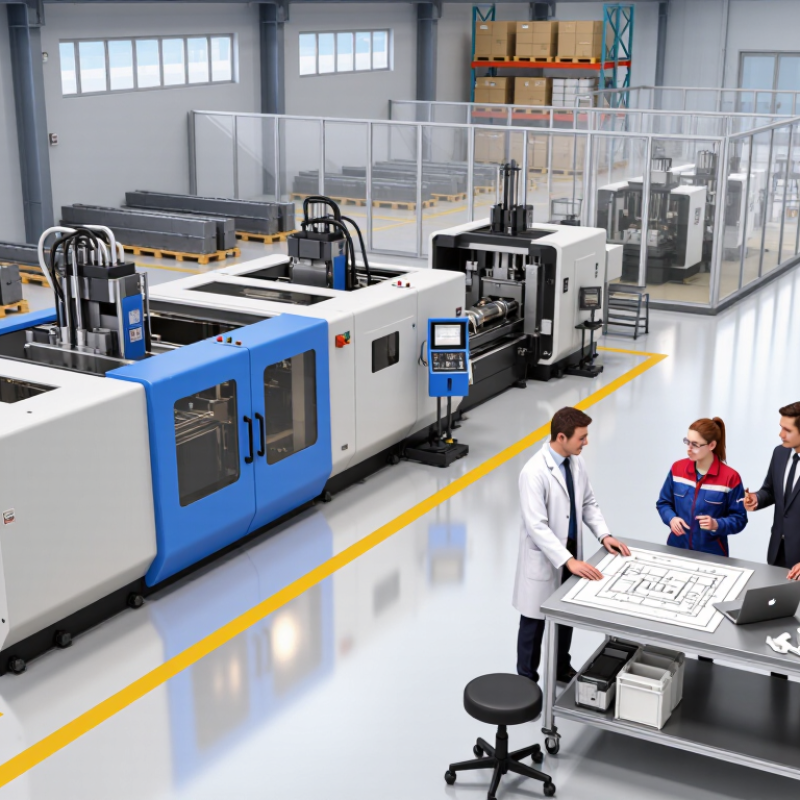
Before comparing reaction injection molding suppliers, turn the part into a measurable brief. Specify the finished dimensions, critical tolerances, annual volume, target unit cost, and expected service life. Describe the part’s job: does it absorb impact, seal against water, or support a fastener? Name the operating temperatures and likely exposure to sunlight, oils, or cleaning agents. Small details matter. A metal insert near a thin wall can change mold design and create a weak point.
Define the material performance you need, not just a preferred resin. Record target hardness, density, flexibility, and surface finish, then ask how each will be tested. State whether the part needs a painted skin, molded-in color, or a specific texture.
The Plastics Industry Association’s 2023 Size and Impact report estimated that the U.S. plastics industry contributed $468.2 billion to the economy in 2021. That broad figure is not RIM-specific, but it underlines the scale of the supply chain—and the value of precise specifications.
This step is easy to underwork. Include prototype quantities, production ramp timing, inspection records, and acceptable sample approval criteria. If requirements are still uncertain, mark them as provisional and ask suppliers to identify the risks before tooling begins.
A vague brief often turns into expensive revisions.
QUICK LINKS
CONTACT US
Office: (+86) 755 23040566
Tel: (+86) 158 9965 5195
E-mail: sale@pcbledmodule.com
Skype: Hans@Rocket-PCB
Whatsapp: 86 1589965 5195
Office Address: 2207,Bid 4,He Gu Shan Hui Cheng,35#,Guang Tian RoYanluo street, Song Gang Town,518105 SHENZHENG, CHINA
Plant ADD.: No 69, Lianfeng North Road, Xianxi Area, ChangAn Town, Dongguan, China.


Copyright © 2025 Rocket PCB Solution Ltd. | All Rights Reserved Sitemap Friendship link: CNC machining heat sink