

loading

BLOG

How to Choose the Right Oil Rig Components

Choosing the right Oil Rig Components is a practical decision about pressure control, equipment life, and time on the well. A mud-pump liner faces abrasive fluid and repeated loading; a valve seal must tolerate heat, pressure, and chemical exposure. A component that fits on paper may still fail in the field if its materials or connections do not match the operating conditions. Small parts matter.

Industry investment data helps explain why careful selection deserves attention. The International Energy Agency’s World Energy Investment 2024 estimated that upstream oil and gas investment would rise by 7% in 2024, reaching about $570 billion. That figure covers upstream investment broadly, not component spending, but it signals the scale of equipment decisions across the sector. Baker Hughes’ weekly rig count, meanwhile, tracks active rigs and offers operating context; it does not measure component condition or reliability. These are useful indicators, with limits.

A sound choice starts with the actual duty: expected pressure and temperature, fluid composition, load cycles, interface dimensions, and maintenance access. Check manufacturer documentation, material compatibility, traceability, and applicable industry requirements before comparing price or delivery time. Ask how the part performs under conditions close to yours, not only in a standard test. A polished specification sheet is not the whole story. Field history can be incomplete, and no single data point guarantees service life. The best selection process makes those uncertainties visible, then weighs them against safety, uptime, and the cost of replacement.
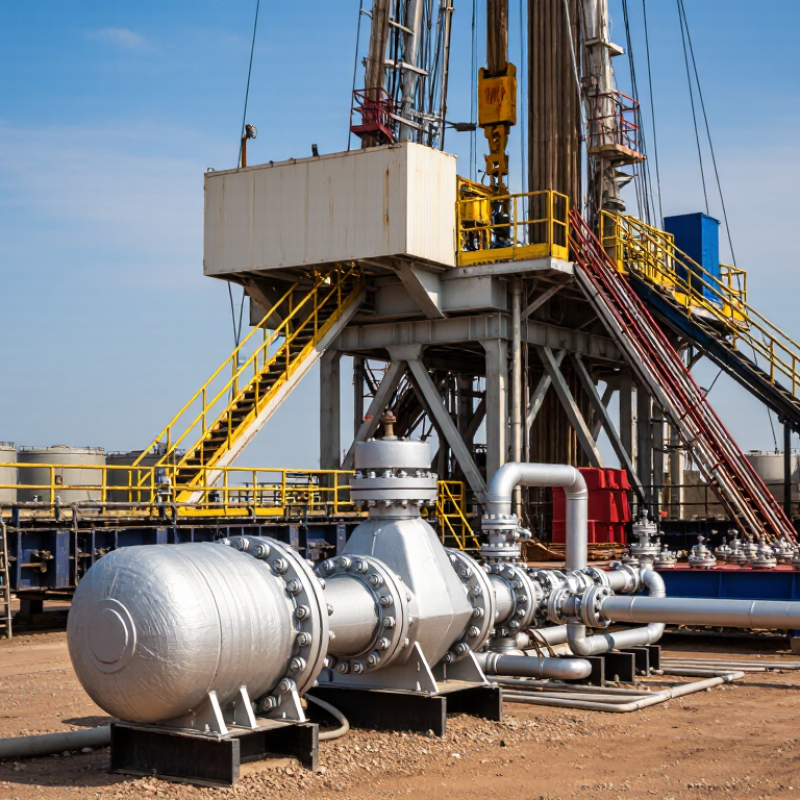
How to Choose the Right Oil Rig Components

Define the Rig’s Operating Conditions and Performance Requirements

Before choosing oil rig components, define the conditions they must withstand—not just the planned operating point. Record well depth, expected pressure and temperature, mud density, flow rate, water depth, corrosive exposure, and vibration. Include startup, shutdown, and upset conditions. A pump sized for steady circulation may struggle when solids load rises or flow changes quickly. Small details matter. Specify the required service life and acceptable maintenance window, too; a component that meets peak ratings but is difficult to inspect may still create avoidable downtime.

Use recognized technical limits as screening tools, not substitutes for project data. API Technical Report 17TR8 uses 15,000 psi and 350°F as reference values for high-pressure, high-temperature design. If projected conditions approach those levels, verify every pressure-containing component, seal, connection, and control system against the actual envelope. The IEA’s Oil 2024 report estimates upstream oil and gas investment at about $570 billion in 2024, underscoring the scale of capital exposed to equipment choices. Yet a large budget cannot correct a weak operating assumption. Document the data source, uncertainty, and safety margin for each requirement. Some forecasts will be wrong; revisit them as well data and operating plans change.

Identify Essential Rig Systems and Their Component Functions

Choose components around the well’s depth, pressure, drilling fluid, and expected duty cycle. The hoisting system—derrick, drawworks, wire rope, and traveling block—moves the drill string and casing. Confirm rated loads match the well plan, not just the rig’s headline capacity. A worn sheave can turn routine handling into a costly delay. Small details matter.

The circulation system includes mud pumps, standpipe, hoses, drill pipe, and solids-control equipment. Pumps deliver fluid downhole; returns carry cuttings back to the shakers. Check pressure ratings, flow capacity, and access for changing screens or liners. The rotary system turns the drill string, while sensors and controls help crews track torque, speed, and operating limits. Fit matters, though maintenance access is easy to overlook.

For well control, assess the blowout preventer, choke manifold, valves, and pressure-monitoring equipment as a coordinated system. Verify compatible connections, documented test procedures, and clear maintenance records. The IEA’s Global Methane Tracker 2024 estimates that oil and gas operations emitted about 80 million tonnes of methane in 2023. That figure covers operations broadly, not drilling rigs alone, but it reinforces the value of dependable containment and careful pressure testing. No component works in isolation; a mismatch between a pump, hose, or valve can constrain the entire system.

Compare Component Materials, Capacity, and Technical Specifications

Choosing oil rig components means matching material, capacity, and operating conditions—not selecting the largest rating. For wellhead and tree equipment, API Specification 6A lists pressure ratings from 2,000 to 20,000 psi. That range is useful, but a higher rating alone does not guarantee a suitable assembly. Check each component’s rated working pressure, temperature range, bore size, and connection compatibility against the well design. Small details matter.

Material selection changes with the environment. ISO 15156-2 covers carbon and low-alloy steels for sour service, while Part 3 addresses corrosion-resistant alloys. These standards help engineers assess material suitability in hydrogen-sulfide environments; they do not replace project-specific corrosion review. For pumps, valves, and load-bearing equipment, compare published flow, torque, load, and temperature limits with expected operating peaks. A component that meets average demand may still be undersized during a pressure surge. Fit is not enough.

Record the source and edition of every specification. API 6A provides standardized pressure classes, while equipment datasheets supply component-level limits and test conditions. Check whether a stated capacity is continuous or short-duration, and whether testing reflects the intended service. Datasheets can leave assumptions unclear; that deserves a question, not a guess. Verify material certificates, inspection records, and connection dimensions before procurement, then have a qualified engineer review the final equipment schedule.

Verify Compatibility, Safety Standards, and Regulatory Requirements

How to Choose the Right Oil Rig Components

Verify Compatibility, Safety Standards, and Regulatory Requirements

A component can fit on paper and still fail at the rig. Check pressure and temperature ratings against the well’s operating envelope, then confirm connection type, load capacity, and fluid compatibility. For wellhead and tree equipment, API Specification 6A sets requirements for design, materials, testing, and marking. Drill-through equipment may fall under API Specification 16A. Sour-service exposure also matters: ISO 15156 addresses materials used in environments containing hydrogen sulfide. Match the exact specification and edition required by the project; a certificate alone does not prove suitability.

Safety records give these checks real weight. The International Association of Oil & Gas Producers’ Safety Performance Indicators 2022 report recorded 35 fatalities across reporting operations. That figure does not measure component failures, but it reinforces why equipment selection, inspection, and maintenance belong in the same risk review. Ask suppliers for traceable material records, pressure-test documentation, and inspection history. Verify the documents against the equipment tag, not just the purchase order. Small mismatch. Big concern.

Regulatory requirements vary by location, installation type, and operating conditions. Confirm the applicable regulator’s rules, recognized standards, and required approvals before procurement. For offshore equipment, check whether the installation’s safety case or technical authority imposes additional limits. Record who verified compatibility and which revision of each standard was used. I have seen checklists treated like proof; they are not. A field inspection may reveal corrosion, damaged threads, or a rating plate that is hard to read. Verify again.

How to Choose the Right Oil Rig Components - Verify Compatibility, Safety Standards, and Regulatory Requirements

Component Compatibility checks Safety and performance checks Relevant standards to verify Regulatory and procurement checks
Wellhead and tree equipment Confirm connection type and dimensions, pressure rating, temperature range, material selection, and compatibility with the casing and tubing program. Check that pressure-containing parts and seals suit the expected well fluids, pressure, temperature, and sour-service conditions where applicable. API Specification 6A; ISO 10423. Confirm the applicable edition and equipment designations for the project. Verify required design documentation, inspection and test records, and any project-specific or jurisdictional approvals before installation.
Blowout preventer (BOP) equipment Match the BOP connections and bore to the stack configuration, wellhead or adapter, and other pressure-control equipment. Confirm pressure and temperature ratings are suitable for the well program. Check ram or annular element compatibility with the intended tubulars and operating conditions. Confirm maintenance history, function testing, and pressure testing follow applicable procedures. API Standard 16A; for subsea BOP systems, also review applicable API Standard 53 requirements. Identify the regulator and rules governing the operation. For U.S. Outer Continental Shelf operations, review applicable BSEE requirements in 30 CFR Part 250.
Choke and kill equipment Check end connections, nominal bore, pressure rating, flow direction where specified, and compatibility with the BOP outlets and manifold configuration. Confirm materials and seals are suitable for expected fluids and service conditions. Review pressure-test requirements and inspect for erosion, corrosion, or damage. API Specification 16C; verify the scope and edition applicable to the equipment and project. Ensure the selected configuration is included in the approved well-control design and that required test, inspection, and traceability records are available.
Drilling and well-servicing equipment For equipment such as rotary equipment, identify the required load, operating envelope, interfaces, and connection dimensions. Confirm compatibility with the rig’s handling and drive systems. Review rated capacity, operating limits, guarding, inspection condition, and maintenance records. Do not exceed the manufacturer’s specified working limits. API Specification 7K covers specified drilling and well-servicing equipment. Check the standard’s scope for the particular component. Confirm that equipment inspections, lifting or handling controls, and operating procedures meet applicable workplace and local requirements.
Subsea wellhead and tree equipment Verify the subsea interface, connector and hub profile, water-depth suitability, pressure rating, and compatibility with the planned installation and intervention systems. Assess environmental and service conditions, sealing performance, corrosion protection, and required qualification and testing for subsea operation. API Specification 17D; ISO 13628-4. Confirm which requirements apply to the equipment scope. Check the project’s offshore design basis, environmental and operational approvals, and any applicable national or regional offshore regulations.
Pipe, valves, and pressure connections Match connection type, size, thread or flange specification, pressure class, and material. Do not assume that components with similar dimensions are interchangeable. Check pressure-temperature limits, material compatibility, sealing method, inspection status, and suitability for the intended service. Use the component-specific API or ISO standard and the referenced connection specification; confirm the exact standard designation against the equipment documentation. Retain certificates, material records, inspection reports, and pressure-test documentation required by the project and governing jurisdiction.

Selection note: Ratings and standards alone do not establish compatibility. Confirm the complete equipment interface and operating envelope against the well design, current equipment documentation, applicable standard editions, and regulations in the operating jurisdiction.

Assess Maintenance Needs, Reliability, and Total Lifecycle Cost

How to Choose the Right Oil Rig Components

Assess Maintenance Needs, Reliability, and Total Lifecycle Cost

A component’s purchase price tells only part of its story. Check how often it needs inspection, how easily technicians can reach service points, and whether routine work requires specialized tools. A pump bearing that takes hours to access may cost more over time than a pricier, easier-to-service option. Small details matter.

Match expected reliability to actual operating conditions. Review load, vibration, temperature, and exposure to saltwater or abrasive fluids. Maintenance records from comparable equipment can reveal recurring seal failures or unexpected wear. Ask suppliers for inspection intervals, expected service life, and clear operating limits. A reliability claim without field conditions is hard to evaluate.

Estimate total lifecycle cost across the planned service period. Include installation, spare parts, labor, energy use, inspections, and the financial impact of downtime. Compare those costs across realistic scenarios, not just ideal operating conditions. Keep the assumptions visible; maintenance intervals and repair times can change in the field. That estimate can shift. I’ve seen cost plans look precise on paper, then miss the extra labor needed to remove a component in a cramped work area. Consider a trial installation or a maintenance review before committing to a large order.

Chat Online
Chat Online
Leave Your Message inputting...
Thank you for your attention. Please kindly describe your question first, or please send your inquiry to our email sale@pcbledmodule.com, and we will reply to you ASAP. Welcome, what can I help you?
Sign in with: