
English


Choosing the right Hss Heat Shrink Sleeve starts with understanding the job it must do. The term “HSS” can refer to different products or applications, so confirm its meaning with the supplier before comparing options. A sleeve designed for one setup may not suit another. Check the product data sheet, not just the product photo.
Begin with the dimensions. Measure the component’s outside diameter and the sleeve’s supplied and recovered diameters. Then check the stated shrink ratio and wall thickness. A close fit matters. Too much looseness can weaken protection, while an undersized sleeve may be difficult to install or damage during fitting. Consider the working temperature, exposure to oil or abrasion, and how often the assembly will be handled. These details often reveal more than a broad label such as “heavy duty.”
Material matters, too. Different polymers tolerate heat, chemicals, and wear differently. Match the material to the actual operating conditions, and follow the maker’s installation temperature and heating guidance. Do not assume that a higher temperature rating is automatically better; compatibility still matters. If the sleeve is intended for HSS cutting tools or heat-shrink tooling, verify that specific use with the manufacturer. Ask for test data or a sample when the application is critical. A tidy fit can be misleading. It may look right and still perform poorly after repeated heating. Comparing verified specifications, rather than choosing by appearance or price alone, makes the decision more dependable.
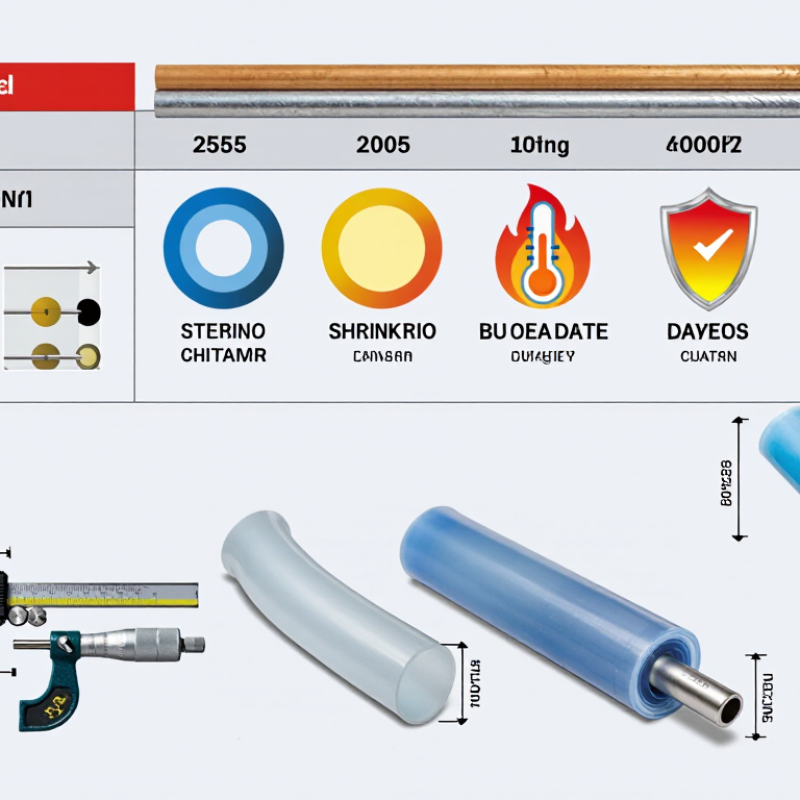
Before selecting an HSS, define what it must protect: electrical insulation, abrasion resistance, moisture sealing, or cable bundling. Then record the actual service conditions, including voltage, continuous temperature, brief heat peaks, chemicals, outdoor exposure, and movement. Small details matter.
ASTM D2671-21 outlines test methods for heat-shrinkable tubing used in electrical applications, including checks related to physical and electrical performance. IEC 60684-2:2011 also specifies test methods for flexible insulating sleeving. These references help compare test evidence; they do not establish one safe rating for every sleeve.
Measure the component’s largest diameter and the smallest diameter the sleeve must recover around. A 2:1 shrink ratio means the sleeve’s supplied diameter is twice its fully recovered diameter, but fit also depends on wall thickness and shape. Check the manufacturer’s rated temperature range and chemical-resistance data against the real installation, not just room conditions.
For example, a sleeve near an engine may face heat, oil, vibration, and sharp edges together. That combination is easy to underestimate.
Also confirm the installation temperature and available clearance for a heat gun or oven. One point worth reconsidering: selecting by diameter alone may look efficient, yet it can leave the assembly poorly protected under its actual operating conditions.
QUICK LINKS
CONTACT US
Office: (+86) 755 23040566
Tel: (+86) 158 9965 5195
E-mail: sale@pcbledmodule.com
Skype: Hans@Rocket-PCB
Whatsapp: 86 1589965 5195
Office Address: 2207,Bid 4,He Gu Shan Hui Cheng,35#,Guang Tian RoYanluo street, Song Gang Town,518105 SHENZHENG, CHINA
Plant ADD.: No 69, Lianfeng North Road, Xianxi Area, ChangAn Town, Dongguan, China.


Copyright © 2025 Rocket PCB Solution Ltd. | All Rights Reserved Sitemap Friendship link: CNC machining heat sink

