

loading

BLOG

How to Choose the Right Dishwasher Stamping Die

Choosing the right Dishwasher Stamping Die is about more than matching a tool to a drawing. It affects panel shape, surface quality, production speed, and how consistently parts fit during assembly. A dishwasher door or side panel may look simple, but its bends, openings, and shallow formed features can be unforgiving. Small errors show.

Start with the part itself. Stainless steel grade and thickness, panel dimensions, edge conditions, and required tolerances all influence the die design. The available press matters too: its tonnage, bed size, stroke, and feeding setup can limit which tooling approach will work reliably. A progressive die may suit high-volume parts with several operations, while another production method may better fit a different geometry or output target. It depends.

A sound selection process includes more than reviewing a quotation. Ask how the supplier will manage material flow, prevent distortion, and protect visible surfaces. Review forming simulations where appropriate, then examine trial parts for flatness, springback, burrs, and assembly fit. Confirm that the proposed die can be inspected, maintained, and adjusted without excessive downtime. These details are easy to overlook when price leads the discussion. They should not be.

No single checklist replaces practical validation. Even a carefully modeled tool can behave differently during a real press trial. This guide explains the key factors for comparing die designs, suppliers, and support plans, so you can make a more informed choice for your dishwasher components.
How to Choose the Right Dishwasher Stamping Die

Define the Dishwasher Part and Its Production Requirements

A dishwasher stamping die should start with a clear definition of the part it must make. Is it a mounting bracket, a panel, or a reinforcing component? Record its material, thickness, overall dimensions, and critical features, such as holes, bends, and embossed areas. A thin stainless panel with a long flange behaves differently from a compact bracket. Small geometry details matter.

Define the production requirements before comparing die concepts. Estimate annual volume, required cycle time, and expected service life. Note the press’s available bed size, shut height, tonnage, and feeding method. Specify tolerances on features that affect assembly, rather than applying tight limits everywhere. Also identify visible surfaces and acceptable edge conditions. These details help determine whether a progressive, transfer, or simpler die arrangement is practical. Early estimates can be wrong, so confirm them against actual press and material data.

Tips: Bring a dimensioned part drawing and sample material to the die review. Include the intended production rate. Check whether the part’s bends and holes can be formed without distortion. It is easy to overlook that detail. When requirements remain uncertain, record the assumption and revisit it before finalizing the die design.

Compare Die Types and Required Forming Operations

How to Choose the Right Dishwasher Stamping Die

Compare die types with the part’s geometry, material, and production volume. Progressive dies perform several operations as sheet metal advances through stations. They can blank, pierce, bend, and form features in one continuous sequence. This suits repeatable parts made in high quantities. Transfer dies move each blank between stations, allowing more room for deeper draws or larger components. Compound dies combine operations, often blanking and piercing, in a single press stroke. They are compact, but may not suit complex shapes. There is no universal best choice.

Next, map the required forming operations to the panel design. Dishwasher parts may need shallow drawing, flanging, embossing, trimming, or hole piercing. A deep draw needs careful control of material flow to reduce wrinkles and tearing. Tight bends near holes can distort them, so operation order matters. Review the material thickness, bend radii, and tolerances with the die designer. Check press capacity and planned output, too. A faster setup can still create extra scrap if features are poorly sequenced. I have seen small layout choices become costly later.

Tips: Request a station-by-station operation plan before tooling begins. Check sample parts for springback, burrs, and dimensional variation. Leave room for adjustment; early assumptions can be wrong.

Check Material, Precision, and Press Compatibility

A dishwasher stamping die should match the sheet material, required accuracy, and press that will run it. Start with the steel grade, thickness, and any coating. These affect cutting force, wear, and part behavior. Stainless sheet, for example, can spring back after forming, so a die may need carefully tuned clearances and forming surfaces. Check critical dimensions against the part drawing, not just the overall shape. Small holes and folded edges often reveal problems first.

Tips: Ask for clearance recommendations based on your actual material thickness. Review tolerance requirements and inspect sample parts under consistent lighting. A dimension can look correct on paper and still cause assembly trouble.

Press compatibility matters just as much. Confirm the press tonnage, shut height, bed size, stroke, and available feed direction before approving the die layout. Verify how the die will be mounted and whether the press can support its weight and operating speed. If the press is near its capacity, allow a safety margin rather than relying on a rough force estimate. Share press specifications with the die maker early. It can prevent costly rework, though even a careful review may miss a production detail. A trial run with the intended sheet stock helps expose burrs, distortion, or feeding issues before regular production.

Assess Die Life, Maintenance Needs, and Supplier Support

A dishwasher stamping die should be judged by more than its quoted service life. Ask how the estimate was calculated: material grade, sheet thickness, press speed, lubrication, and expected production volume all affect wear. A die cutting stainless panels may show edge wear differently from one forming brackets. Request trial data or inspection records from similar applications, if available. Numbers without operating conditions can mislead.

Maintenance needs should fit the factory floor. Check whether punch replacement, sharpening, and alignment can be done with standard tools and accessible instructions. Look for clear wear limits, spare inserts, and a recommended inspection interval. A chipped edge can leave burrs on parts before a full stoppage occurs. Small details count. Still, even a well-written schedule may need adjustment after real production begins.

Supplier support matters most when the press is waiting. Ask who handles troubleshooting, how quickly technical staff respond, and whether replacement components are stocked or made to order. Confirm that setup drawings and maintenance guidance will be supplied with the die. A practical supplier can review worn parts and help identify whether the cause is clearance, alignment, or process variation. Not every issue has a neat answer. Keep records of stoppages, sharpening, and defects; those details make support more useful and future die-life estimates more credible.

How to Choose the Right Dishwasher Stamping Die

Compare die-life potential, maintenance ease, and supplier support before selecting a die for your production needs.

Ratings use a 1–5 planning scale, where 5 is strongest. They are illustrative, not industry benchmarks: actual die life and service needs depend on materials, press conditions, production volume, and maintenance practices. Confirm expected tool life, spare-part availability, repair response times, and service terms with each supplier.

Verify the Choice Through Simulation and Production Trials

How to Choose the Right Dishwasher Stamping Die

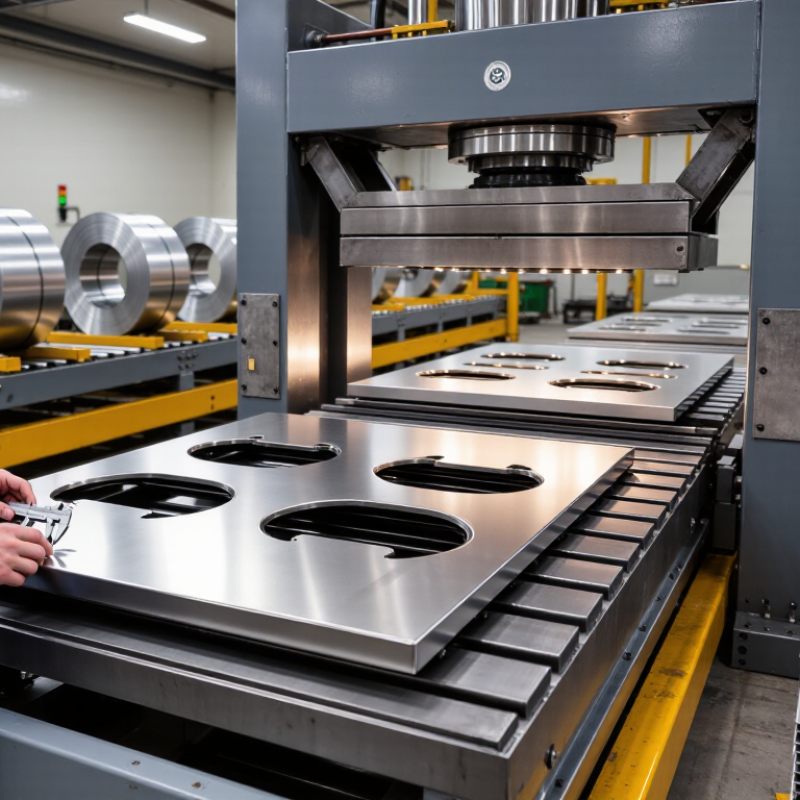
A dishwasher panel may look simple, but its broad surfaces can reveal small forming problems.

Before approving a stamping die, simulate the full forming sequence using the intended sheet thickness, material properties, and lubrication conditions. Include trim and springback stages where relevant. Watch for thinning near corners, wrinkles along flanges, and areas where the panel may not sit flat. These predictions help engineers adjust radii, blank shape, or binder force before cutting production tooling.

Still, simulation depends on its inputs. A neat color plot is not proof.

Then test the die with production-representative material and press settings. Run enough parts to see whether results repeat, not just whether one panel looks acceptable. Check critical dimensions, flange angles, surface marks, and fit against adjacent components.

A practical check is to place the panel on a stable fixture and measure the same points across several parts. Small differences matter. If measurements drift as the die warms or the coil changes, record that behavior and investigate the cause.

Trial data can expose assumptions the model missed, such as uneven lubrication or material variation. Revise the die or process, then repeat the checks before releasing it for routine production.

Chat Online
Chat Online
Leave Your Message inputting...
Thank you for your attention. Please kindly describe your question first, or please send your inquiry to our email sale@pcbledmodule.com, and we will reply to you ASAP. Welcome, what can I help you?
Sign in with: