
English


A Construction Equipment Battery must do more than start an engine in a showroom. It has to deliver dependable power through cold mornings, long shifts, vibration, dust, and repeated stops. A battery that fits the tray may still be wrong for the machine. Voltage, capacity, terminal layout, and starting performance all matter. So does compatibility with the equipment’s charging system.
The best choice begins with the machine’s specifications, not a guess based on size or price. Check the operator’s manual and the existing battery label before comparing options. Then consider how the equipment is used. A loader that starts often on a cold site may need different support from a generator running steadily indoors. Details count.
These seven tips offer a practical way to assess battery options, from fit and power requirements to maintenance and service life. They also explain which questions to ask a supplier and what to verify before installation. No single battery suits every machine. Even experienced operators can overlook a small difference in terminal position or reserve capacity. That happens.
Use the guidance as a starting point, and confirm key specifications with the equipment manufacturer or a qualified battery professional. A careful check can prevent avoidable downtime and help protect the machine’s electrical system. The right battery is not always the most expensive one. It is the one that reliably meets the machine’s demands in real working conditions.
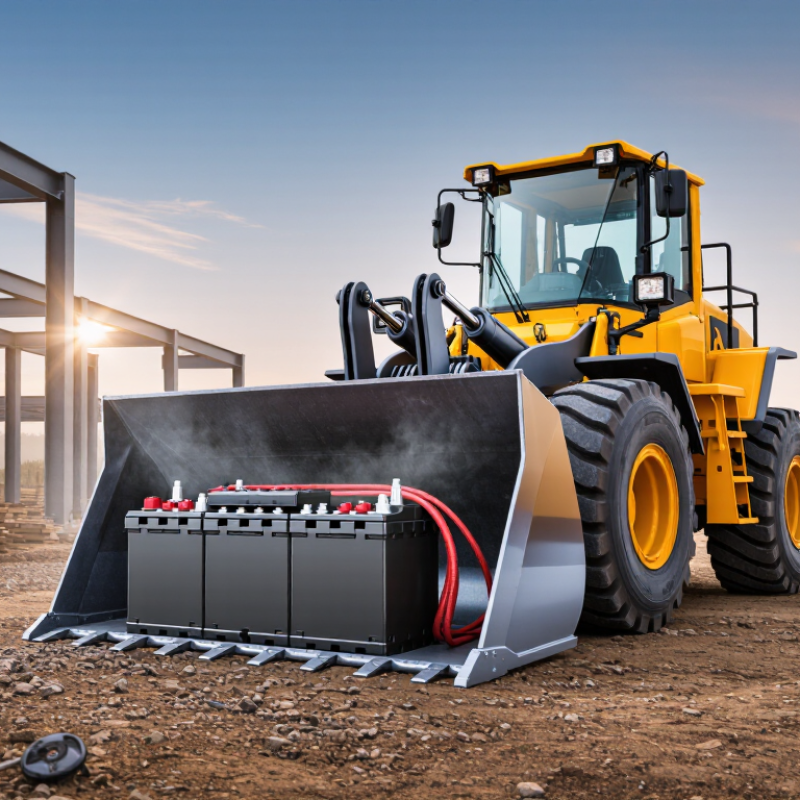
Before choosing a construction equipment battery, confirm the machine’s system voltage in its service manual or wiring diagram. The existing battery label can help, but it may be faded or incorrect after earlier repairs. A 12-volt battery is not a safe substitute for a 24-volt system, even if the terminals appear to fit. Check polarity and connector size as well. Small details matter.
Tip: Match more than voltage. Check the required cold-cranking amps, amp-hour capacity, and reserve capacity against the equipment specifications. Starting demand can rise in cold weather, while lights, cab controls, and telematics draw power during operation. A battery with too little capacity may struggle during repeated starts. More capacity is not automatically better; fit and charging-system requirements still matter.
Tip: Before ordering, compare the battery dimensions and terminal arrangement with the equipment requirements. If the manual lists different ratings for standard and severe-duty use, choose the option suited to actual working conditions. Record the old battery’s voltage and ratings, then verify them independently; labels can be misleading. This check takes only a few minutes. It is still easy to miss a detail when equipment is down and a replacement feels urgent.
QUICK LINKS
CONTACT US
Office: (+86) 755 23040566
Tel: (+86) 158 9965 5195
E-mail: sale@pcbledmodule.com
Skype: Hans@Rocket-PCB
Whatsapp: 86 1589965 5195
Office Address: 2207,Bid 4,He Gu Shan Hui Cheng,35#,Guang Tian RoYanluo street, Song Gang Town,518105 SHENZHENG, CHINA
Plant ADD.: No 69, Lianfeng North Road, Xianxi Area, ChangAn Town, Dongguan, China.


Copyright © 2025 Rocket PCB Solution Ltd. | All Rights Reserved Sitemap Friendship link: CNC machining heat sink

