English


Choosing a Home Car Charging Station is less about buying the most powerful unit and more about matching equipment to your car, home, and routine. The International Energy Agency’s Global EV Outlook 2024 reports that nearly 14 million electric cars were sold worldwide in 2023, representing about 18% of new car sales. More drivers now need a dependable place to recharge. Yet a global trend cannot tell you whether your garage wiring can support a particular charger.
The U.S. Department of Energy’s Alternative Fuels Data Center says Level 2 chargers can add roughly 10 to 20 miles of driving range per charging hour. Actual results depend on the vehicle and installation. That difference matters when you plug in after work and need enough range by morning. Check your vehicle’s connector, the charger’s power rating, cable reach, weather protection, and smart features. Just as important, have a qualified electrician assess your electrical panel and available circuit capacity before choosing a unit.
The best option may be a simple, reliable charger—not the one with the longest feature list. Compare installation costs, warranty terms, and your utility’s rates or charging plans. A charger’s advertised speed is only part of the story. Your car may accept power more slowly, or your home may need electrical upgrades. It is easy to overlook those details. I would not choose a model until the real installation requirements are clear.
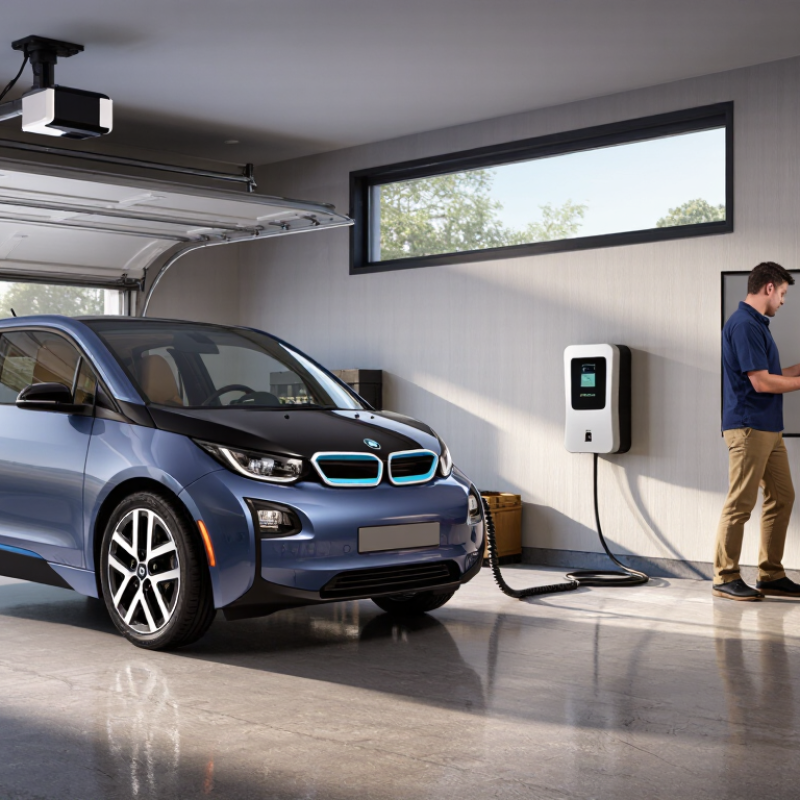
FHWA reports that U.S. drivers average about 37 miles per day. That figure offers a useful starting point when choosing a home charging station, but it may not match your routine. A short commute can become a longer day with errands, detours, or a weekend trip. Real life varies.
Many electric cars use roughly 3 to 4 kilowatt-hours per mile. At that range, a 37-mile drive takes about 9 to 12 kilowatt-hours from the battery. Allow extra energy for charging losses, and check your vehicle’s efficiency information for a more personal estimate. Cold mornings, highway speeds, hills, and cabin heating can all raise consumption. A station does not need to replace a full battery overnight if you usually drive less than the national average. The key question is how much energy you need to add during the hours your car is parked.
Compare that daily need with the station’s output, your car’s charging limit, and the available electrical capacity at home. A modest setup may cover a typical commute during an overnight parking window; frequent long drives may call for more charging speed. Avoid sizing around one unusually busy day. Still, the 37-mile average is only a rough guide, and household routines can shift.
QUICK LINKS
CONTACT US
Office: (+86) 755 23040566
Tel: (+86) 158 9965 5195
E-mail: sale@pcbledmodule.com
Skype: Hans@Rocket-PCB
Whatsapp: 86 1589965 5195
Office Address: 2207,Bid 4,He Gu Shan Hui Cheng,35#,Guang Tian RoYanluo street, Song Gang Town,518105 SHENZHENG, CHINA
Plant ADD.: No 69, Lianfeng North Road, Xianxi Area, ChangAn Town, Dongguan, China.


Copyright © 2025 Rocket PCB Solution Ltd. | All Rights Reserved Sitemap Friendship link: CNC machining heat sink