
English


A warehouse floor tells its own story: tire marks near loading bays, fine dust beneath shelving, and damp tracks around wash stations. A Combination Sweeper Scrubber can collect loose debris and wash hard floors in one pass, but the wrong model may leave wet edges, clog with heavy grit, or struggle through a full shift. Choosing well starts with the building, not the brochure.
Grand View Research’s Floor Cleaning Machines Market report valued the global market at about $5.3 billion in 2023 and projected continued growth through 2030. That figure covers floor-cleaning machines broadly, not combination units alone. Still, it reflects growing demand for productive, mechanized cleaning. For facility teams, the practical questions are more specific: How wide are the aisles? What debris is collected? How many hours must the machine run before charging or refilling?
Cleaning-for-health specialist Dr. Michael A. Berry’s published work emphasizes that cleaning should support health, not just improve appearance. That principle matters when comparing pickup performance, water recovery, filtration, and operator visibility. Look closely. A polished sales sheet cannot show how a machine turns beside a pallet rack or handles grit at a doorway. Some specifications will still require an on-site trial.
This 2026 guide explains how to compare brush systems, tank capacity, battery runtime, service access, and total ownership costs. It also considers the trade-offs that are easy to overlook, including training time and floor-drying consistency. The best choice is rarely the largest machine. It is the one your crew can use safely, maintain reliably, and fit into the building’s actual cleaning schedule.
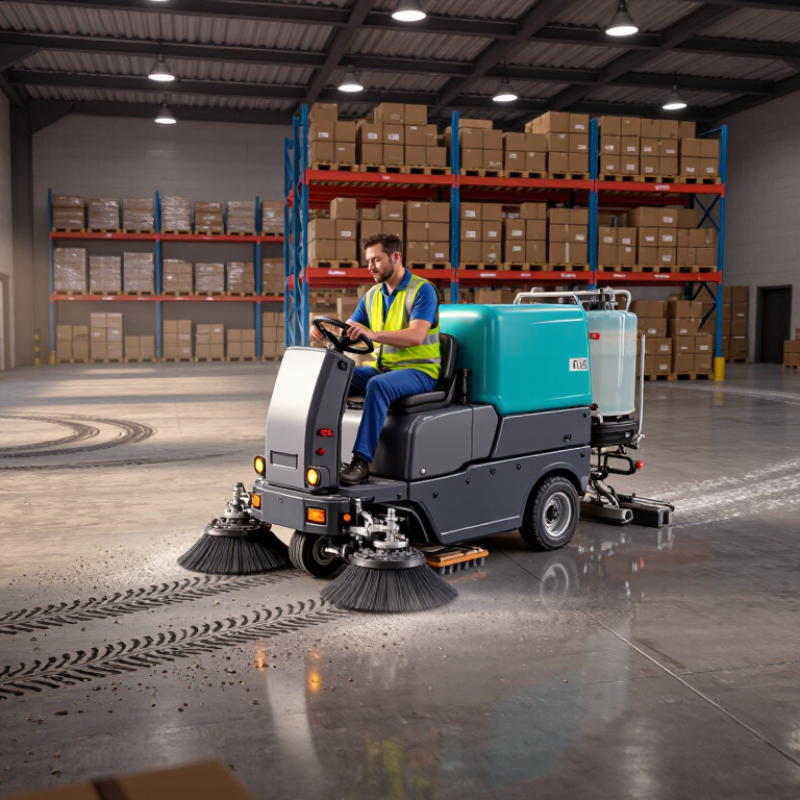
A combination machine should be selected by the soil it must remove, not by its advertised coverage rate. On polished concrete, a cylindrical brush can collect grit and small debris before the scrub deck wets the surface. On resilient vinyl, softer brushes or pads help reduce scuffing. Avoid aggressive pads on delicate coatings; a single test pass can reveal dulling or swirl marks.
Fine dust needs a different approach from leaves, packaging scraps, or tracked-in sand. EPA’s The Inside Story reports that indoor pollutant levels can be two to five times outdoor levels, and sometimes much higher. This is not a floor-cleaning trial, but it supports controlling dust rather than spreading it with a dry brush. Use effective dust capture where fine particles are common. Not always easy. Filters clog, and wet debris can smear if the pickup system is poorly adjusted.
Match the scrub method to the floor and residue. Neutral detergent and a soft brush suit routine soil on many sealed surfaces; oily shop floors may need compatible chemistry and more dwell time. A machine that sweeps well may still leave a slick film if its solution flow is excessive. Check the recovery tank, squeegee edges, and floor drying after a short trial. EPA’s Exposure Factors Handbook estimates people spend about 87% of their time indoors, so dust control and slip prevention deserve attention in everyday routes.
QUICK LINKS
CONTACT US
Office: (+86) 755 23040566
Tel: (+86) 158 9965 5195
E-mail: sale@pcbledmodule.com
Skype: Hans@Rocket-PCB
Whatsapp: 86 1589965 5195
Office Address: 2207,Bid 4,He Gu Shan Hui Cheng,35#,Guang Tian RoYanluo street, Song Gang Town,518105 SHENZHENG, CHINA
Plant ADD.: No 69, Lianfeng North Road, Xianxi Area, ChangAn Town, Dongguan, China.


Copyright © 2025 Rocket PCB Solution Ltd. | All Rights Reserved Sitemap Friendship link: CNC machining heat sink

