English


Choosing Natural Raffia Bags for wholesale is not just a matter of color or price. Buyers need to assess the weave, handle attachment, dimensions, finish, and consistency across a production run. A bag may look sturdy in a product photo, then feel loose when packed with a notebook and water bottle. Details matter. Ask for a physical sample, check its measurements, and inspect the seams and handles under normal use. Natural fibers can vary in tone and texture, so a perfectly identical batch may not be realistic. That deserves a clear conversation before an order is placed.
An illustrative sourcing specialist, Elena Ward, offers this editorial reminder: “A good wholesale sample should tell you how the bag feels, not just how it photographs.” This is a guiding line created for this introduction, not a verified quotation from a published interview. It points to a practical habit: compare samples with your intended use, packaging, and customer expectations. Ask suppliers how they control sizing, finishing, and quality checks, and request written specifications for repeat orders. A low unit price can still bring extra work if handles vary or dimensions drift. Even careful checks have limits. Raffia is a natural material, and some variation is part of its character; the goal is to understand what is acceptable before scaling up.
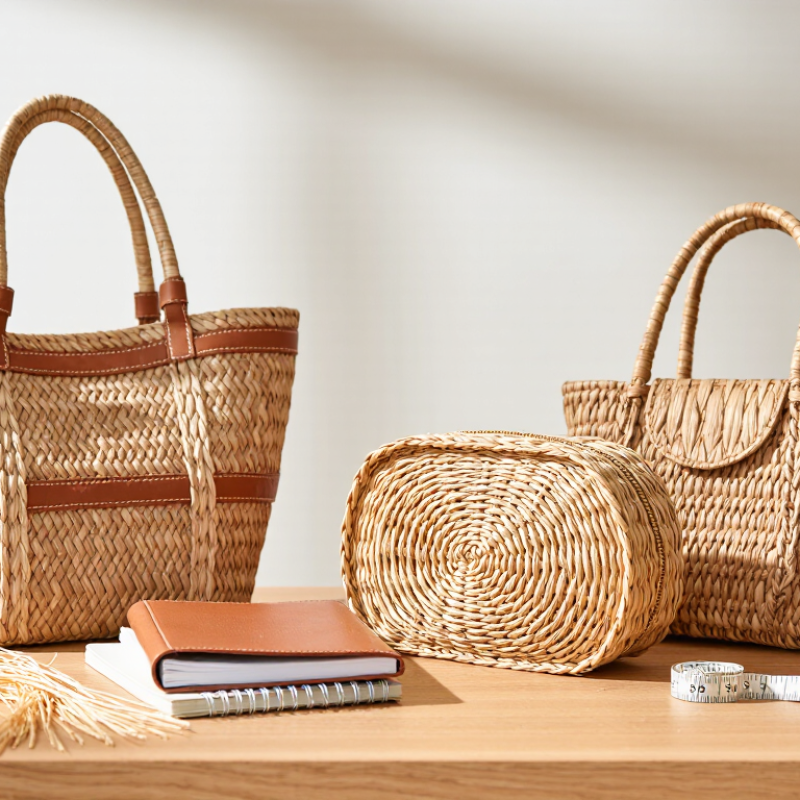
Natural raffia is not a single, uniform material. It usually refers to fibers taken from the leaves of raffia palms, but the palm species and growing region can affect color, length, and flexibility. Ask suppliers to identify the palm source rather than relying on “natural” alone. That distinction matters.
The material may arrive as narrow leaf strips, prepared fiber, or twisted raffia yarn. These forms behave differently in a bag. Flat strips can create a crisp, visible weave, while softer yarn may feel more flexible and show a finer texture. Check a physical sample: run your fingers over the surface, look for uneven widths, and bend the weave gently. Some variation is normal. Too much can make production inconsistent.
For wholesale orders, request clear details about fiber preparation and whether the bag includes non-raffia components, such as fabric linings or synthetic thread. Compare samples from more than one production batch when possible. A pale strand may darken slightly with exposure, and natural fibers rarely match perfectly. I would not treat every shade difference as a defect, though it is worth defining acceptable variation before confirming quantities.
QUICK LINKS
CONTACT US
Office: (+86) 755 23040566
Tel: (+86) 158 9965 5195
E-mail: sale@pcbledmodule.com
Skype: Hans@Rocket-PCB
Whatsapp: 86 1589965 5195
Office Address: 2207,Bid 4,He Gu Shan Hui Cheng,35#,Guang Tian RoYanluo street, Song Gang Town,518105 SHENZHENG, CHINA
Plant ADD.: No 69, Lianfeng North Road, Xianxi Area, ChangAn Town, Dongguan, China.


Copyright © 2025 Rocket PCB Solution Ltd. | All Rights Reserved Sitemap Friendship link: CNC machining heat sink