

loading

BLOG

How to Choose Interactive Sport Games for Global Buyers?

Choosing Interactive Sport Games for global buyers requires more than attractive graphics or a popular sport license. A game that succeeds in one market may feel confusing, inaccessible, or culturally distant elsewhere. Buyers should examine player age, language support, control layouts, accessibility options, connection requirements, and local content expectations. A family in Tokyo may value compact hardware and quiet operation. A youth center in Brazil may need durable equipment, simple menus, and reliable offline play. These details shape real purchasing decisions.

Jesse Schell, a respected game designer and author of The Art of Game Design, describes a game as “a problem-solving activity, approached with a playful attitude.” This idea helps buyers judge more than entertainment value. Strong InterActive Sport Games should create clear goals, responsive feedback, and meaningful physical or strategic participation. They should also support safe play, transparent data practices, age-appropriate content, and dependable after-sales service. Check regional certifications. Test the game with real users.

No universal winner exists.

A technically advanced product can still fail because its instructions are poorly translated. A low-cost model may create higher expenses through frequent repairs, limited updates, or incompatible accessories. Buyers should request demonstrations, review maintenance terms, and compare total ownership costs across regions. They should also question their own assumptions. “Global appeal” is often claimed too easily. Careful selection combines market evidence, hands-on testing, supplier credibility, and long-term usability. The best choice is not merely exciting on launch day. It remains understandable, inclusive, and reliable after months of everyday play.
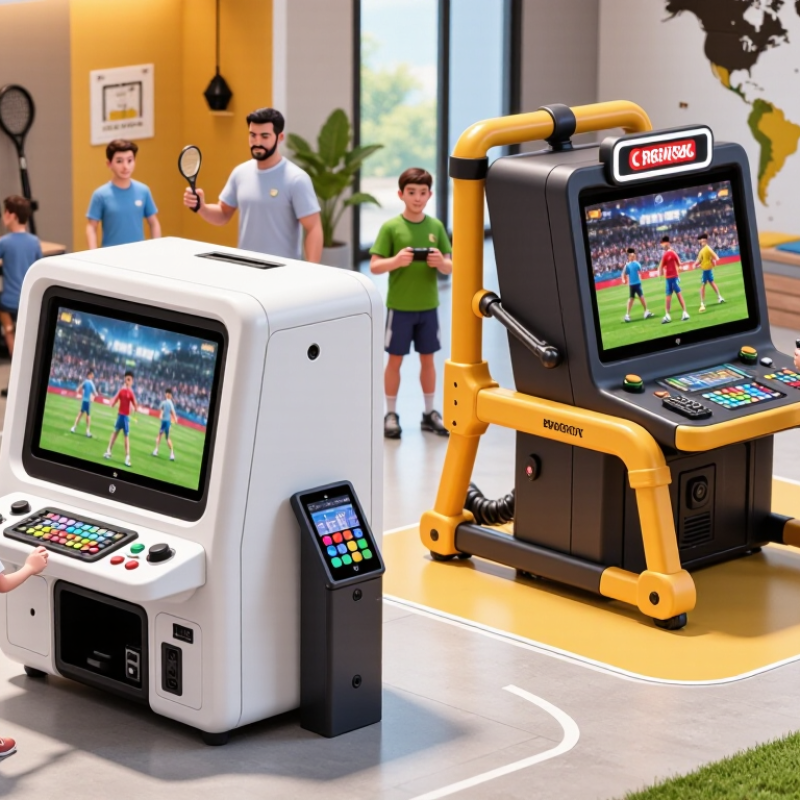
How to Choose Interactive Sport Games for Global Buyers?

Define Interactive Sport Game Types and Target Markets

Interactive sport games are not one product category. Buyers should define the play experience before comparing suppliers. Motion-controlled fitness games need cameras, safe spacing, and low-latency feedback. Sports simulations need realistic physics, clear rules, and deeper sessions. Arcade and party formats favor simple controls, quick rounds, and visible scores. Competitive online games require stable servers, moderation, and fair matchmaking. Different users. This distinction prevents a common purchasing mistake: treating a children’s motion game like a professional training simulator.

Market selection should follow evidence, not enthusiasm. Newzoo’s 2024 Global Games Market Report estimated 3.42 billion players worldwide and $187.7 billion in game revenue. Mobile games generated about 49% of that revenue. The Global Wellness Institute’s 2024 report valued physical activity at $1.06 trillion in 2022. These figures show opportunity, not guaranteed demand. I would map each game type against age, device access, venue, and payment habits. Mobile-first markets may favor short arcade sessions. Fitness-focused markets may accept sensors and subscription features. Family venues need durable hardware and simple safety instructions.

Validation should be physical. Place two prototypes in a venue, then record completion rates, replay frequency, and setup time. Ask whether a twelve-minute session feels too long. It might. Enthusiastic visitors can hide weak retention. Track week-four usage, not opening-day applause. A reliable international offer should also check language, accessibility, local sport preferences, warranty support, and data handling. Assumptions fail. My own market scorecard often changes after the first month.

Assess Player Needs, Space Requirements, and Usage Scenarios

Choosing an interactive sport game starts with the player, not the screen. In site audits, I check age, height, fitness level, reaction speed, and group size. A game for children needs simple controls and forgiving scoring. Competitive adults may prefer faster feedback and measurable challenges. The World Health Organization reported that 31% of adults worldwide, about 1.8 billion people, were insufficiently active in 2022. This supports demand for accessible movement, but not every player wants intense exercise.

Space changes the buying decision. Measure ceiling height, clear floor area, viewing distance, storage access, and emergency routes. Leave room for players to step sideways safely. A narrow room may suit turn-based throwing games, while a large leisure venue can support team movement. Equipment specifications alone are not enough. In practice, buyers sometimes measure the play zone but forget spectator flow. That mistake is costly.

Usage scenarios should guide durability and software choices. A hotel may need short sessions, multilingual instructions, and quick cleaning between groups. A school may value adjustable difficulty and supervised play. A public venue needs strong casing, easy maintenance, and reliable session records. The Sports & Fitness Industry Association’s 2024 report recorded 242.1 million Americans participating in at least one sport or fitness activity in 2023, showing broad demand for active experiences. However, one market’s habits cannot represent every country. Test with real users, observe hesitation, and revise the design. Locally collected feedback is often more useful than a polished sales forecast.

How to Choose Interactive Sport Games for Global Buyers

Assess player capacity and available floor space before selecting an interactive sport format.

The chart compares official playing-area dimensions for common sport formats. Table tennis and badminton suit compact venues and small-group use, while 3x3 basketball and volleyball require larger spaces for multi-player sessions. These figures represent the baseline playing area; buyers should also allow additional room for safety clearance, circulation, equipment, and spectator access.

Compare Game Features, Technology, Safety, and Accessibility

Choosing interactive sport games for global buyers requires more than attractive graphics. Compare core features first: motion modes, player capacity, scoring rules, language options, and session length. In a busy family center, quick setup may outperform a richer product. We learned this after watching players abandon long tutorials. That detail matters. Request a live demonstration and test the controls with children, older adults, and first-time users. Their hesitation can reveal more than a specification sheet.

Technology should feel responsive, not complicated. Check sensor accuracy, screen visibility, connection stability, update procedures, and offline fallback options. Ask how user data is collected, stored, and protected.

Safety deserves equal attention. Look for stable equipment, rounded edges, clear spacing, emergency stop controls, and simple maintenance instructions. Confirm that the product supports applicable local safety requirements.

Accessibility is practical, not decorative. Consider seated play, adjustable heights, high-contrast visuals, captions, audio guidance, and multiple language settings. A game may appear inclusive but still exclude users with limited mobility.

Tips: Test the game in a crowded room. Measure setup time. Observe fatigue, not only excitement. Request written safety records and service response times. If the supplier avoids difficult questions, pause before ordering. We sometimes overvalue novelty. Real users may value comfort and clarity more. Allow a trial period when possible, because assumptions rarely survive daily operation.

Evaluate Suppliers, Certifications, Pricing, and Logistics

How to Choose Interactive Sport Games for Global Buyers?

Supplier evaluation should begin with production evidence, not attractive videos. Request factory photos, audit records, sample test reports, and monthly capacity. A live sample should survive repeated passes, impacts, and cleaning. Check response times, spare-part access, and software update procedures. A low quote can hide weak after-sales support. It happens often.

Certifications must match the destination market and product design. Ask for applicable electrical, toy-safety, electromagnetic compatibility, and material testing documents. Verify certificate numbers with the issuing laboratory. Do not accept a logo alone. The ISO Survey reports millions of valid ISO 9001 certificates worldwide, but certification does not guarantee every batch performs well. Testing should cover the finished configuration, including adapters, sensors, and batteries. That distinction is easy to miss.

Pricing needs a landed-cost model. Include tooling, packaging, inspection, duties, insurance, inland delivery, and replacement units. The World Bank’s Logistics Performance Index 2023 evaluates customs, infrastructure, shipment quality, and delivery timeliness. These factors can change a promising quotation. UNCTAD reports that maritime transport carries over 80% of global merchandise trade, so port delays deserve a realistic buffer. Measure carton size carefully; one oversized package can trigger higher freight charges. I still question forecasts based on one shipping season. Weather, congestion, and currency movement remain difficult to predict. Use trial orders before committing to large volumes.

Select, Test, and Plan the Game for Global Distribution

How to Choose Interactive Sport Games for Global Buyers?

Select, Test, and Plan the Game for Global Distribution

Choosing interactive sport games for global buyers starts with a practical selection process. Study the venue, player age, floor space, climate, and local preferences. A compact reaction game may suit a shopping center, while a larger simulator needs stronger flooring and supervision. Ask buyers about duty cycles, target price, and expected maintenance skills. Do not trust a colorful demo alone. It can hide noise, heat, or difficult setup.

Test a working sample with real operators, not only sales staff. Record setup time, restart time, sound level, power use, and safety observations. Invite players with different heights and abilities. Watch where they hesitate. We once treated unclear icons as a minor issue, but users stopped before the second round. That assumption was wrong. Revise controls, instructions, and language after each trial. Check materials, moving parts, emergency stops, and data practices against applicable local requirements. Keep test records, photos, and corrective actions in one shared file.

Plan distribution before production. Confirm voltage, plugs, packaging dimensions, spare parts, remote support, and technician training. Prepare translated instructions with simple diagrams. Check customs documents, product classifications, insurance, and destination rules with qualified local advisers. Pilot a small shipment before committing to a full container. Track damage, installation delays, repeat faults, and player return rates. Forecasts will be imperfect. Leave budget and time for changes, because one market may value speed while another expects durability and quiet operation.

Chat Online
Chat Online
Leave Your Message inputting...
Thank you for your attention. Please kindly describe your question first, or please send your inquiry to our email sale@pcbledmodule.com, and we will reply to you ASAP. Welcome, what can I help you?
Sign in with: