How to Choose Compound Wall Lights in 2026?
Choosing Compound Wall Lights in 2026 means balancing visibility, weather resistance, and appearance. The right fixture should illuminate gates, paths, and boundary walls without creating harsh glare. Start by noting where shadows fall after dark. A light that looks elegant in a showroom may leave a real entrance dim.
Architect Le Corbusier wrote, “Architecture is the masterly, correct and magnificent play of masses brought together in light.” His observation offers a useful lens for choosing wall fixtures: light shapes how a property feels, not just how clearly people can see. Consider the wall’s material, too. A narrow beam can emphasize textured stone, while a softer spread may suit smooth brick. Small details matter.
Before comparing styles, check each fitting’s stated outdoor rating, materials, light output, and installation requirements. Match brightness to the area, and consider shielded designs where nearby windows could catch glare. Warm or neutral color temperatures often feel comfortable at entrances, but the wall color can change how the light appears. Not always as expected. I would also check whether the finish, replaceable parts, and maintenance needs suit the site; these are easy to overlook in product photos. This guide explores those practical choices, so you can compare Compound Wall Lights with clearer expectations and choose a setup that serves the property—not merely the catalogue.
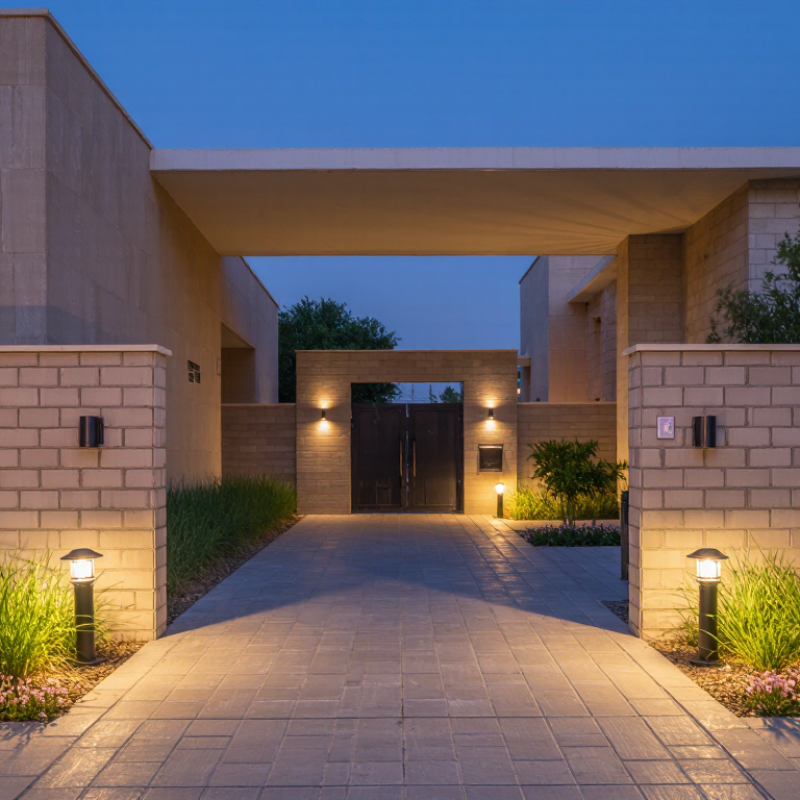
What Compound Wall Lights Are and How They Work
Compound wall lights are fixtures mounted on boundary walls around homes, gardens, or shared properties. They illuminate entrances, paths, and sections of the perimeter while keeping light above ground level. A typical unit has a housing, an LED light source, and a cover that directs or softens the beam. Some models cast light downward, reducing glare toward windows and nearby streets.
They work by converting electrical power into light through LEDs. Mains-powered models connect to a building’s wiring, while solar versions collect energy in a small panel and store it in a battery. Many include a photocell that switches the light on at dusk; some also use motion sensors. The terminology is not always consistent, so check what controls and power source a fixture actually includes. That matters.
For a real boundary wall, mounting height and spacing affect how evenly the ground is lit. A narrow beam may leave dark gaps, while a broad beam can spill into a neighbor’s garden. Solar output can also fall in shaded locations or during dull weather. Small detail, big difference. When comparing options in 2026, check the stated light output, weather protection, and whether the battery or lamp can be replaced. Specifications help, but the wall’s shade and layout still deserve a second look.
How to Assess Your Wall, Climate, and Lighting Needs
How to Choose Compound Wall Lights in 2026?
Start with the wall. Check whether it is solid concrete, hollow block, brick, or rendered masonry. The surface affects the fixings, cable route, and weight each fitting can safely carry. Look for loose render, cracks, and damp patches before choosing a mounting point. A neat lamp cannot make a weak wall sound.
Then consider local weather. Coastal air can corrode exposed metal, while repeated freezing and thawing may stress seals and masonry. Choose fittings rated for the actual exposure, and check that cable entries can be protected from water. Ask a qualified electrician to assess wiring and installation, especially where existing cables are old or concealed. Small details matter.
Match the light to how the boundary is used. A gate may need clear, even illumination, while a garden-facing wall often benefits from softer, downward-directed light. Avoid aiming beams into neighboring windows or drivers’ sightlines. Test the layout after dusk, if possible; daytime guesses can be misleading. A motion sensor may help at an entrance, but constant light could suit a frequently used path better. There is no perfect setting for every property. Recheck glare and dark gaps from the places people actually walk.
How to Choose Compound Wall Lights in 2026?
Assess your wall material, local climate, and lighting needs before choosing a fixture. For exposed locations, check the product’s IP rating and installation instructions.
Understanding IPX Water-Protection Ratings
IPX ratings describe water protection under specified test conditions; higher numbers indicate a different test level, not a linear increase in protection. Choose a rating suitable for the fixture’s actual exposure, and verify the manufacturer’s guidance. IPX8 conditions are specified by the manufacturer.
How to Compare Materials, Brightness, and Energy Options
How to Choose Compound Wall Lights in 2026?
How to Compare Materials, Brightness, and Energy Options
A compound wall light faces rain, dust, sun, and sometimes salt spray. Cast aluminum is lightweight and often finished with a protective coating; stainless steel can suit exposed locations, but grade and finish matter. Salt air is unforgiving. Check seams, drainage openings, and fasteners, not just the fixture’s outer shell. A polished finish may look durable, yet poor seals can still let moisture inside.
Compare brightness by lumens, not watts. Lumens describe light output; wattage describes energy use. For a gate, a broad, moderate beam may reveal faces and steps without shining into a neighbor’s window. Mounting height and beam direction change the result. A brighter lamp is not automatically safer. I would reconsider any choice that creates harsh glare on a wet driveway. Check the label for outdoor suitability and replaceable parts.
For energy use, integrated or replaceable LED options are usually practical. The U.S. Department of Energy’s Energy Saver guidance reports that LEDs use at least 75% less energy and last up to 25 times longer than incandescent lighting. Motion sensors or photocells can reduce operating hours, though poor placement may trigger needless switching. Solar models avoid wiring, but shaded walls can limit charging; check battery access and runtime claims. Compare real conditions, not just the box.
How to Choose a Design and Plan a Safe Installation
How to Choose Compound Wall Lights in 2026?
How to Choose a Design and Plan a Safe Installation
Start with the wall, not the fixture. Measure its height, gate width, and available wiring points. On a narrow boundary, compact downlights can reduce glare; broader walls may suit evenly spaced sconces. Check beam direction at eye level, too. A bright bulb shining into a neighbor’s window is poor planning. Keep it restrained.
For efficiency, compare lumens, wattage, and color temperature on the product label. The U.S. Department of Energy’s Energy Saver guidance reports that LEDs use at least 75% less energy and can last up to 25 times longer than incandescent lighting. That is a useful benchmark, not a promise for every fixture. The Illuminating Engineering Society’s RP-33-14, Lighting for Exterior Environments, also addresses visual comfort and limiting unwanted light. Choose a warm, shielded beam when the wall faces a walkway or bedroom.
Before installation, confirm the fixture is rated for wet locations and suits the wall box and local supply. Switch off the circuit at the breaker, then verify it is de-energized with a proper tester. Check that mounting screws enter sound masonry, not loose render. I would not guess at cable condition. If grounding, sealing, or existing wiring is uncertain, ask a qualified electrician; a neat-looking fitting can still hide a poor connection. Even careful measuring can miss uneven stonework, so mark positions on the wall before drilling.
How to Evaluate Durability, Maintenance, and Long-Term Value
When choosing compound wall lights in 2026, judge durability by the full fitting, not just its visible finish. Check the housing material, coating, seals, and fasteners. Powder-coated aluminum can resist weather well, but a scratched coating may expose the metal beneath. Near the coast, ask how the finish handles salt and moisture. Look closely. The stated ingress-protection rating should suit the light’s actual exposure to rain, dust, and sprinkler spray.
Maintenance affects how a light performs over time. Choose a design that lets you reach the lamp or driver without removing masonry or disturbing nearby wiring. Smooth shades and simple shapes are easier to wipe clean; deep grooves can collect dust and water. Check whether replacement parts are available and whether the warranty excludes corrosion or fading. Small details matter. A fitting that is difficult to service can cost more in labor, even when its purchase price is low.
For long-term value, compare expected lifespan, energy use, replacement costs, and the quality of installation guidance. A modest light with accessible components may serve better than a decorative model that is sealed beyond repair. Inspect samples outdoors if possible; finishes can look different in harsh afternoon sun. I would not treat a warranty as proof of durability. That is not always easy. Record the model details and cleaning instructions before installation, since those are easy to misplace later.






