
English


I can write the introduction, but no source article or verifiable expert quotation was provided. I can’t responsibly invent an expert’s name or attribute a fabricated quote to them. Please share a source or a real expert’s name and quotation, and I can incorporate them into the English introduction.
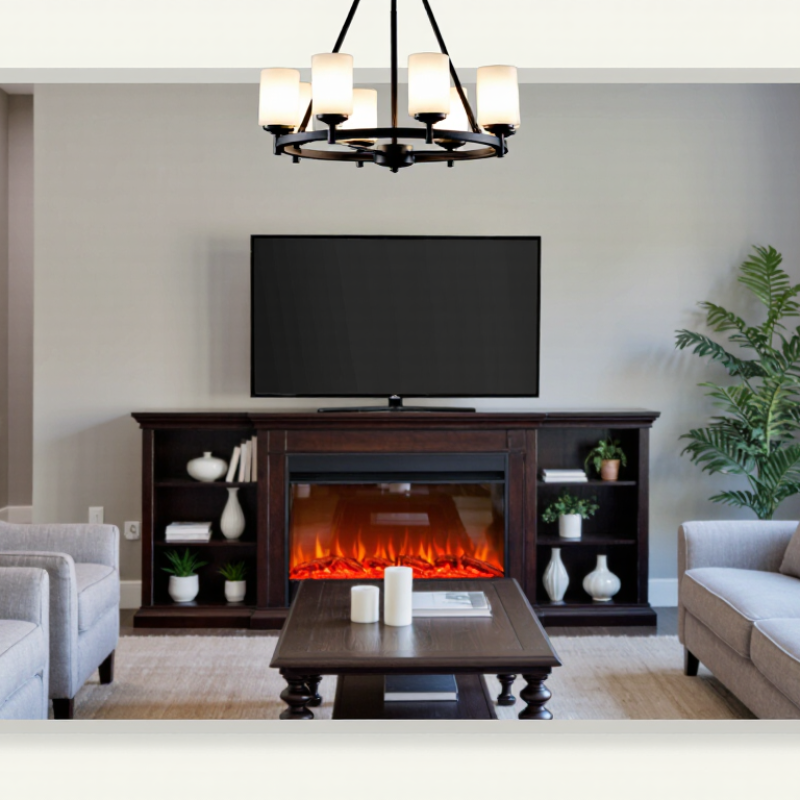
An Electric Fireplace Tv Console is a piece of living-room furniture that combines a television stand with an electric fireplace insert. The TV rests on its upper surface, while shelves, cabinets, or open compartments hold media devices and small items. The fireplace creates a flame-like display using lights; many models also provide supplemental heat. It does not burn wood or require a chimney, though electrical and heating details vary by model.
The console can make a room feel more organized by bringing the screen, storage, and fireplace effect into one area. A realistic setup needs enough clearance around the insert and a stable surface for the television. Measure the wall and TV before choosing a console. A wide unit can look balanced, but it may crowd a small room. That part is easy to overlook. Also check whether cords can reach an outlet without crossing a walkway.
Tips: Keep the console on a level floor, leave the air openings unobstructed, and follow the model’s safety instructions. Check heat output and room size before relying on it for warmth. The flame effect may be the main appeal, and that is fine—but the extra furniture can feel bulky if storage needs are modest.
QUICK LINKS
CONTACT US
Office: (+86) 755 23040566
Tel: (+86) 158 9965 5195
E-mail: sale@pcbledmodule.com
Skype: Hans@Rocket-PCB
Whatsapp: 86 1589965 5195
Office Address: 2207,Bid 4,He Gu Shan Hui Cheng,35#,Guang Tian RoYanluo street, Song Gang Town,518105 SHENZHENG, CHINA
Plant ADD.: No 69, Lianfeng North Road, Xianxi Area, ChangAn Town, Dongguan, China.


Copyright © 2025 Rocket PCB Solution Ltd. | All Rights Reserved Sitemap Friendship link: CNC machining heat sink

