
English


Choosing a Toyota Yaris Mirror in 2026 is not just a matter of matching the car’s color. Model year, body style, market, and trim can change the mirror assembly, connector, and available features. A power-adjustable mirror may look identical to a manual one, yet its wiring can differ. Check the vehicle identification number and compare the original part number before ordering. Fit matters.
There is a practical reason to take that step. S&P Global Mobility reported that the average age of light vehicles in the United States reached 12.6 years in 2024. Older cars often need replacement parts, but age alone does not confirm fitment. Toyota Yaris versions sold in different regions may also use different mirror specifications. Catalog listings can be incomplete, so verify details with a Toyota dealer or a parts supplier that can check the VIN.
Look closely at the features you actually need: electric adjustment, heating, folding, indicator lamps, and blind-spot monitoring. Not every Yaris has them. NHTSA’s Federal Motor Vehicle Safety Standard No. 111 addresses rear visibility, underscoring why a clear, correctly positioned mirror matters. Still, a replacement mirror should match the vehicle’s original equipment and be installed securely. A cheaper assembly may save money upfront, but a mismatched plug or poor glass view can turn a simple repair into another parts search. The small details count.
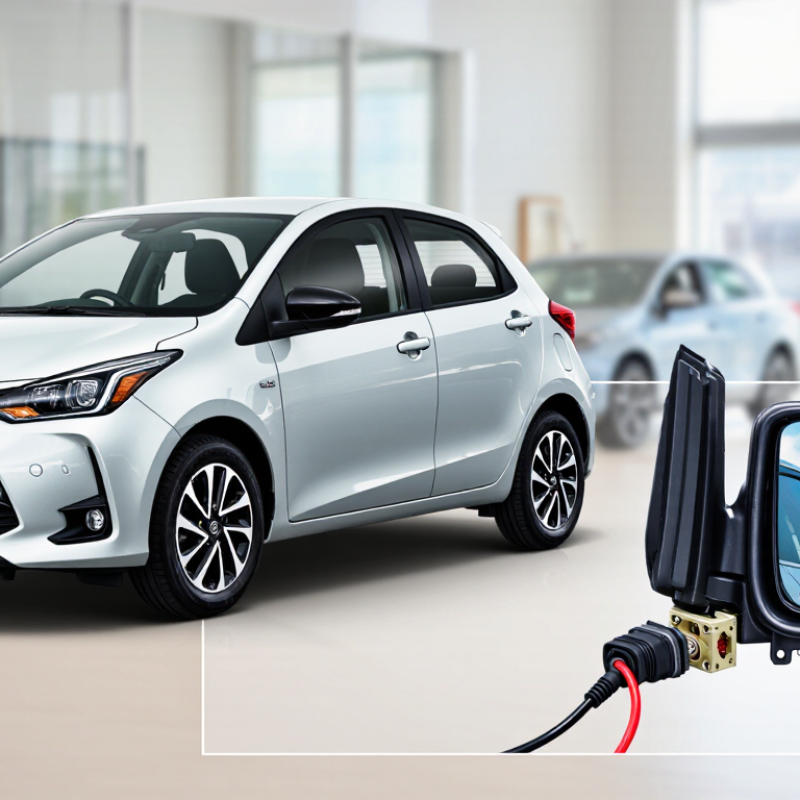
Before ordering a Yaris mirror, confirm the exact model year, sales market, and vehicle identification number (VIN). A registration year can differ from the model year. Check the door-jamb label and windshield plate, then compare both records. Under the U.S. VIN requirements in 49 CFR Part 565, a modern VIN contains 17 characters; its tenth character indicates model year within a repeating code cycle. NHTSA’s VIN Decoder can help verify the year and manufacturer details. SAE J272 also describes the World Manufacturer Identifier used within VINs. Do not rely on the tenth character alone.
Market matters. A mirror listed for one region may have a different connector, heating function, blind-spot indicator, folding mechanism, or glass shape. Enter the complete VIN into the vehicle’s electronic parts catalog (EPC), then check the catalog’s market and production-date filters. Compare the diagram and part notes with the mirror on the car, especially the plug shape and number of pins. Small details matter. Catalog data can still be incomplete, so confirm unclear fitment with a qualified parts specialist before purchase. One missed connector difference can turn a correct-looking mirror into the wrong part.
QUICK LINKS
CONTACT US
Office: (+86) 755 23040566
Tel: (+86) 158 9965 5195
E-mail: sale@pcbledmodule.com
Skype: Hans@Rocket-PCB
Whatsapp: 86 1589965 5195
Office Address: 2207,Bid 4,He Gu Shan Hui Cheng,35#,Guang Tian RoYanluo street, Song Gang Town,518105 SHENZHENG, CHINA
Plant ADD.: No 69, Lianfeng North Road, Xianxi Area, ChangAn Town, Dongguan, China.


Copyright © 2025 Rocket PCB Solution Ltd. | All Rights Reserved Sitemap Friendship link: CNC machining heat sink

