

loading

BLOG

How to Choose a Solid State Diode Laser?

Choosing a Solid State Diode Laser starts with the job it must perform, not the highest number on a product page. A laser used for marking, measurement, alignment, or laboratory work may need very different output characteristics. Wavelength, optical power, beam quality, operating mode, and duty cycle all affect results. Small details matter. A beam that looks impressive on a datasheet may still be poorly matched to a material or detector.

Begin by defining the target, working distance, required spot size, and expected operating hours. Then compare the laser’s wavelength and power with the application’s actual needs. Check whether the output is continuous-wave or pulsed, and review stability, cooling requirements, and driver compatibility. Packaging and mounting matter too, especially when space is tight or vibration is present. Ask for test data gathered under conditions similar to your setup, rather than relying only on nominal specifications. A dependable supplier should explain measurement methods, tolerances, and support options clearly.

There is no universal best choice. A higher-power unit can add heat, cost, and control challenges without improving the outcome. Conversely, choosing only by price can lead to unstable performance or difficult integration. This guide presents practical criteria for comparing options, from core specifications to safety features and supplier reliability. Some trade-offs remain uncertain until the laser is tested in its real environment. That is worth acknowledging. A careful selection process reduces avoidable surprises and helps ensure the Solid State Diode Laser fits the system, budget, and long-term operating needs.
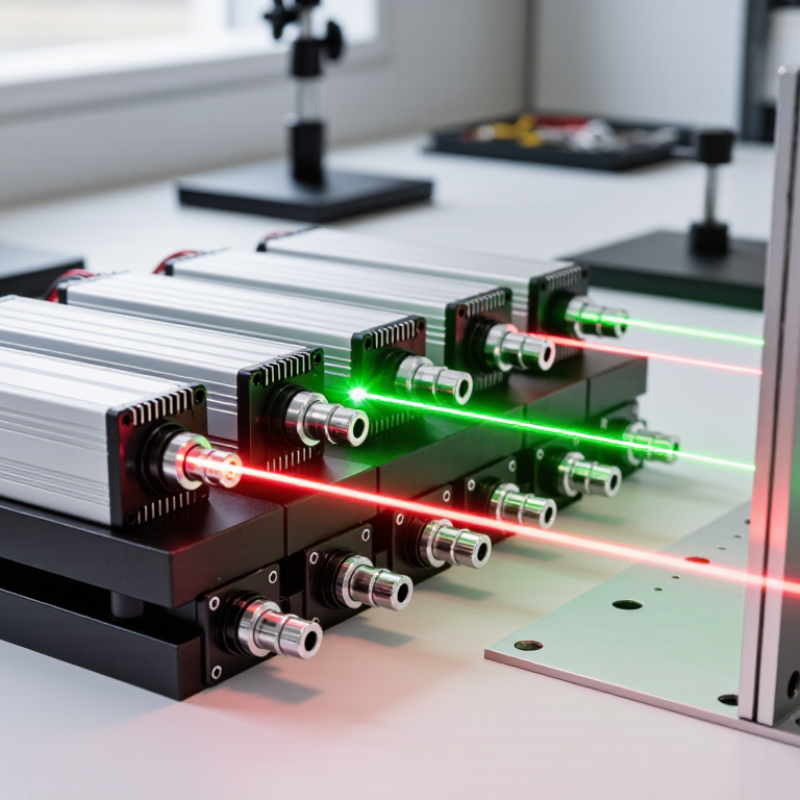
How to Choose a Solid State Diode Laser?

What Is a Solid State Diode Laser?

A solid-state diode laser often refers to a diode-pumped solid-state (DPSS) laser. A semiconductor diode supplies pump light to a solid gain medium, usually a crystal or glass. Mirrors guide light through a resonant cavity. The pump energy excites the medium, which emits light at a wavelength determined by its material and optical design. In simple terms, the diode powers the process; the solid medium produces the beam.

This differs from a direct diode laser, where a semiconductor junction creates the output beam itself. That distinction matters. It affects wavelength, beam quality, efficiency, size, and heat management. For example, a DPSS system may convert infrared pump light into green output using frequency-doubling optics. Those extra parts can introduce losses and require careful alignment. Designs vary.

When evaluating a laser, check its output wavelength, operating mode, power stability, cooling method, and beam profile. Confirm whether listed power means pump power or delivered output; these figures are not interchangeable. Warm-up time and vibration sensitivity may also matter in daily use. Terminology varies, so check the technical documentation rather than relying on a product description alone. I would treat unclear specifications as a reason to ask questions, not make assumptions.

How Does the Intended Application Shape Laser Selection?

A laser should be selected around the material and task, not a headline power rating. For engraving dark anodized metal, wavelength and focused spot size affect contrast and edge detail. For polymer marking, test how the specific plastic absorbs energy; similar-looking materials can react differently. That matters. A wavelength that works well on one sample may discolor another.

Next, match operating mode and output to the work cycle. Continuous-wave output may suit steady heating, while pulsed output can limit heat spread during brief marks. Check pulse energy, repetition rate, and beam quality together, rather than treating peak power as the whole story. If the laser will run for long shifts, review cooling requirements and output stability at the intended duty cycle. Small details count.

The installation also shapes the choice. A compact workstation may need a short, fixed beam path, while a moving production line may require reliable beam delivery and careful alignment. Consider enclosure space, ventilation, maintenance access, and the operator’s view of the work area. It is tempting to choose the highest output available, but that can add cost and heat without improving the result. Test representative samples under realistic settings, then compare marking quality, cycle time, and thermal effects. A little uncertainty remains until the actual material is tested.

Which Wavelength, Power, and Pulse Settings Are Needed?

Choosing a solid-state diode laser starts with the target material, not the highest wattage. Match wavelength to absorption: a wavelength poorly absorbed by the workpiece may create heat in the wrong place. Confirm performance across the operating temperature range, since diode output wavelength can shift as the device warms. For pulse selection, calculate energy per pulse: a 10 W average output at 10 kHz equals 1 mJ per pulse, before optical losses. At 100 ns, that corresponds to roughly 10 kW peak power for an ideal rectangular pulse. Real pulse shapes differ. Small details matter.

IEC 60825-1:2014 evaluates laser exposure by factors including wavelength, emission duration, and accessible output; power alone does not define risk. For practical selection, compare pulse energy, repetition rate, pulse width, and beam size with the process requirement. Short pulses can limit heat spread, but may demand higher peak power and careful thermal management. A longer pulse may suit steady heating better. That trade-off bites. Check the supplier’s measured output data, not only nominal settings, and allow headroom for losses in optics and cables.

Tips: Write down the material, desired spot size, working distance, and duty cycle before comparing models. Test on a small sample first. Record temperature and results; my own instinct is to trust a neat specification sheet too much, and that can be a mistake.

How Should Beam Quality, Cooling, and System Compatibility Be Assessed?

How to Choose a Solid State Diode Laser?

Beam quality, cooling, and compatibility matter more than a bright spot on a brochure.

Ask for beam parameter product, divergence, and M² values measured at your intended operating power. ISO 11146 defines methods for measuring laser beam widths and propagation characteristics. Compare results under matching conditions; otherwise, the numbers can mislead. A neat-looking beam is not always a useful one.

Cooling affects output stability and lifetime.

RP Photonics’ diode-laser reference describes wavelength shifts commonly around 0.25–0.35 nm per °C, depending on device design. That small drift can matter when coupling into a narrow-band filter or fiber. Check the specified coolant temperature, flow, and heat load, then leave room for practical variation. I would not size a cooler from average power alone; peak load and ambient temperature deserve attention too.

Small details matter.

Tips: Before purchase, confirm wavelength, output power, beam dimensions, and numerical aperture against your optics. Check driver current and voltage limits, connector types, cooling connections, and control signals. Request beam data at your working distance, not only at the laser head. If the supplier cannot provide clear test conditions, pause and ask.

What Safety Features and Maintenance Requirements Should Be Checked?

When evaluating a solid state diode laser, check how it controls exposure to the beam. A fully enclosed optical path is safer than an open bench setup. Look for a working interlock that disables emission when an access panel opens, plus a key switch or other controlled start method. Verify that warning indicators are visible before operation. Small details matter.

Choose protective eyewear rated for the laser’s specific wavelength and output. General-purpose tinted glasses are not enough. Keep eyewear in good condition, and never treat it as a substitute for a closed beam path. Remove shiny tools and jewelry from the work area; even a small reflection can travel somewhere unexpected. Set the beam stop securely, and keep the beam below eye level where practical. These checks reduce risk, but no checklist catches everything.

Maintenance needs depend on the unit’s design, so follow its service instructions rather than guessing. With power disconnected, inspect cooling vents, fans, and fluid lines for dust, blockage, or leaks. Check cables and connectors for cracks or looseness, and clean optical surfaces only with approved materials. Record operating hours, alarms, and service dates. A short log helps reveal gradual changes in output or temperature. It is easy to overlook a dirty filter; that mistake can shorten component life. Have qualified personnel handle internal electrical or optical repairs.

Chat Online
Chat Online
Leave Your Message inputting...
Thank you for your attention. Please kindly describe your question first, or please send your inquiry to our email sale@pcbledmodule.com, and we will reply to you ASAP. Welcome, what can I help you?
Sign in with:



