
English


Choosing a Moulded Case Circuit Breaker in 2026 is not just a matter of matching amperage. The right device must suit the available fault current, conductor size, load profile, and installation environment. A breaker that fits the panel can still be wrong for the system. Small details matter: a warm enclosure, a motor’s starting current, or a cable run longer than expected can change the selection.
Electrical educator Mike Holt is a useful reference for practical code application. The National Electrical Code states its purpose as “the practical safeguarding of persons and property from hazards arising from the use of electricity.” That principle gives this guide its starting point: select for protection, not convenience. Check the rated current, voltage, interrupting capacity, trip characteristics, and any required accessories against the equipment documentation and site conditions. Verify coordination with upstream and downstream devices, too. A single rating never tells the whole story.
This article explains how to compare those factors without treating a datasheet as a complete design. It also considers enclosure conditions, future load changes, and the difference between a technically compatible breaker and a suitable one. Manufacturer data and qualified engineering review remain essential, especially where fault levels or coordination are uncertain. A first specification can look convincing and still miss something. That deserves a second look. The goal is a clear, defensible choice—not the biggest breaker that happens to fit.
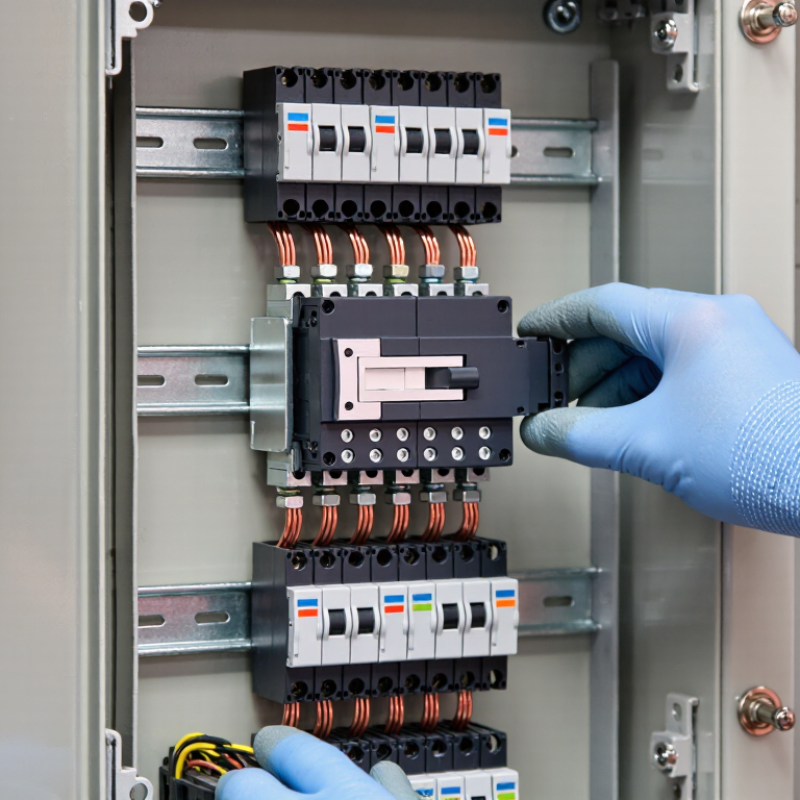
Before choosing an MCCB, identify the circuit requirements rather than starting with a breaker frame size. Record the system voltage, phase, frequency, and the type of load: general equipment, a motor, a transformer, or a mix. Check nameplate current and expected operating time. For equipment with motors, note startup current and how often the motor starts. Small details matter. Measure the load across a typical operating cycle when possible; a single reading may miss peak demand.
Tips: Match the breaker’s rated current and trip settings to the load and conductor ampacity. Verify its interrupting rating against the prospective fault current at the installation point. Have a qualified electrical professional review coordination and applicable installation requirements.
For motor circuits, allow for normal inrush without setting protection so high that conductors lose adequate protection. Review the breaker’s time-current characteristics alongside upstream and downstream devices. Confirm the pole count and voltage rating suit the circuit. Ambient heat, a crowded enclosure, or nearby equipment can also affect performance. It is easy to overlook these conditions when relying on a nameplate alone. If load data is incomplete, document the assumptions and verify them during commissioning rather than treating an estimate as a confirmed requirement.
QUICK LINKS
CONTACT US
Office: (+86) 755 23040566
Tel: (+86) 158 9965 5195
E-mail: sale@pcbledmodule.com
Skype: Hans@Rocket-PCB
Whatsapp: 86 1589965 5195
Office Address: 2207,Bid 4,He Gu Shan Hui Cheng,35#,Guang Tian RoYanluo street, Song Gang Town,518105 SHENZHENG, CHINA
Plant ADD.: No 69, Lianfeng North Road, Xianxi Area, ChangAn Town, Dongguan, China.


Copyright © 2025 Rocket PCB Solution Ltd. | All Rights Reserved Sitemap Friendship link: CNC machining heat sink

