English


Choosing a Compressor Boring Machine starts with the work you actually perform, not the largest specification on a brochure. A shop rebuilding small compressor cylinders has different needs from a facility handling heavy industrial components. Measure typical bore diameters, cylinder lengths, and workpiece weights before comparing machines. These figures help narrow the required boring range, spindle travel, and setup capacity.
Accuracy matters, but it depends on the full setup. Check the machine’s stated tolerances, rigidity, alignment method, and compatibility with suitable cutting tools. Ask how the workpiece is secured, how adjustments are made, and whether the machine can reach the surfaces you need to bore. A compact unit may fit a crowded workshop. A larger machine may save repeated repositioning. Neither choice is automatically better.
Small details count.
Also consider operator training, routine maintenance, spare-part availability, and the supplier’s technical support. Request written specifications and, where practical, a demonstration using a representative component. Confirm what accessories are included; a quoted price may not cover the fixtures or tooling needed for your jobs. There is no shortcut. The right choice balances capability, floor space, budget, and workload without paying for features that will sit unused.
Some trade-offs remain difficult to judge from a product sheet alone. In particular, real-world setup time can vary with operator experience and component shape. Treat advertised performance as a starting point, then verify it against your own requirements. This guide outlines the questions to ask before purchasing, so your decision rests on measured needs rather than assumptions.
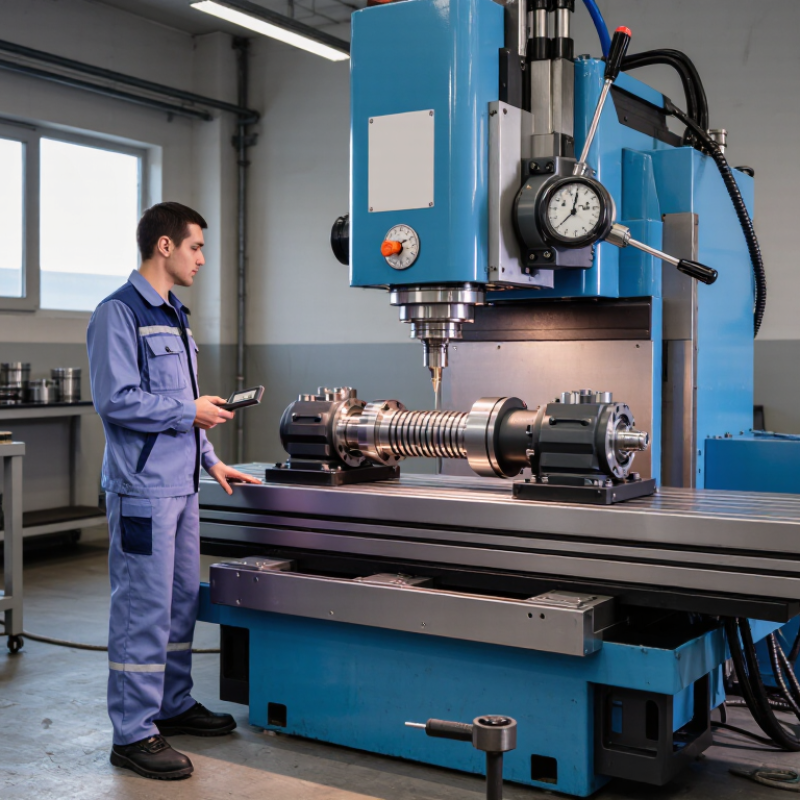
A compressor boring machine enlarges or corrects a cylinder bore with a rotating cutting tool. The workpiece is clamped firmly, then aligned with the spindle so the cutter follows the bore’s axis. Even slight misalignment can leave a tapered or uneven surface. Small errors matter.
As the spindle turns, a controlled feed moves the cutter through the cylinder. The operator removes material in measured passes, checking the diameter with a suitable bore gauge between cuts. This helps keep the bore within its required size and shape. Cutting fluid may reduce heat and help carry away chips, depending on the machine and material. The final surface should be checked for tool marks and consistency, not judged by appearance alone. Setup details vary, so the machine manual and component specifications should guide each job.
Tips: Clean the cylinder and fixture before setup. Check alignment and tool condition, then make a light test cut if appropriate. Measure at several depths and angles; one reading can miss a tapered bore. It is easy to rush this step, and that is worth resisting.
QUICK LINKS
CONTACT US
Office: (+86) 755 23040566
Tel: (+86) 158 9965 5195
E-mail: sale@pcbledmodule.com
Skype: Hans@Rocket-PCB
Whatsapp: 86 1589965 5195
Office Address: 2207,Bid 4,He Gu Shan Hui Cheng,35#,Guang Tian RoYanluo street, Song Gang Town,518105 SHENZHENG, CHINA
Plant ADD.: No 69, Lianfeng North Road, Xianxi Area, ChangAn Town, Dongguan, China.


Copyright © 2025 Rocket PCB Solution Ltd. | All Rights Reserved Sitemap Friendship link: CNC machining heat sink