
English


Choosing a Cell Phone Box Making Machine in 2026 requires more than comparing prices and production speeds. Modern phone packaging must look precise, protect delicate devices, and support efficient factory operations. A machine may produce attractive boxes, yet still create waste, slow changeovers, or unstable folding. These details matter during every shift.
Walter Soroka, a respected packaging educator, described packaging as “the science, art, and technology of enclosing and protecting products for distribution, storage, sale, and use.” His words remain useful when evaluating box-making equipment. A reliable Cell Phone Box Making Machine should handle rigid paperboard, sharp creases, clean edges, and consistent corner forming. It should also suit the box structure, material thickness, adhesive system, and expected order volume.
Look closely at the machine’s working table. Can operators reach the feeding area safely? Are adjustments clearly marked? How long does a format change take? A ten-minute delay may seem minor, but repeated delays can consume hours each week. Energy use, spare-part access, training support, and inspection systems deserve equal attention.
The cheapest option is not always economical. Neither is the fastest machine. A realistic decision compares output, reject rates, maintenance needs, and product quality over several years. Buyers should request samples using their actual board and box dimensions. Do not rely only on showroom demonstrations.
This guide offers a practical framework for comparing machines in 2026. Some recommendations may not fit every factory. That is worth admitting. Production conditions differ, and even a well-designed machine can disappoint without skilled operation and regular maintenance.
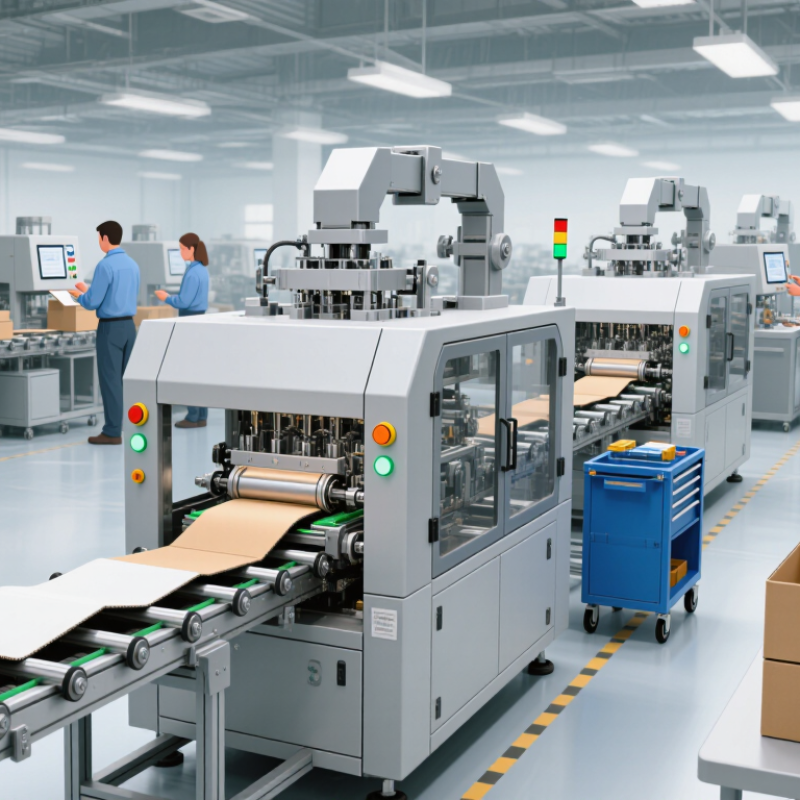
Choosing a cell phone box making machine in 2026 starts with accurate board specifications. For folding cartons, 300–400 GSM paperboard offers a practical balance between print quality, stiffness, and material cost. However, GSM does not equal thickness. Moisture, fiber direction, and coating can change feeding performance. Smithers’ 2024 packaging outlook identifies premium presentation and sustainable fiber packaging as continuing market priorities. This makes stable board handling increasingly important.
Rigid boxes require a different approach. Boards measuring 1.2–2.5 mm need stronger creasing, accurate corner forming, and reliable wrapping control. A machine designed only for thin folding cartons may crush edges or create uneven corners. Industry testing reports from the Paper and Packaging Board sector commonly emphasize caliper consistency and compression performance. In practical trials, check blank feeding, glue coverage, corner alignment, and surface damage at production speed. Do not judge performance from ten samples. That is often misleading.
Tips: Ask for trials using your actual 300–400 GSM paperboard and 1.2–2.5 mm rigid board. Measure finished box dimensions after 24 hours. Test both coated and uncoated sheets. Review waste rates, changeover time, and operator adjustments. A perfect specification sheet can still fail on the factory floor. I would also leave tolerance for future materials, because packaging development rarely stays predictable.
QUICK LINKS
CONTACT US
Office: (+86) 755 23040566
Tel: (+86) 158 9965 5195
E-mail: sale@pcbledmodule.com
Skype: Hans@Rocket-PCB
Whatsapp: 86 1589965 5195
Office Address: 2207,Bid 4,He Gu Shan Hui Cheng,35#,Guang Tian RoYanluo street, Song Gang Town,518105 SHENZHENG, CHINA
Plant ADD.: No 69, Lianfeng North Road, Xianxi Area, ChangAn Town, Dongguan, China.


Copyright © 2025 Rocket PCB Solution Ltd. | All Rights Reserved Sitemap Friendship link: CNC machining heat sink

